10 Things You Need to Know About Food Poverty
Food inflation could hit 10% by the end of 2026, but more than 6 million people already live in food poverty. What does that actually mean when they also have 'big TVs and iPhones'? We'll tell you.
.jpeg)

By Anna Jones and Dominic Watters
There are about 6.1 million people – including two million children – who don’t have enough to eat, or regularly miss meals, or never get the chance to eat nutritious food because it simply isn’t available to them.
But have you ever heard this response: “They say they can’t afford food, but they all have big TVs and the latest smartphone”?
Well, we should probably talk about that. We're bringing you 10 answers to the most difficult, unaskable questions about food poverty.
But first, some good news.
Things had been getting better on the food poverty front.
In the 12 months to April 2025, the number of hungry people in the UK had fallen from 7.5 million to 6.1 million. Food bank usage also fell from 4.3% of individuals to 3.8% (Households Below Average Income statistics, Department of Work and Pensions)
Sadly, the green shoots of progress on food poverty look set to be snuffed out by the Iran conflict. The Food and Drink Federation expects food inflation to top 9% by the end of 2026 - a depressing U-turn on their earlier forecast. Before the closure of the Strait of Hormuz, prices were expected to fall gradually. Not any more.
For the million or so people who were starting to feel more food secure, it’s one step forward and two steps back. We’re hurtling towards harder times - but it was a random meeting in Colchester that helped me understand why, and set the ball rolling for this article.
It's everything you need to know about food poverty, but were too afraid to ask.
“On my estate, you can buy blueberry-flavoured vapes and cherry vodka more easily than fresh blueberries or cherries.”
Firstsite, Colchester: March 28th, 2026
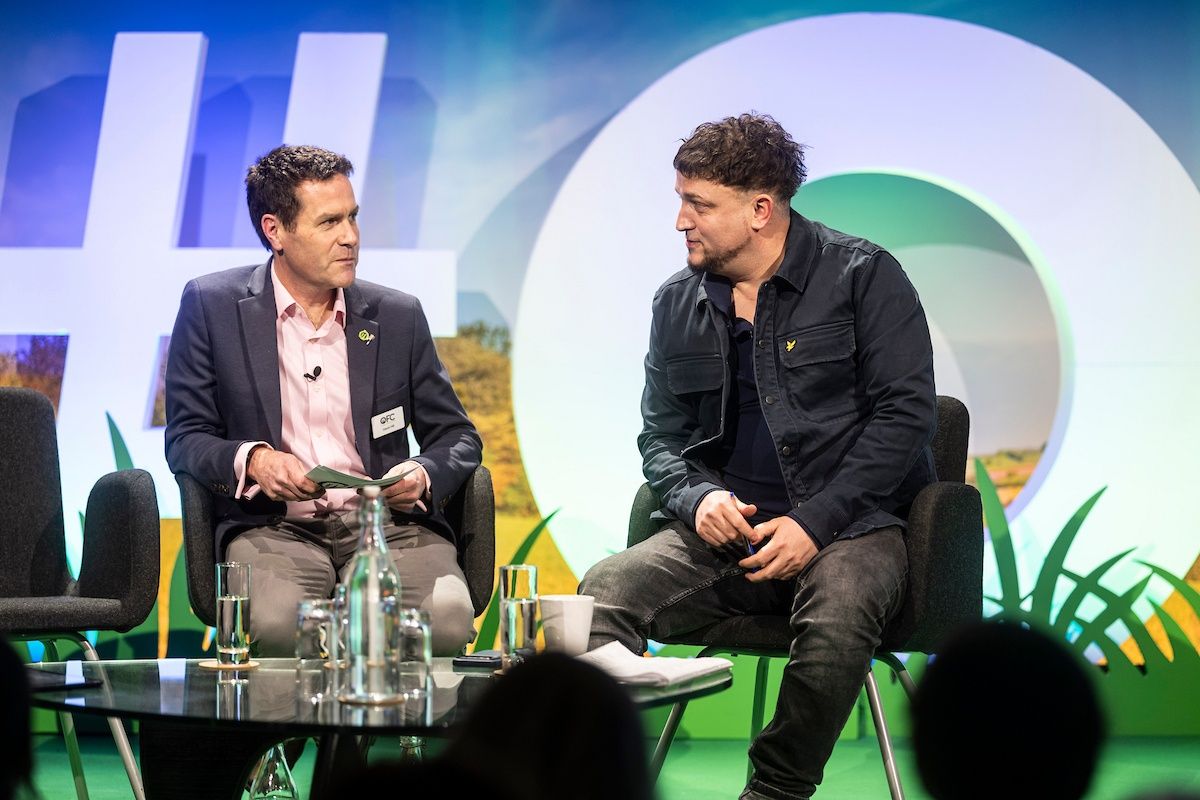
I'm one of the speakers at a well-heeled environmental event in an art gallery in Essex.
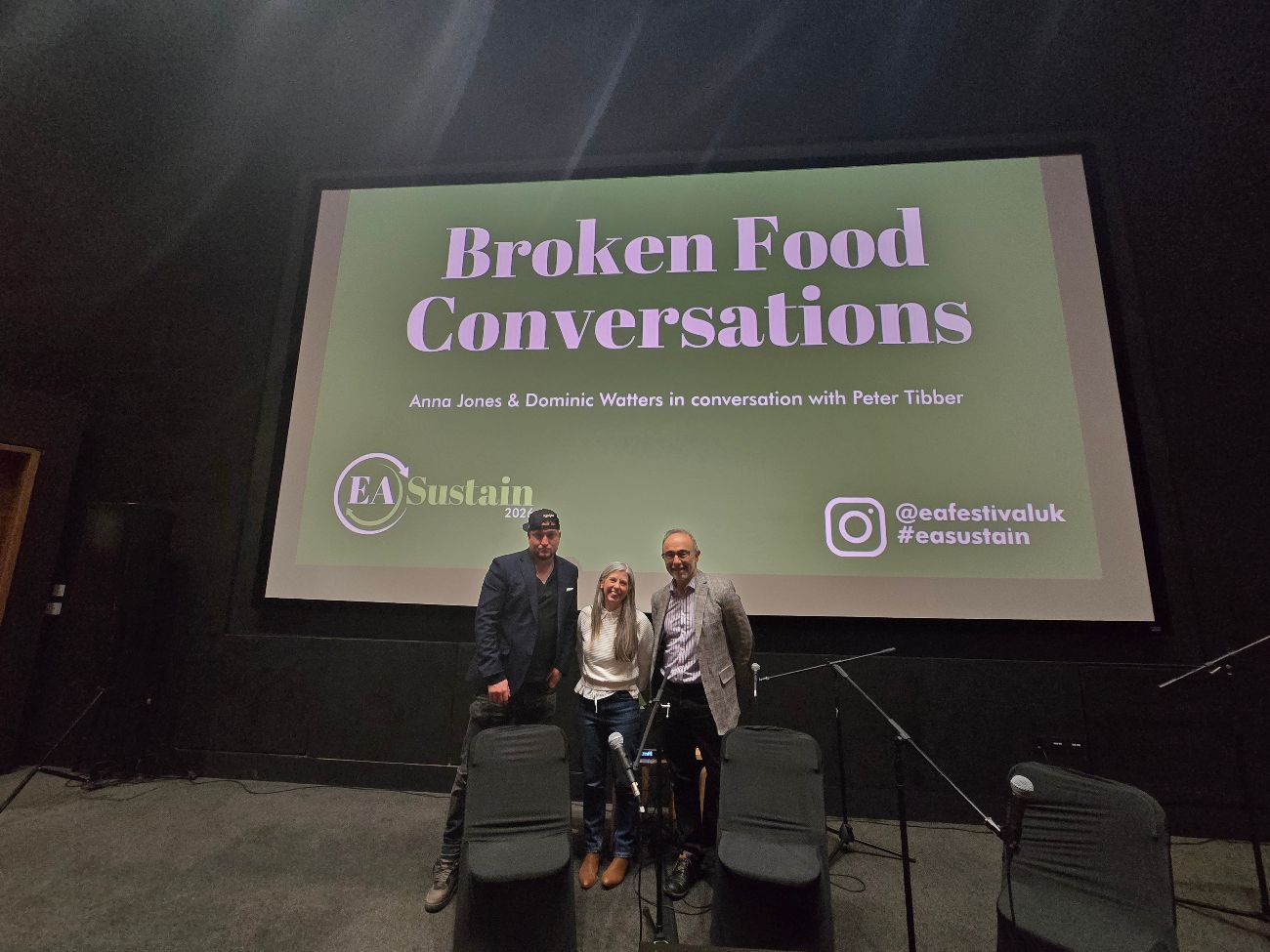
We’re in the middle of a lively Q&A, in front of a large audience at EA Sustain – a biennial festival about environment, culture and entrepreneurship. The session is called ‘Broken Food Conversations’, chaired by the former British Ambassador to Colombia, Peter Tibber. I'm on the bill alongside Dominic Watters. He's an urban food poverty campaigner, I'm a rural farmer's daughter. I’m talking about my book ‘Divide’ and the cultural disconnect between farming communities who produce food and urban communities who consume it. Dominic is talking about the experience of living in a ‘food desert’ on a deprived housing estate in Kent.
He lays it out straight: “You can’t buy fresh fruit on my estate, but you can get a blueberry-flavoured vape.”

“Why can't they book a Tesco delivery?"
It’s not the first time I’ve heard Dominic speak. I watched him captivate an audience at the Oxford Farming Conference in 2025 when he spoke to a room full of farmers about being a low-income single dad raising a child amid food insecurity. I know the impact his words can have.
A shocked murmur ripples through the audience – they are rapt. A sea of hands shoots up. Our audience is older and I strongly sense left-leaning, socially and environmentally conscious, and mostly middle to upper-middle class. Their questions are intelligent, empathetic and what I would expect – the evils of factory farming, the evils of corporate greed, the evils of supermarkets.
But the most telling questions are the ones put to me privately, quietly, away from the roving microphone:
“Why can’t poor or unemployed people grow their own food? Seeds are so cheap.”
“Why don’t people living in food deserts club together and book a Tesco delivery? Surely that wouldn’t cost much?”
The most honest Q&A you’ll ever read about food poverty
I don’t have the answers. The only person here with the knowledge and lived experience to answer these questions is Dominic – but no one asks him, and I know why. We’re all too scared of saying something wrong, or causing offence, or getting cancelled.
"If we’re too afraid to ask questions, how can we really learn?"
The thought niggles at me for days. If we’re too afraid to ask the questions we’re really thinking, how are we ever going to get our heads around food poverty? Without open conversations we're going to struggle to improve understanding and overcome prejudice.
It takes me a while to pluck up the courage to call him – how do I pitch this? We are from such different backgrounds. I’m a sheep farmer’s daughter, born and raised in the hills along the Welsh border, in a safe and stable environment, where I never once worried about where my next meal was coming from. Food just magically appeared, thanks to Mum. We weren’t well off, there wasn’t much money around, but hunger – proper hunger – is an alien concept to me. How can I write about food poverty?
Dominic grew up largely in South London but has lived on the same council estate in Kent for the past twenty years, raising his daughter as a single father. The estate has one way in and one way out, yet despite being surrounded by some of the country’s most productive farmland, fresh produce remains largely unavailable within the community itself. His experience of food insecurity, and the inequalities his community continues to navigate daily, sparked a determination to challenge the way poverty is often understood and discussed.
Today, he is the founder of Food is Care CIC and a PhD researcher at the University of Southampton, while delivering keynote presentations to organisations across the country. Dominic has gone from relying on emergency food support to influencing national policy discussions on food insecurity, while asking a deceptively simple question: when decisions are made about food poverty, whose voices and whose knowledge count?
When I finally speak to Dominic, I level with him: “People ask me questions I don’t know the answers to - but I think you will. Would you like to write an article together?”
And so, here it is – the most honest Q&A you’ll ever read about food poverty.
Some are questions I’ve been asked, or comments I’ve remembered from past conversations, or things I’ve even wondered myself. Some are questions Dominic has been asked, or comments he’s received on social media. They’re all real and genuine, and we both agree it’s time to get them out in the open.
I pose the questions but, from here on, the voice you’re reading is Dominic’s. Over to him.

To begin…
"From the outside, food poverty can look like a series of simple problems with simple solutions."
These questions are often asked from a distance, and I’ve had to welcome that discussion. From where you stand the answers may look obvious. From where I stand, life operates unevenly. Many of the people trying to address food insecurity – policymakers, academics, charities and NGO leaders - are often deeply well-meaning. In recent years there has also been a growing emphasis on listening to lived experience and bringing communities into these conversations. That shift matters.
But it doesn’t go far enough, because being occasionally close to these issues is not aways the same as living within them day after day. When discussions about poverty are still shaped largely from outside the environments most affected by it, gaps can emerge between how problems are understood and how they are navigated in everyday life.
From the outside, food poverty can look like a series of simple problems with simple solutions. But from within the places most affected: often overlooked, forgotten, and marginalised, those same solutions can sometimes reveal how often the realities of communities like mine remain unheard within discussions meant to address them.
1. “Why don’t people living in food deserts club together and book a Tesco delivery?”
"Food decisions are often made day by day, sometimes hour by hour, depending on what is left in the account or jar."
In my community, food decisions are not always made weekly or monthly. They are often made day by day, sometimes hour by hour, depending on what is left in the account or jar, what the children need, whether the electric is on emergency, and what else might come up. When you literally do not have the money, no amount of budgeting can change that.
It also assumes that households all need the same things. But in reality, people are managing very different needs - health conditions, dietary requirements, children who will or cannot eat certain foods, work patterns, caring responsibilities, and different levels of storage or cooking facilities.
Food is not just about having enough of it. It is about having the right food for the people in that household. It is not that people do not help each other. In fact, some of the research I am currently doing with my neighbours shows the opposite. People do support one another through lifts, shared meals, small loans, childcare, checking in, and informal food sharing. But that cooperation exists within instability, not outside it.
From the outside, these issues are often treated separately. But in everyday life, transport, money, energy, relationships, and food access are constantly interacting. That is why simple solutions often fail - not because people lack common sense, but because the conditions needed to make those solutions work are not always there.
2. “They say they can’t afford food but they all have big TVs and the latest smartphones — how can that be?”
"A smartphone is not a luxury anymore, it is essential."
Let me say this clearly: the majority of my neighbours work. One works as a SEND (Special Educational Needs and Disabilities) school bus operator, another manages a coffee shop, another works as a customer assistant in a jewellers. Poverty is not simply a story about unemployment. When my daughter was younger, finding work that fitted around school hours as a single parent was far more complicated than many people realise.
These are the kinds of pressures that often remain invisible in discussions about poverty. A smartphone is not a luxury anymore, it is essential. It is how people manage Universal Credit, apply for jobs, communicate with schools, access services, and stay connected to family. Without it, many people are effectively cut off from modern life. It also assumes that everything people own has been bought recently or at full price. In reality, many items are bought second-hand, passed on, repaired, or paid off over long periods of time. They may reflect what life looked like months or even years earlier - not what someone can afford now, especially as the cost of living continues to rise.
These are not necessarily signs of excess. Sometimes they are simply part of how people manage life under pressure, small forms of comfort or escape within environments that can often feel relentlessly difficult. The real question is not why someone has a phone or a television. It is why, despite having the basic tools needed to function in modern society, many people still cannot reliably access enough of the right food for their family.
3. “Why can’t poor or unemployed people grow their own food?”
"I grew vegetables and herbs on my estate using discarded materials, a broken drawer, parts of an old hoover, whatever I could find."
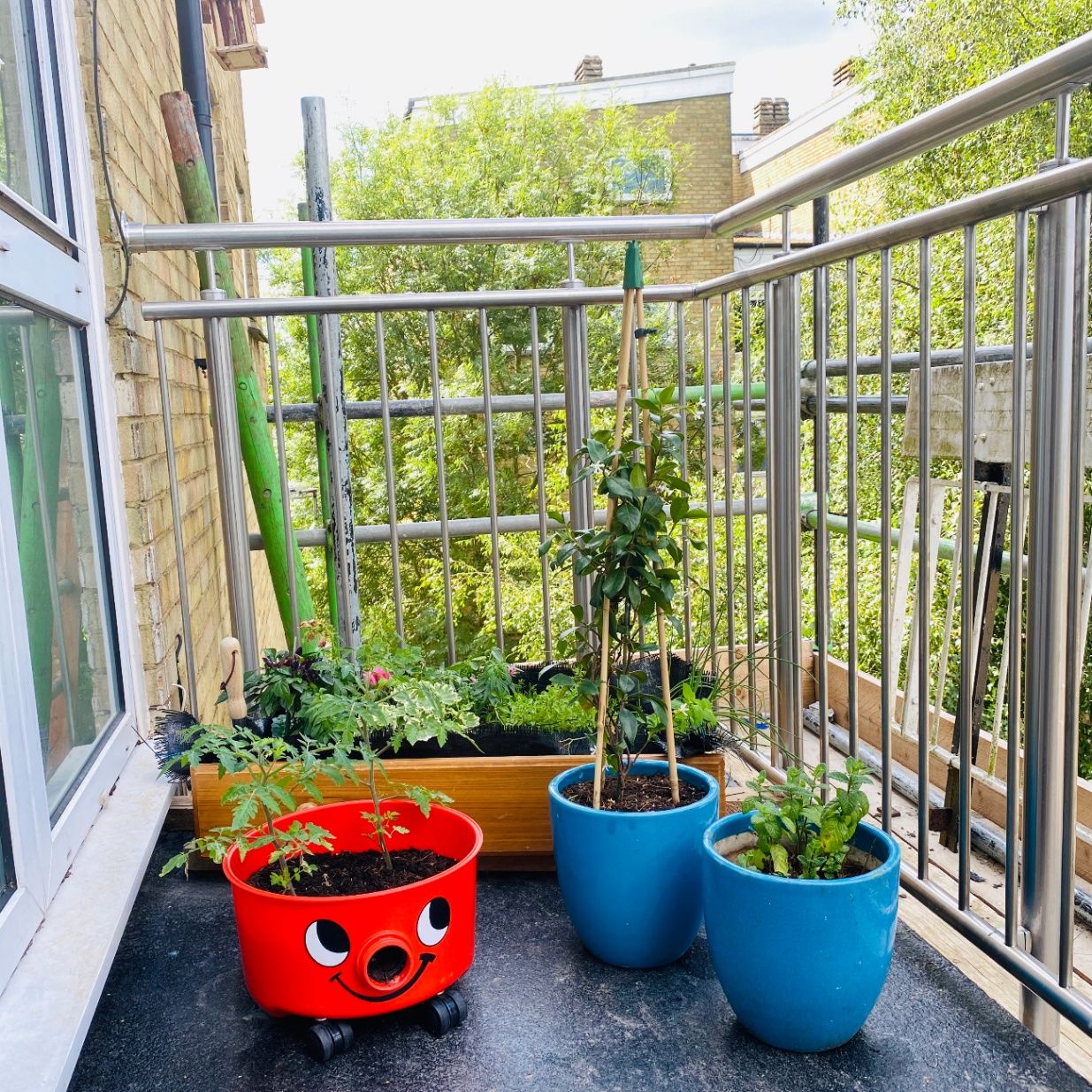
Growing your own food is often seen as a positive, even empowering solution. But it assumes access to space, time, stability, and the right conditions — and those conditions are not always there.
During COVID-19, inspired by projects growing food in urban spaces, I grew vegetables and herbs on my estate using discarded materials, a broken drawer, parts of an old hoover, whatever I could find. It was about trying to create some access to fresh food where there wasn’t any.
But what you can grow in a small, improvised space like a balcony is not enough to feed a family a consistent, nutritious diet. It can supplement food access, but it cannot replace reliable access to food. Many people living in blocks of flats do not have enough outdoor space to grow enough food to feed your family.
Sometimes these kinds of solutions can unintentionally shift a structural issue onto individuals. In places like my estate, the problem is not a lack of effort. People are already showing resilience, creativity, and adaptation every day. What this really highlights is something deeper: people are constantly trying to make difficult environments work. But there are limits to what can be achieved within those conditions. The bigger question is not whether people can grow food themselves. It is why access to fresh, nutritious food is not consistently there in the first place.
4. “People don’t know how to cook anymore — they’re lazy.”
"Cooking a healthy meal becomes much harder when the electric is on emergency, transport is unreliable, or the council estate shops are dominated by ultra-processed food."
On the surface, this can look like a question of skills or effort. But it overlooks the conditions people are living in. Across the world, some of the most valued food traditions have come from communities working with very limited resources. In Italy, cucina povera is built around simple, affordable ingredients — pulses, vegetables, bread — transformed into something sustaining and flavourful. The same can be said of traditional British dishes like Lancashire hotpot or bubble and squeak.
Many people already know how to cook and how to make food stretch. But cooking is not simply about knowledge. It requires energy, reliable appliances, functioning kitchens, storage space, and affordable fuel. Not everybody has those things consistently.
From within what I describe as living experience – the ongoing navigation of inequality rather than something remembered or retrospective - people are already making constant effort, stretching meals, planning around children, skipping meals themselves, budgeting day by day, and trying to hold households together under pressure. What can appear from the outside as a lack of effort is often exhaustion, instability, and constraint.
Cooking a healthy meal becomes much harder when the windows do not fully close, the electric is on emergency, transport is unreliable, or the council estate shops are dominated by ultra-processed food. So often, this is not about laziness. It is about whether people have the conditions needed to cook consistently, and for many communities, those conditions are increasingly fragile.
5. “They look like they’re getting enough food to me! People are getting fatter.”
"We get flavour without nutrition."
People often associate food insecurity with visible hunger. But food poverty does not always look the way people expect it to. It is not simply about whether somebody is eating. It is about what they are able to eat, how regularly, under what conditions, and with what long-term impact on health.
The cheapest and most accessible foods are often high in calories, salt and sugar, but low in nutritional value. In my estate, we often have access to flavour, convenience, alcohol, vaping products, and ultra-processed foods, but no access to fresh, nutritious food. There is both power and neglect in that. We get flavour without nutrition.
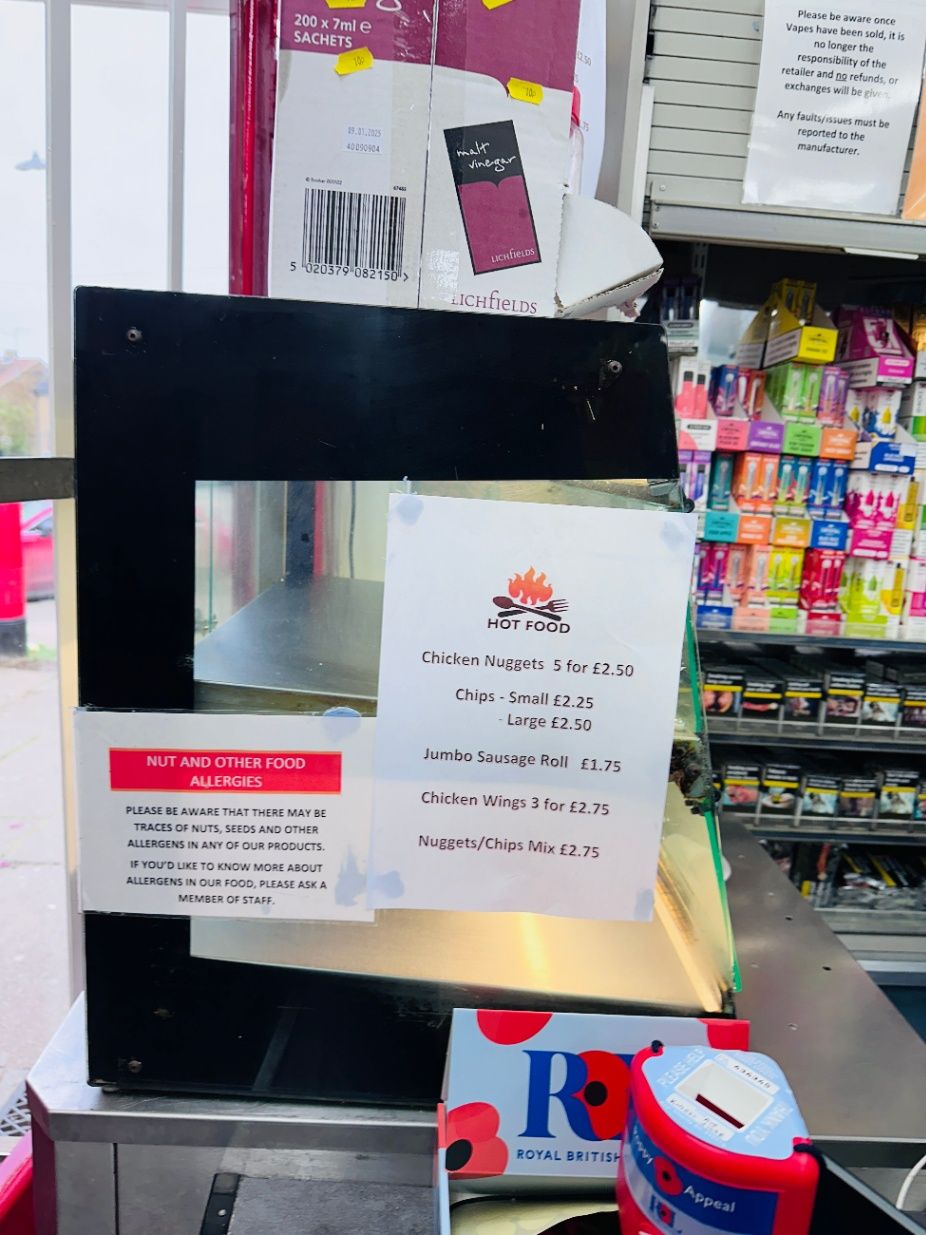
Many of my neighbours work hard, try to feed their families well, and are doing everything they can to get by. Some are also obese. But appearance alone tells you very little about whether somebody is food secure. What it often reflects instead is the food environment people are living within, environments where fresh food is limited, but cheap, filling, heavily processed alternatives are everywhere.
Food insecurity is not always visible in the way people expect. Sometimes it is hidden inside exhaustion, poor health, stress, obesity, emergency meters, or the daily negotiation of environments that were never designed around wellbeing in the first place.
6. “The Government spends so much on welfare — why are people still struggling?”
"There is often a difference between how support is designed and what people are actually dealing with in practice."
From the outside, it can seem like significant amounts of money are being spent, so people should not still be struggling. But the issue is not simply how much support exists. It is how that support is structured, accessed, and experienced in everyday life.
There is now far more discussion around food insecurity than there was even a few years ago. More reports, more strategies, more public concern. That shift matters. But in many of the communities most affected, it does not always feel like anything fundamental has changed.
One of the biggest problems is distance, not just physical distance from supermarkets or services, but institutional distance from the realities people are living day to day. When organisations, policymakers, and institutions are working away from the communities they are trying to support, it becomes difficult to fully understand how different pressures interact in everyday life.
I often find myself moving between policy spaces and council estates, and the gap between those worlds can sometimes feel profound. There is often a difference between how support is designed and what people are actually dealing with in practice. For example, there is increasing recognition of the importance of school food and Free School Meals. But in many of the communities I am part of, once children leave the school gates, the local food environment is still dominated by cheap ultra-processed options.
That is why I increasingly argue that food insecurity cannot be understood through food alone. Housing conditions, transport, energy costs, local retail environments, insecure work, and stigma all shape what becomes possible. So this is not simply a question of how much money is being spent. It is about whether support meaningfully connects with real life - and for many people in estates like mine, there is still a significant disconnect between the two.
7. “You can feed a family for 30p a day — food is cheap.”
"This calculation assumes time, planning, bulk buying, reliable transport, access to large supermarkets, storage space, functioning kitchens, and affordable energy to cook with."
I understand why this gets said, because on paper food can appear cheap. But those calculations often rely on ideal conditions that many people simply do not have. They assume time, planning, bulk buying, reliable transport, access to large supermarkets, storage space, functioning kitchens, and affordable energy to cook with. They also rarely account for the extra costs many poorer households face, including higher energy costs through pay-as-you-go meters.
Food is not just about price. It is also about availability. In some areas access to fresh, nutritious food is limited. In my estate, in what is often called the “Garden of England”, you can buy blueberry-flavoured vapes and cherry vodka more easily than fresh blueberries or cherries.
That contrast says something important about how the food system is structured and who it is designed to serve. In many council estate convenience store food environments, ultra-processed foods do not simply exist alongside healthier options they dominate the local environment. They are often the cheapest, most visible, most accessible, and most heavily marketed foods available.
More recently, through research in estates within what has historically been described as the ‘Bread Basket of Britain’, Lincolnshire, I have been struck by how similar many of these patterns look across very different parts of the country. Different regions, different local authorities, but often the same structural inequalities shaping everyday food access. What this increasingly reveals is that food insecurity can exist in the shadow of abundance. So framing this purely as a matter of personal choice misses something fundamental. For many communities, this is not an occasional challenge — it is the structure of the food system they are expected to live within every day. Food may appear cheap in theory. But the kind of food needed for a healthy, stable diet is often far less accessible in practice.
8. “Why don’t you just get a job?”
"I have a job. Work does not automatically protect people from hardship, instability, or food insecurity."
I have a job. Actually, two jobs, and the majority of my neighbours are working too.
From the outside, work is often presented as the straightforward solution to poverty. Across the country work does not automatically protect people from hardship, instability, or food insecurity. I am speaking here as a single parent living in a council estate flat, at times with nothing in the fridge and the gas on emergency. Where the bins are rarely collected. Where the windows do not fully close. Where black mould runs through parts of the block. That is not a position of choice. It is what happens when different pressures begin stacking on top of one another.
I wanted my daughter to attend a good primary school. But doing that from my estate meant multiple buses each day, unreliable transport, and trying to fit work around school hours as a single parent. The practical realities are often overlooked in wider conversations about poverty.
The practical realities are often overlooked in wider conversations about poverty.
I am often told not to take these things personally. But when you are living within those conditions day after day, it can feel as though the environment itself is constantly working against your ability to move forward. That is part of why I began developing the Four Visual Pillars: A Redefining of Food Insecurity - because food insecurity is rarely just about food.
This is not about a lack of willingness to work. It is about whether the work available actually provides stability, dignity, and the conditions needed to live well, and for many people, it still does not.
9. “Why don’t people just budget better or shop cheaper?”
"In many estates, the nearest available food is also the most expensive."
This assumes people have far more control over where and how they shop than they often do in reality. Budgeting and shopping cheaply rely on stability. They assume access to reliable transport, affordable supermarkets, storage space, functioning kitchens, time to plan meals, and enough money available at the right moment to bulk buy or shop ahead.
But many families are navigating life far more reactively than that. From within what I describe as living experience, people are often checking balances daily, topping up emergency meters, working around unreliable buses, managing childcare, juggling insecure work, and responding to unexpected costs as they arise. What can look from the outside like poor budgeting is often people managing extremely limited options as carefully as they can.
In many estates, the nearest available food is also the most expensive in the long term — small convenience shops dominated by ultra-processed foods, with limited access to affordable fresh produce. So even shopping “cheaply” is shaped by the environment people are living within. So this is not a lack of discipline or responsibility. It is often the result of people trying to navigate structurally difficult conditions with very little room for error.
10. “If food banks exist, isn’t the system working?”
"Food banks are not a solution. They are a response."
Food banks are often presented as evidence that support is there when people need it. I have had to use a food bank myself, and more recently I have returned to food banks through my research and community work.
But from within what I describe as living experience, food banks are not a solution. They are a response. They can provide important short-term relief, and many are run by incredibly caring people doing vital work within difficult circumstances. But they do not address the conditions that lead people to need them in the first place. Food banks tell us people are surviving. They do not tell us the system is working.
There are also neighbours I know who would never use a food bank, even when they are struggling. For some, particularly older working-class residents, asking for that kind of help would feel like a deep personal failure. Others have a longstanding mistrust of formal systems of support and would rather go without than turn towards them. Food bank numbers tell us who is able or willing to access support; they do not tell us about everyone who is experiencing food insecurity.
Much of the national conversation focuses on future crises: food shocks, supply chain disruption, resilience planning, or what might happen during national emergencies. But for many communities, that sense of crisis is already part of everyday life: empty fridges, emergency meters, poor housing, unreliable transport, and limited access to fresh food.
For many people, crisis is not an exceptional event. It is the baseline condition they are expected to navigate. For many people growing up in my estate blocks, food insecurity is not a future risk - it is the starting point. So the presence of food banks does not demonstrate that the problem has been solved. In many ways, it reflects the opposite.
To conclude, how did these questions make you feel?
These questions matter, because they reveal how much distance still exists between perception and reality. I am trying to speak from places that are often overlooked: households with nothing in the fridge, flats running on emergency meters, estates where fresh food is difficult to access but flavours and ultra-processed options are everywhere, and communities navigating pressures that rarely appear in policy documents or public debate in their full complexity. In these environments, it is rarely one issue alone. Housing, food, fuel, transport, work, care, and health all interact. The pressures stack in ways that make it harder not only to get by, but to live well.
It should not take a crisis, or even a war, to make food security a priority. But for many communities, that sense of crisis never really ended. COVID-19 did not create these conditions. In many places, it simply made visible realities that people had already been living within for years. That is where my work through Food is Care CIC begins: not from outside communities, but from within them. If this article does anything, I hope it helps make visible what is too often unseen. Not just about hunger, but the daily navigation of structurally unequal lives.
The communities most affected by food insecurity should not simply be consulted after decisions are made. They should help shape how those decisions are made in the first place.
For more information on Dominic's work, visit foodiscare.org.uk
He can also be found on LinkedIn