A Question of Balance
How 'efficient' is your fieldsport? Is it all about hope, anticipation, disappointment, enjoyment .... or just about bag size?


There have been questions raised in Scribehound about the ethics of driven game shooting, perhaps most eloquently expressed by Jonny Carter. Many feel unease, some even despair, but what is to be done about it if fieldsports generally are to continue?
We need to dig deeper into motivation. Shooting game birds is a recreational activity which people usually pay to do, whereas pest control is a service which people usually get paid to provide. Pest control entails killing as many pests as possible with minimal effort and cost. Recreational hunting involves maximising the pleasure element, the challenge, the man/days of enjoyment, per head of game taken.
This is the theory at least, but sometimes things go astray, and I think driven shooting is losing its way at the moment. It is all a question of balance. Let’s look at the crudest of indicators: man/days per head of game taken. Try going through your Game Books and tot up your figures. Are you a salmon fisherman? How many fish did you catch last season, for how many days of fishing? Is your figure 0.1 fish per man/day? Or 1.0? If you caught only one fish in ten days, do you feel you had a good season? Would one per day make you feel happy? Is one every second day a happy medium?
What about fox-hunting, a communal sport as it used to be practised before the ban? Maybe 30 people on horses, 20 in cars or on foot, catching a fox perhaps every second outing. That’s 100 man/days per fox or 0.01 foxes per man/day. Modest Hunts would be content with that scenario. For the Huntsman, thinking of his hounds and their enthusiasm to hunt, maybe they find two foxes a day, and catch one in four, a good ratio for a natural predator.
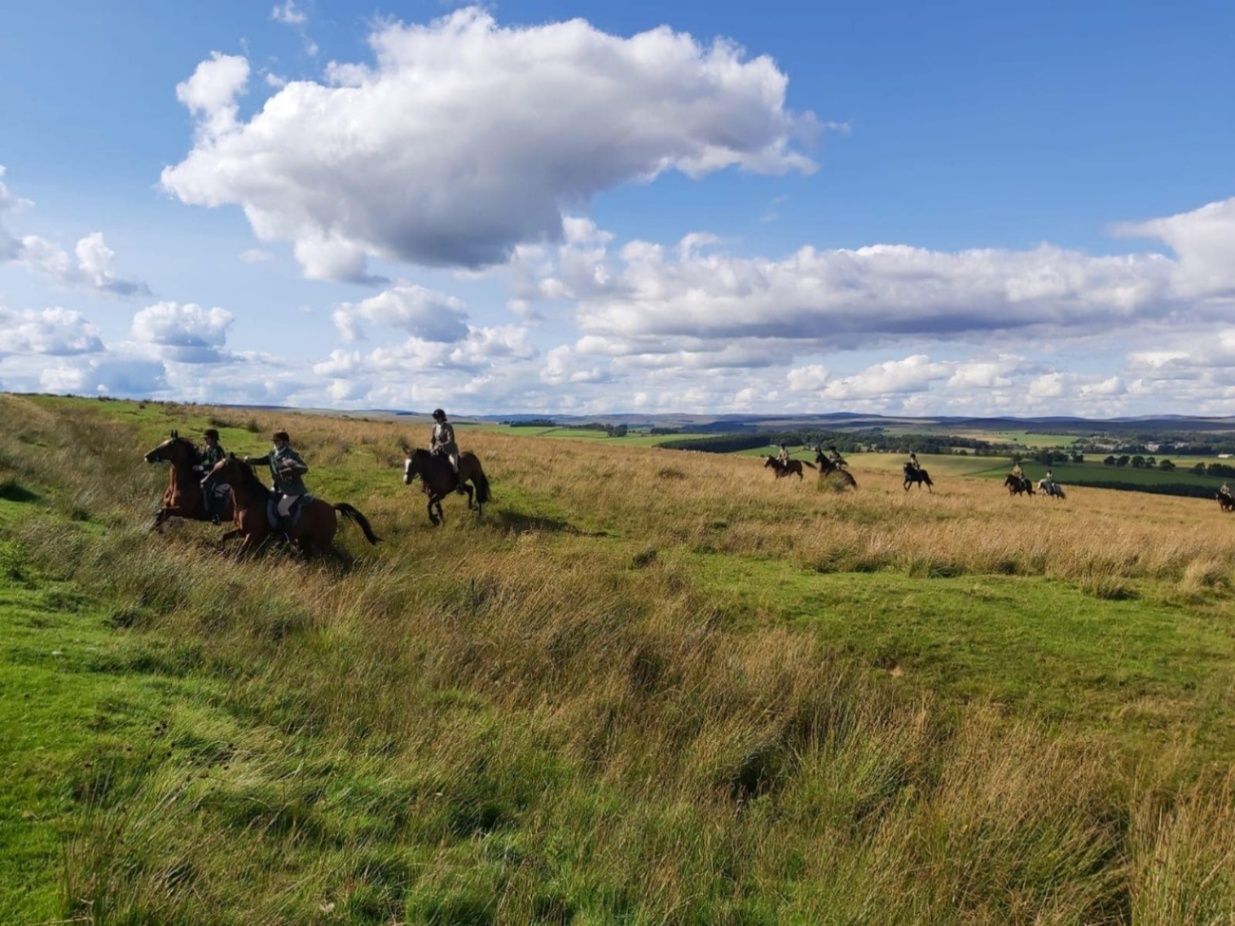
My chosen sport is crow-hawking with falcons. We limit our Field to 12 horses and don’t allow quads. Last season in 267 man/days we had 91 flights, killing 38 crows and wounding none. That’s one crow in 2.4 flights which is fine for a hunting falcon. That’s 7 man/days per crow or 0.14 crows per man/day. We used to hawk more days and kill five times this many, but I was younger then, and more active. We go for the corbies, the tough old crows that target ground-nesting birds and sheep cast out on the fells.
What about driven pheasant shooting? I asked the Game Conservancy in 1995 and they estimated that on average each Gun shot 10.3 pheasants. Looking at the figures for 2023, this is now about 27 pheasants per man/day. You could add in a few pickers-up operating free of charge, but the figure is still pretty steep. Shooting quite well at one bird retrieved for three cartridges, that means 54 shots either missed or wounded.
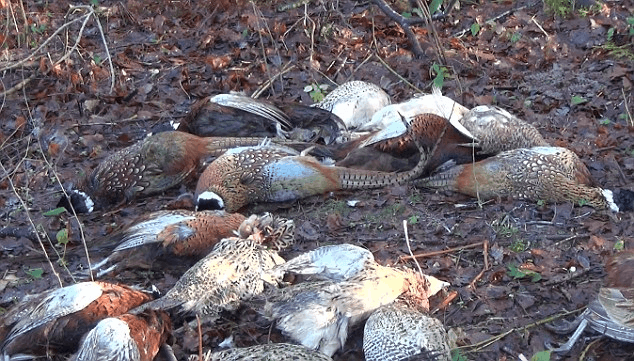
So in my index of ‘sport’, we have fox hunting at 0.01 foxes per man/day, crow hawking at 0.14 crows per man/day, salmon fishing at say 0.5 fish per man/day and driven pheasant shooting at 27 birds per man/day. Although these are rough calculations and the variables are quite large, driven pheasants have a kill per man/day 2,700 times that of fox hunting. Where should the balance be? And for your chosen sport, where is your balance?
In pursuit of enjoyment
But this is such a crude approach, surely ‘sport’ is much more subtle than that? It is not just about killing things. OK, what if we take killing out of the equation. What about simulated driven days using clays, or trail-hunting? With those you know you are not going to have blank days; every day will provide shots, or runs. But a real hunting experience is defined not just by the successes, but by the disappointments.
I expect you know the story of the fisherman who died and went to heaven. There was a superb trout river there and, lying on the bank, a beautiful fishing rod and a box of flies. He tried casting on a pool and the very first cast he caught a lovely shimmering trout. He cast again and in moments he’d landed another fish on the bank. He cast a third time and immediately a trout rose and took the fly. Then he started to understand. He’d been sent to Hell!
Things hoped for have a higher value than things assured.
The uncertainty that had made fishing a challenge for him had been taken away. The pleasure was destroyed. Fishermen struggle with this balance. They buy all the latest gizmos, the carbon rod, the latest floating line, and yet they eschew easy methods such as the worm or spinner and confine themselves to fly-fishing. This makes it harder, so there is more of a challenge, a balance between man and fish. This is what recreational fishing is all about, it is not simply a matter of catching fish. If he had wanted to do that, maybe for research purposes, he could have electro-fished and stunned the lot. This balance is how recreational hunting works and it taps straight into our natural psyche as predators. Too easy or too hard, and it doesn’t work.
We evolved as hunter-foragers. We have predator psyches. All predators fail most of the time. If they fail and give up, they die. So they try again, and again, until eventually they succeed. We are programmed for hunting failure. We all come from long lines of successful hunters who have had to overcome failure on a daily basis in order to survive. In fact the most powerful rewards system is not a reward every time, but at a lower frequency, maybe every fifth or seventh time. When we are reinforcing behaviour in training our falcons, we reward every fifth time or so, but not on a regular basis, on a random basis. Sometimes we reward at the first attempt, then maybe the tenth, then maybe the third. This elicits the strongest response. It is a variable ratio reward system. Slot machines in gambling arcades use similar reward frequencies for maximum addiction. If you reward every single time, the response is weaker. People don’t get addicted to coffee machines because the reward is guaranteed. They may get addicted to coffee, but that’s a chemical thing.
What keeps us going is hope, not the certainty of success. The fisherman who catches a fish at every cast finds he has gone to hell. Hope has been taken away from him. Equally if you say to a fisherman “You may fish in this lake as often as you like” but then say “Oh, by the way, there are no fish in it” you have destroyed that essential component, hope, anticipation. Outwardly he could go through the motions, haunting the bank side, casting and casting, but why bother? It is not the physical action of casting that brings him enjoyment, it is the driver of hope.
What if you took an intermediate position and told him that there was just one single fish in that lake. There is hope now, but the odds are long. Tell him it is just an average fish. If the situation was a commercial venture, maybe the cost of trying to catch the fish would not be worth the reward of catching it for food. Is it just a fish, equivalent to one he could easily buy in a supermarket? Or is it about a challenge, the achievement of catching the fish against all odds, an Old Man and the Sea scenario? What if the fish was the last remaining individual of an entire species; would he still want to catch it and destroy it? What if it was the biggest trophy fish ever recorded for its species; pride, status, prestige come into play. What if you told him that the fish was a massive Pike, a cannibal, a monster predator which made it futile to re-stock the lake with trout until it had been removed, a pest? Then the fisherman would have both a challenge and also feel pleased for removing a ‘pest’, a little bit of wildlife management.
For many fishermen, a fish that ‘fights’ is an important part of the experience, despite the fish being sentient. What if you tell him, there are plenty of fish in the lake, but the moment he hooks one he must cut his line, quickly knot a hook onto it, hook it into his own lip (or swallow it) and ‘play’ the fish until he has either got it ashore, or it has pulled him into the water. Hmm.
These are all different motives and scenarios, but with one common denominator: the presence of a fish. Take the fish out of the equation and there is no equation. Even the rumour of a fish is enough for hope to flourish. Thousands of people have searched for the legendary Loch Ness Monster.
Finding a balance
But balance is important too. The fisherman who went to hell had plenty of success, but no disappointment. We need to chase both. Shooting more and more pheasants in a day is chasing success, but neglecting disappointment, hardship. Rough shooting over spaniels or pointers emphasises the ‘search’ phase of hunting and minimises the ‘attack’ phase, the shot. This is the most fascinating part of hunting: getting oneself into a situation where you can make an ‘attack’. The shot, when it comes, is almost an anti-climax. The pheasant doesn’t understand the shot, pellets whizzing towards it at the speed of sound. It dies and the hunt is over. But whereas the shooter slips his safety catch and pulls the trigger, the falconer slips his goshawk. Far from being over, his hunt is just beginning. The pheasant, both from instinct and from experience, knows what a goshawk is and how to escape from her. She in turn quickly assesses the strength of the pheasant in comparison to her own. The pheasant may outfly the hawk, or it may seek cover. If the hawk is young and needs encouragement, the falconer will put his dog in and flush it at the ‘retrove’ (the second flush). But if the hawk is a good one, he will leave the pheasant with its glycogen-depleted white muscles and look for another point elsewhere. He wants his hawk to take pheasants in the air, not to tail-chase them until they put in.
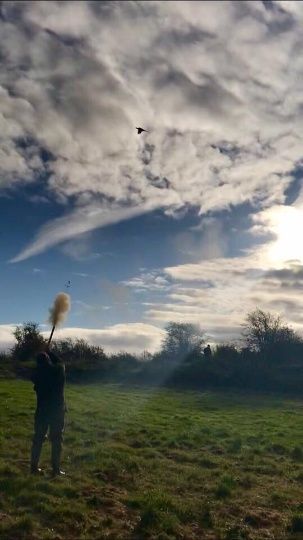
So we maximise the sport per head of game taken. The 27 pheasants for one day’s driven shooting would last the falconer a whole season, and then some. I gave up driven shooting 50 years ago, without even properly starting. To me it is such a waste. But how to make shooting less killing, more enjoyment, more disappointment? Guns are so efficient nowadays. The ban on repeating shotguns is overcome by using pairs of guns. The result is carnage. How to make game shooting less ‘efficient’? Muzzle-loaders? Clouds of black powder? Walking up with pointers? Grouse moors and all the wildlife habitat they provide are a huge asset. How can we sweat the asset rather than lose it, making the shooting less efficient and thus providing ten times the man/days per head and per season? How can we make the most of the peripherals, the dog work, the socialising, the fun and yes, more of the tough stuff, the days when you get soaked to the skin, when you walked all day and only shot a squirrel…
Ideas please.