…And a Curlew in a Spruce Tree
The rise of commercial forestry in the Scottish Borders leading to the demise of the ground nesting birds such as the Curlews.


With Christmas nearly upon us, the Christmas tree is up. Proudly in salute, like the statue of liberty. Dressed up in her Sunday best.
The big debate, what's on the top? A star or an angel? For us it's always the angel. This year we have broken with tradition, the Norway spruce replaced with a taboo, its larger Alaskan cousin; The Sitka spruce
Picea sitchensis.
Norway has been the tree of choice for Christmas on our family farm for as long as I can remember. But with its ability to shed all of its needles like a naked scarecrow come Christmas day, change was required.
On our farm we have only just managed to clear the aftermath of storm Arwin. The two small compartments are now felled, cleared and re‐fenced. We had forecast a Christmas bonus from our timber sales. Think again. Christmas is cancelled. These compartments have left us out of pocket. The Income received has not even remotely covered the cost of fencing and replanting. With thebenefit of hindsight we should have felled before Arwin. C’est la vie. I’ve asked Father Christmas for a crystal ball again this year.
Exploring Government grants, as one does, to mitigate the cost. Restocking grants are a chocolate teapot. News reporters have been insulted less by Donald Trump' than the Scottish government have insulted us; The upland habitat-diverse farmers, by its token gesture of a restocking grant.
Just two hundred meters away our neighbouring farm has been sold for trees. The farmer took the 'timber handshake’ and sold out to an investment fund. In his position who can blame him? Some locals would say that the place was "never farmed properly" but that depends on your definition of "proper farming." It was farmed on a low input basis and stocked lightly, a profitable one-man band for sure. This gave wildlife the chance to thrive.
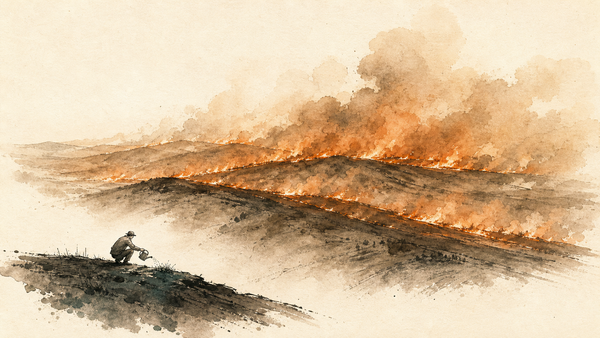
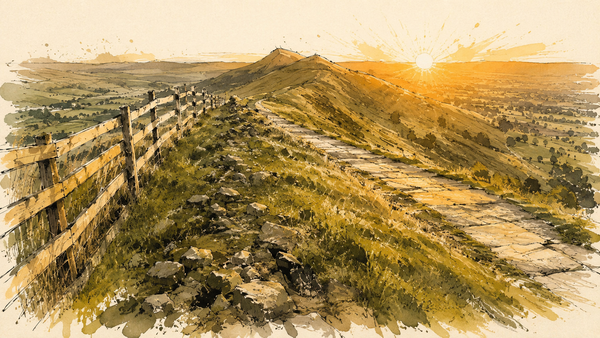
Come spring, as the last of the snow melted off the dyke backs and the lambs started to bleet, said upland farm buzzed with life. Like the trooping of the colour on Horse Guards Parade, a cacophony of sound and activity from the ground-nesting birds; skylark, meadow pipits, peesweeps, and curlews to name but a few. This land is all now mounded at the time of writing, preparing for the imminent plantation of the sitka, a process which looks like an intensive mole farm.

It's extremely bad news for the aforementioned species. Within a few years this neighbouring farm will be a sterile expanse of sitka, and I feel the loss of this habitat heavy in my heart.
I’ve always been a bird man. My grandfather and father before me have always surveyed the birds on our lands, and this is a mantel I’ve proudly taken on. Well thumbed leather bound notebooks going back to the 1950s adorn our bookshelves. Every bird that hasever been spotted on the farm documented, from the humble wood pigeon to the white tailed eagle. There’s nothing quite like the reassuring familiarity of the trills and warbles of the skylarks whist feeding sheep in the far fields, nor the thrill of spotting something new, as yet unidentified from the seat of the quad bike. It’s one of the best parts of my job and something I hope my children will be equally inspired by.
As a keen runner I stopped and spoke to a chap performing the bird survey on the land next door. When asked what will happen to these birds. His answer was simply "they will be displaced." Easy for the displacer but very difficult for the displacee to displace when all around is being planted. Where will they go?
The Curlew will be its first victim. Numenius Arquata. Both names given to describe its curved bill. The curve of the Greek word numenius (new moon) and of the Latin Arquata (archer’s bow)
Studies have suggested that there has been a 50% decline in the curlew population between 1995 and 2015. By 2035 the Curlew will be remembered only by old stories and paintings hung on walls. Hard to comprehend when this bird was still sold in butcher's shops in the 1940s. This decline is accelerating in Scotland under government plans to plant 36 million new trees each year. A plan set out mainly to offset carbon. A topic for another day! Targets should be less about numbers and more about endemic species supporting a rich and diverse habitat.
Interestingly there were three breeding pairs of Curlews in the last two years on my neighbouring farm none of which were recorded on the bird survey map when the forestry application was made. Hard to swallow. Within just a few years Curlews will be gone forever in our area.
However as owners of the land, like myself a fourth generation farmer, we are merely custodians of the land we own. We must be accountable for our decisions and their impact on more than just our pension pot.
In years to come I forsee myself louping the dyke to select our family Christmas tree, a Sitka, and the curlew will bear the crown. Replacing the Angel to remind my children of a bird they never met, once hovering over these uplands, barking and ‘whauping.’Now extinct to industrial afforestation.
Although the sitka does have some benefits; with needles as sharp as daggers it keeps my eighteen-month son away from the bobbles like an electric fence retaining cattle. Once bitten ‐ very much twice shy!