Are you sitting too comfortably? Then the comfort crisis has got you!
We're the ultimate hunting machine - but we don't tap into our instincts. Is getting out there and following original design model the answer to our ills?


Human the Hunter
It might be unfashionable to talk about it at parties, but we, the human race, are the apex predator on the planet. And I, for one, am carnivorous and hungry.
To stand in a supermarket, staring at food wrapped in cellophane, you are about as far removed from the initial design model of a human being as you can be. We are hunters….but sanitised, even emasculated. There’s no need to reach for a spear, dodge the odd sabre-toothed tiger and head out searching for dinner. Picking up a bag of peas from the freezer section doesn’t really count as ‘gathering’ either.
Now I’m not suggesting for a second we reverse the trend entirely and head out into the wilderness armed to the teeth and searching for our next meal, but there are things we can all do. Hunting, shooting and fishing keeps us in touch with the very reason we are made the way we are. And in these days when our wellbeing is scrutinised more than ever before, the benefits to maintaining your inner cave-person may surprise you.
I’ve started to feel very strongly about this for a little while now. I can’t put my finger on exactly when it began happening - but the signposts have been appearing along my journey for some years. Now, I find myself searching for opportunities to exercise the hunter within. Please allow me to explain.
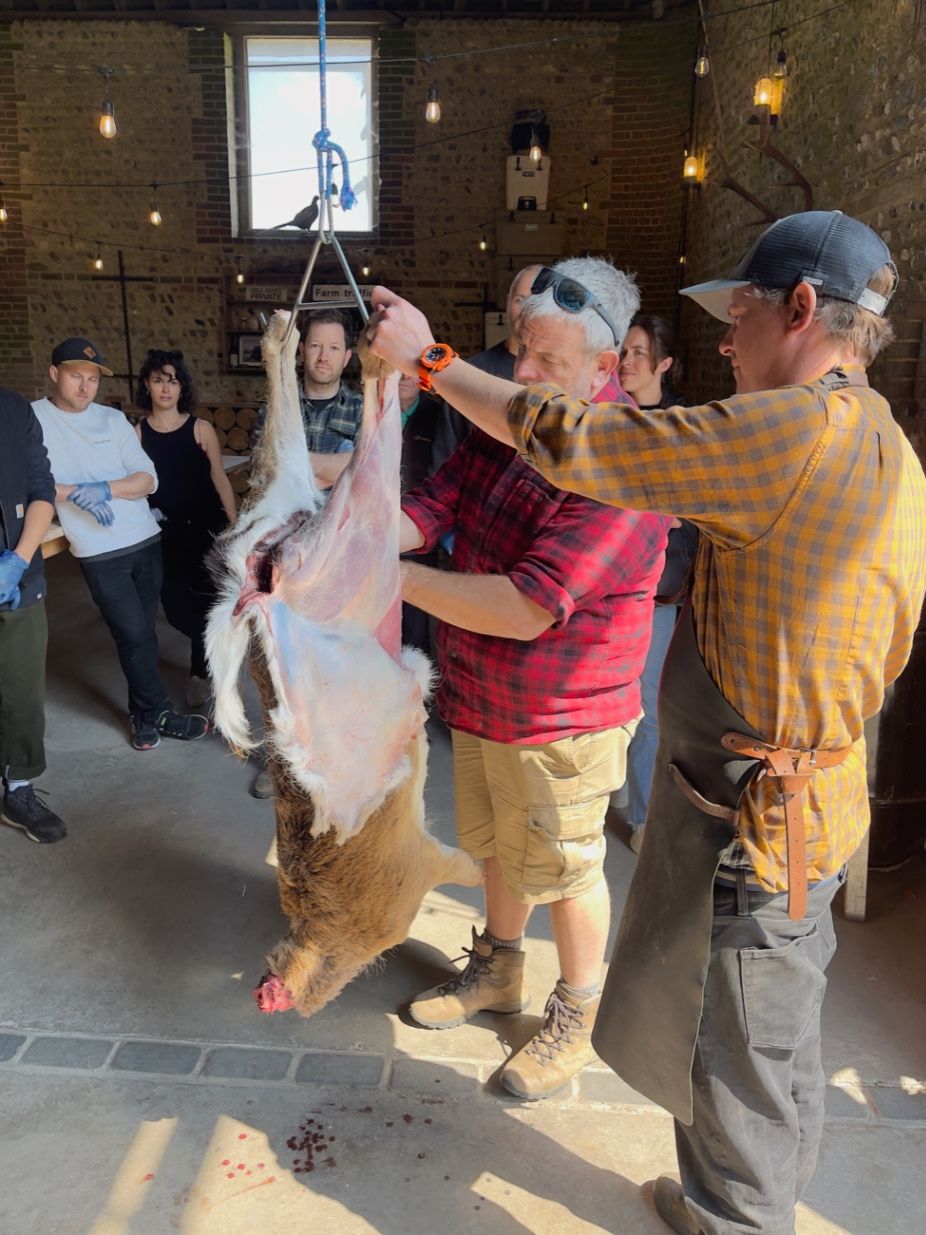
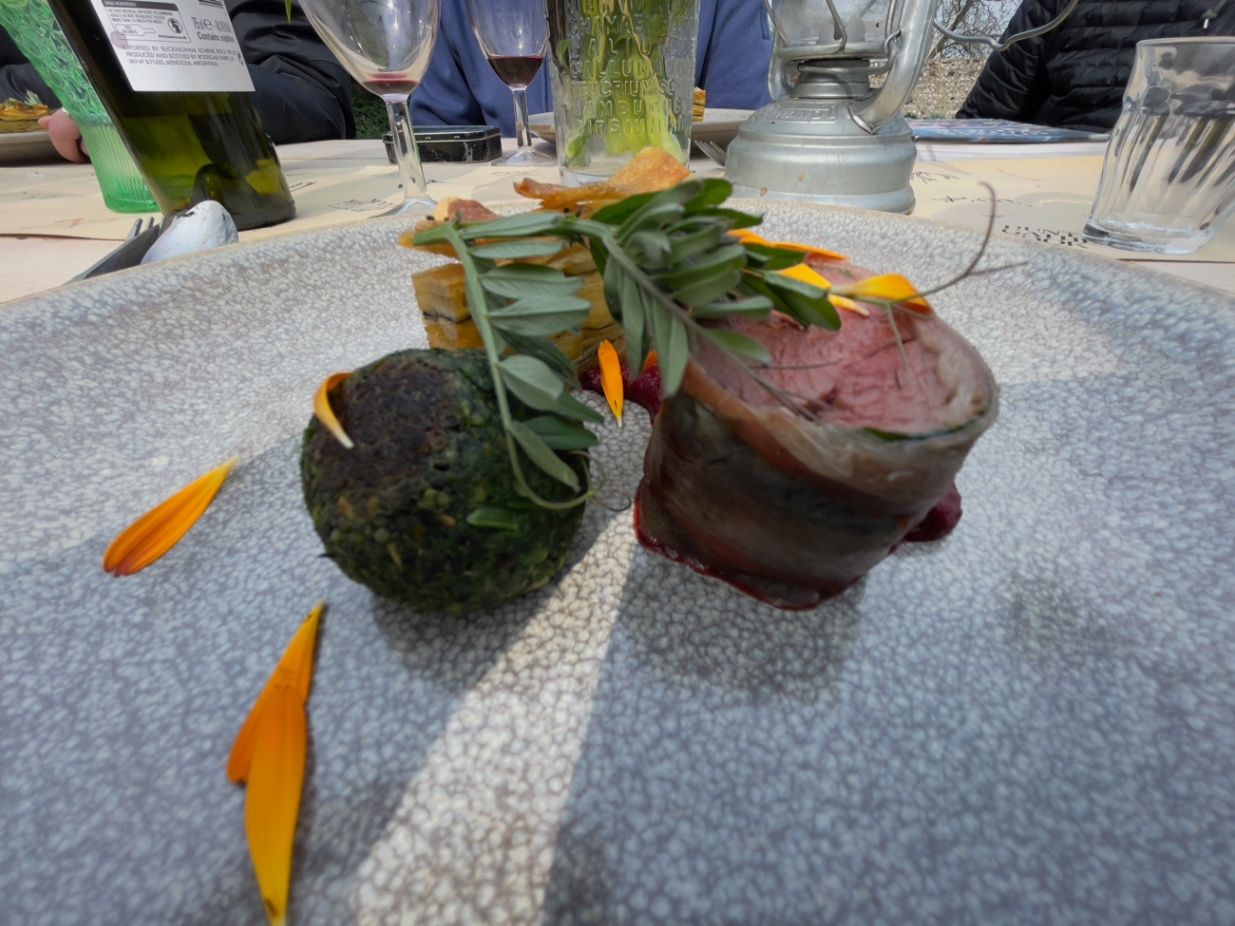
It’s like this. A year or so ago, as a birthday gift from my understanding wife, I had the joy of being sent on a group foraging weekend with chef Nick Weston (https://www.huntergathercook.com). Me and my best mate Jason Watling, both of us in our 50’s, went at it like a couple of excited schoolboys. We picked nettles, got stung to pieces, found wild garlic in a hedge, ate tempura hogweed with ponzu dressing and butchered a deer which we later had for the most incredible dinner, prepared by Nick and his team.
I’m pretty sure there was nothing on the plates that you could buy in a shop, and it was all cooked on coals or an open flame. It felt so good to be reconnected, and served as a reminder to me about a world that’s in danger of disappearing if it’s ignored. It also doesn’t have to be that complex. Once you realise there is another path to take, it becomes something you are compelled to search for. And then stars seem to align when you find it. Flavours are more intense, more satisfying. Less sanitised…we become more satiated. It just feels good. But why?
Go Wild
Something certainly happens when your inner engine is running in a wild environment. A switch is flicked, and I’ve been aware for some time I go into another gear when I need to. It’s a switch we all have. But did you know, we don’t only use it in the wild? Because we as creatures inhabit a very different world to that of our ancient forefathers, our ‘hunting’ instinct is often initiated in very unusual places!
I’ve understood since I first started to work in television, for example, that my nerves before going on screen for a live broadcast were caused by an ancient chemical reaction, designed to prepare me for the hunt and capture of a small, furry but very tasty animal. Butterflies in the stomach, sweaty palms, increased heart rate. Adrenaline is a fantastic performance enhancer, and there’s the release of feel-good endorphins that goes hand-in-hand with it. (Note: You’re not really in danger of being injured or attacked when you work in telly, even though there are a few sharks swimming about……)
So just how can we tame this beast within? What can we do in our gadget-heavy, convenience-everywhere world? The answer is simple - just fight back a bit!
As an angler, which I most definitely am, the chance to get back in touch with my ancient inner being, thankfully, isn’t too far away. Yes it’s true, these days we rightly extol the virtues of catch and release to help preserve fish stocks - but there are still thousands of places where you can fish for the table. One trout, or bass, or a couple of mackerel, will feed two people with no problem at all. It’s certainly not something I do all the time - but every so often I’m aware there’s a need to get back in touch with the hunter. It’s also my firm belief that angling simply HAS to retain a connection with catching fish and then eating them.
How does this manifest itself? I’ll try to paint you a picture of one of the examples that really made me think.
Fishing and Adrenaline
The first time I fished in a National Rivers Final, hoping to get the chance to represent my county as a fly fisherman, I was sent to the River Dee in Wales. This river is a wild animal of a thing. It’s up and down, filled with white water and endlessly deep chasms of darkness. I’m not ashamed to say it’s the only river I’ve so far fished that I’m actually scared of.
On the day, I was drawn on a beat which looked terrifying. A foaming torrent greeted me when I arrived at the river. The rocks to get to the fishable slack on the far side of the pool looked impossibly mountainous, and getting over there was a true test of courage and ambition. (OK. A small reality check. I might be over-playing my part here a bit…but my engine was running a lot and I was being watched by the England manager at the time. The rocks were there, but they may not have actually been “mountainous”).
Long story short, I managed to get over to the slack and in the first 20 minutes, landed three fish. I eventually won my section, heroically (!!) wrestling this beast of a river into some kind of submission. My concentration, because what I was doing was taking place in seriously dangerous conditions, was heightened beyond belief. One slip and I’d have been in the river. I was pumped - heart thumping and really flying. The adrenaline was coursing through me and I’m 100% certain my performance as an hunter improved as a result. It felt good.
The thing is, you too can achieve this surging feeling of satisfaction by getting back in touch with the hunter you are - even if it’s on a smaller scale, and without the need for any actual dragon slaying. Our daily management of mental wellbeing is under constant discussion. My view here is this. If you use the equipment for it’s intended purpose, then the well-oiled machine that is the human mind and body has a better chance of working properly.
Let’s bring this forward and talk about how you, the humble fly angler, can tap into that incredible feeling.
Fishing for the table
So there I was, freed from behind my desk, out in the fresh air and at one off the brilliant put-and-take fisheires we all have access to. Manningford, in Wiltshire, is a small stillwater with attitude. With a fly rod in hand, I was on a quest to catch dinner.
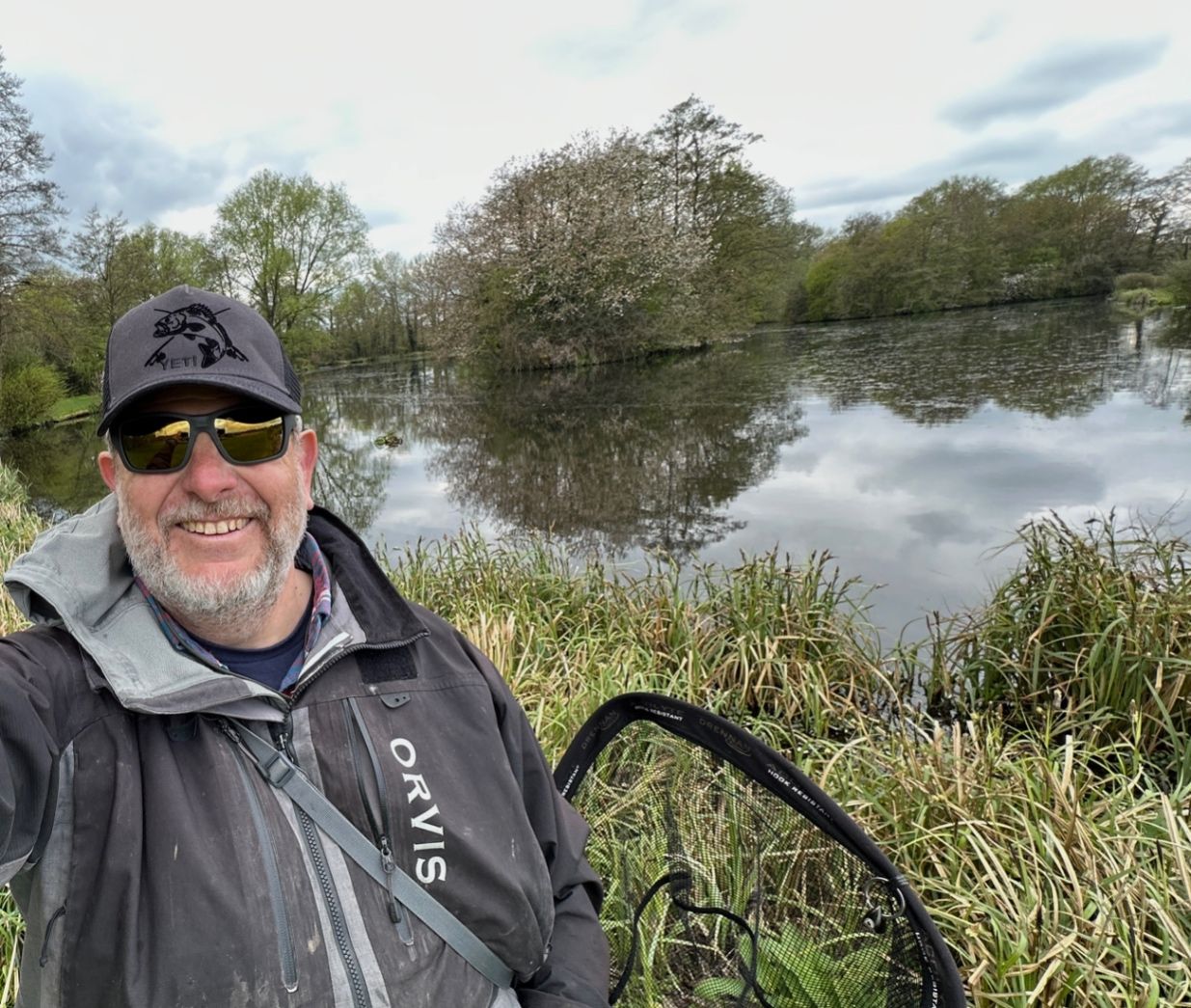
The experience here is what it’s all about. It’s certainly not convenience food - but something that’s hard won is so often the sweeter for it. Manningford is filled with rainbow trout reared to be taken for the table. To achieve that though, you have to catch one first.
The thing is, on most days the water is so crystal clear, you can see your intended evening meal swimming up and down. It can be mind-blowingly frustrating as you cast your fly at a likely looking candidate - only to see it totally ignore your offering and swim off into the depths.
The longer it goes on, the more annoyed you can become. Are you going to have to nip to Marks and Spencer on the way home after all, casting aside all those weighty principals and resting to something wholly unsatisfying?
But trust yourself - and let the hunter’s radar do the work. Two things to consider…First, the joy of being an angler, particularly when the fishing is hard, is working out how to solve the problem in front of you. That might be wind in your face, preventing your now excellent, text-book cast from reaching the patrol zone of said cruising rainbow. Or it might be that heavy overnight rain has coloured the water so much you can’t see a b****y thing!
If you can work out what the problem is, you can then progress toward finding a solution. A time will come when your instincts allow you to understand what’s going on and you’ll react accordingly. Your problem-solving raider starts working overtime.
Second, watch the water. The answers will probably be there, right in front of you, if you learn to read them. If fish are busy, then they are probably in a feeding mood. If they are torpid, sitting motionless in mid-water and not doing a lot, then they might be having a little kip. The reality is their mood will probably be somewhere in between.
Today the problem was…while there were active fish, they were skittish. They swirled, jumped, and spooked, sending ripples across the perfect surface of the big, open pool. Getting into a rhythm and solving the problem was going to be a test.
We’ve got three types of control point with fly presentation to try and catch. They are depth and location, colour and profile of fly and speed/style of retrieve. My best advice here would be to try and not change too many things all at once if it’s not working. Vary your depth or retrieve first and watch how fish react. Change fly and watch to see if it makes a difference to how the fish react. If you’re not getting takes, then you’re going hungry - so try to listen to those inner voices telling you to speed up the retrieve, or slow it down a bit. If all else fails, move to another location, cover another fish. Eventually it will come good.
There will be days when you bag up with your three-fish limit inside half an hour and wonder what all the fuss was about. There will be others when that tin of tuna at the back of the store cupboard is looking like a good option….
The rainbows at Manningford fight hard. Some of these fish can be seriously big, pull like a train and you feel you’ve earned your supper when you get them into the landing net.
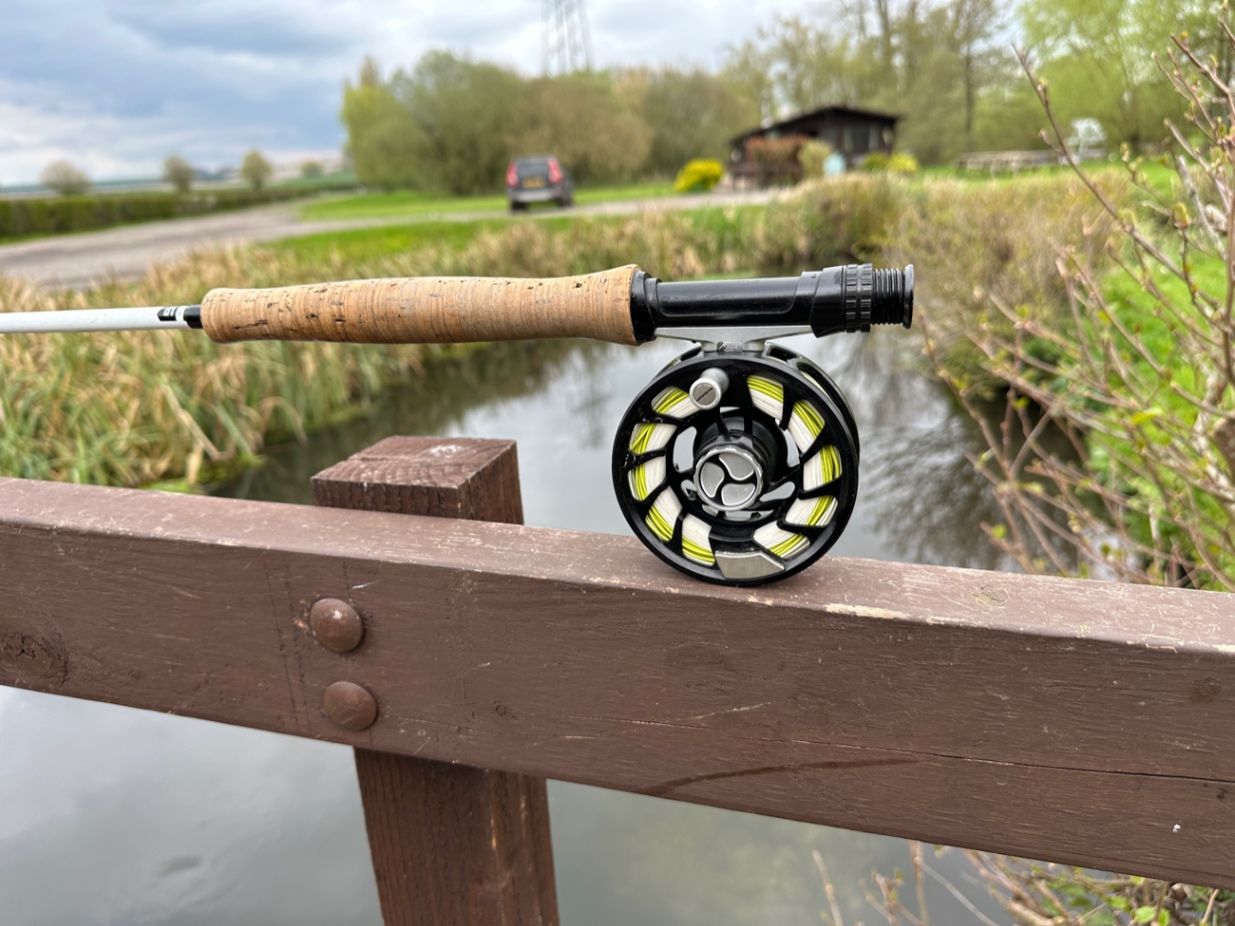
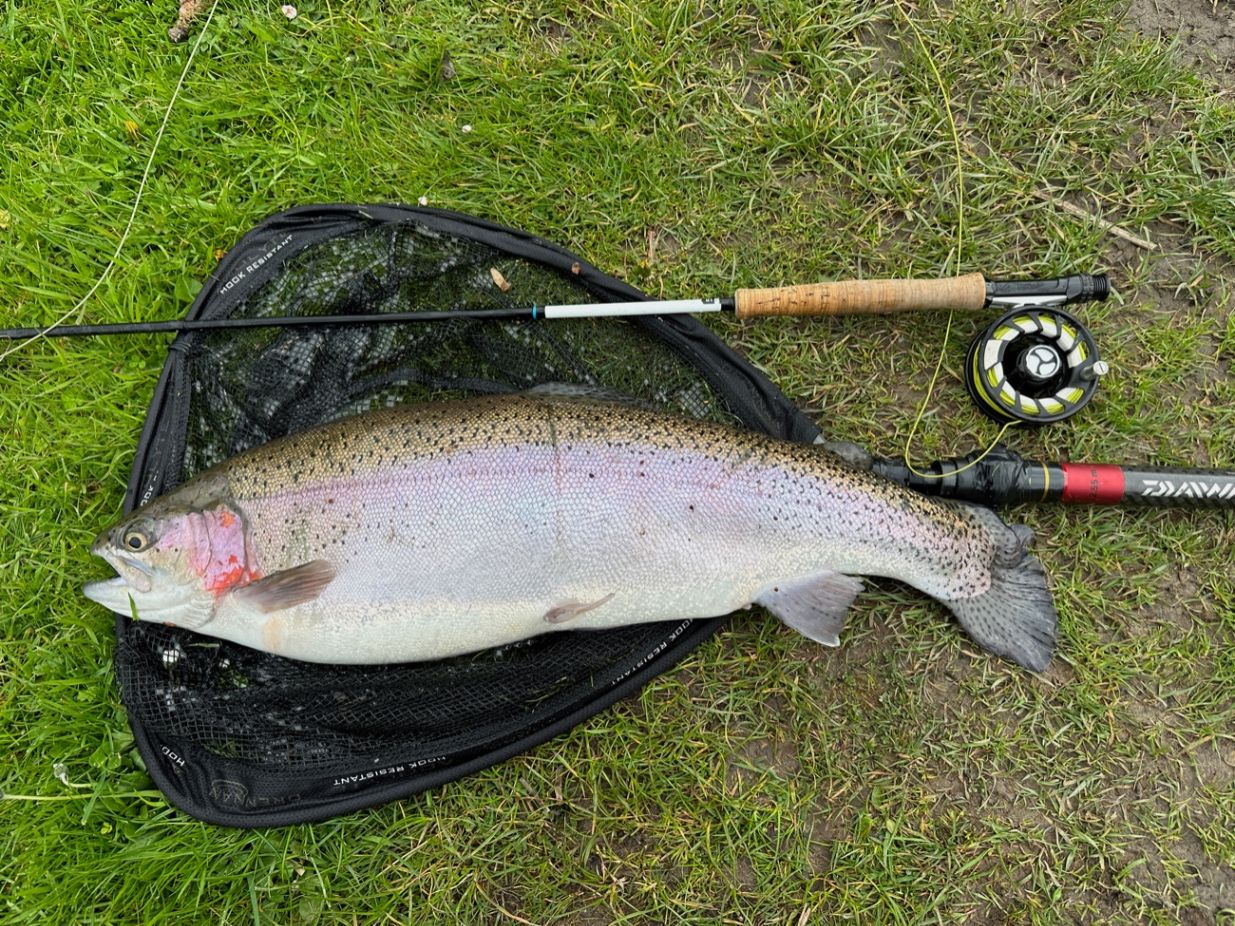
After wandering around for a while, trying fast retrieves on a floating line, I saw a fish cruising. It totally ignored my fly…until I paused the retrieve. Then BANG!! Everything locked up. My first fish of the day was on. The fight, on my 9’ Orvis Helios 5#, was an epic as every from a Manningford monster. After a few minutes, when diving lunged were cushioned and surges for freedom thwarted, the fish was mine. A lovely rainbow pushing 5lbs. It was quickly despatched and stored in my bass bag. Mission accomplished.
It serves, in these situations, not to be too greedy. Leaving feeding fish and walking away from that joy of presenting a fly, fooling, hooking and landing one is hard. It’s where catch and release comes into it’s own of course! I spent an idyllic two hours exploring the lake, casting at the odd moving fish, landing a couple more which went into the bag and would make it into the freezer for another meal before it was time to head for home. I felt great. A feeling I love. There’s always a little wry smile on my face as I leave a venue with dinner in the bag, knowing I’ve used the equipment as intended and will be delivering for my hungry family.
Watch out Nigella......Fordy's got his pinny on
Now onto the interesting bit…..these fish are delicious when handled properly in the kitchen.
Back home and time for the kitchen. You can of course just clean the fish and sling them onto a barbecue, pan fry or roast. What I decided to create instead here was a dish I was shown by Nick Weston’s team during a day on the River Test a couple of years back.
Here’s the recipe I use to make a gin-cured trout, served with horseradish, dill, lemon and crusty bread. Once you’ve tried it, you might never buy smoked salmon from a shop again. And think of the story you’ve got to tell alongside a delicious meal.
For best results, prepare the day before you intend to eat it:
For it, you will need:
2 x rainbow trout
45g Granulated Sugar
35g Sea Salt
A splash of good quality gin (vodka also works…)
Small bunch of dill or other fragrant fresh herb.
First, remove the fillets from two freshly-caught rainbow trout. No need to fillet the whole fish, remove the skin or indeed remove the bones. You’ll do this the next day when the fish has been cured. Just trim away the whole fillets.
In a deep dish you can fit in your fridge, mix the sugar, salt, gin and dill, ripped into small pieces. If you’ve got a dish that has a lid, perfect. If not, use foil. Don’t be tempted to use a shallower dish (see below - a lot of liquid comes out).
Add the fish fillets to the dish and mix together carefully but thoroughly.
Cover and put the entire dish in the fridge, leaving it for 24 hours. No more really as these fish tend to break down and become a little slimy if left in the cure for too long.
Next day - remove from the fridge, rinse away the remaining cure, dry the fish and place on a cutting board.
You may be surprised by the amount of liquid that comes out of the cured fish here. Essentially, the cure pulls the liquid from the fillets, shrinking them slightly and leaving them firm to the touch. If you’ve used a dish that’s too shallow, there will be an unpleasant fishy gloop all over the bottom of the fridge. This may seriously reduce your potential for hero hunter/gatherer status.
Using tweezers, remove the bones which should come free from the fillets quite easily. Run a sharp filleting knife under the fish to remove the skin if you’d like. To eat like this, slice the fillets finely, cured as you would smoked salmon (you can then smoke these fillets too). Serve with horseradish, fresh bread or a salad for a great starter or lunch dish.
You can leave the fillets whole, with skin on, and pan fry skin-side down for 3-5 minutes, then turn over for a further two. You can also oven roast or even barbecue for a couple of minutes to provide a delicious main meal.
Last time I did this a few weeks back, I even foraged a handful of wild herbs, some garlic chives from a forgotten corner of the garden and a few leaves of wild sorrel, chopped it into some mashed potato to serve with the crisp-skinned fillets.
A hunter/gatherer never had it so good….
Some further reading....
After writing this article, a friend read it, liked it and then suggested I should get hold of a book by an American journalist called Michael Easter. The book is called ‘The Comfort Crisis’. I actually listened to it as an audio book…and, if it’s possible to do this with an audio book, couldn’t put it down! If hunting, shooting and fishing is your bag, I highly recommend you give it a go. It's taught me an awful lot....