Crushing clays - there, here and everywhere
Some musings on British fieldsports and traditions seen through a Norweigan lens.

The carousel makes one eighth of a full rotation. A clay pigeon falls onto the throwing plate. The arm is in a tense position slightly behind the clay. The trap is eighty-eight yards away, the shooter is on stand 3. She is to call for a single C, which comes down quartering in from the right and lands twenty yards in front of the stand. She has placed one cartridge in each of the two barrels and is now closing the gun. All the other shooters stand with opened guns at their side, focusing on the task that awaits when it is their turn.
She chooses to start with the gun half-mounted, with the stock two inches below her shoulder. Then she shouts "Pull!". The voice is recorded by the microphone in front of her and converted into an electrical signal which is sent to the Datec-controller, which in turn sends a radio signal up to the receiver connected to the trap. The motor drives the arm three inches further towards the clay, past the point of no return, and then the spring does the rest. The arm slings the target over the throwing plate and into the perfect path the target setter has finely tuned the trap to deliver.

The starting speed is fifty-six mph. The target's spin makes it almost float on air on its way down. In the meantime, the shooter has perfectly mounted the gun, contacted the target at the hold point and is now just behind the approaching clay. She calmly swings the barrels through, a little past the target, and fires the first shot. The distance is thirty-three yards. Nothing happens. The shot was in front, she realises. The target still floats calmly down. The barrels are now ahead of it, so she measures out the exact lead she thinks the target needs now with a calm and fluid movement, gets the correct visual image at eighteen yards, pulls the trigger - and the clay is transformed to dust.
The shooter lowers the gun, opens it, catches the empty shells released by the ejectors and throws them in the dustbin. A waft of gunpowder smoke gently rises from the barrels, the shotgun is put down by the right foot, the heart rate drops by a few beats per minute, and the focus is directed to the next target on the program card. Then the next shooter shouts "Pull!"...
Different - yet the same
This description – taken from the Norwegian shooting scene – could be applied to any shooting ground in any country where sporting clays are enjoyed. Here in Norway clay shooting was officially introduced by the Norwegian Association of Hunters and Anglers (NJFF) in 1961. This was called “jegertrap” – hunters’ DTL. This was the primary practice for hunting walked up birds and birds shot over pointing dogs. These two forms of bird hunting are still predominant in Norway, where driven shooting is non-existent. When shooting “jegertrap” there are five stands, as in DTL, and each gun calls for one clay at a time. The target is arbitrarily thrown within a 45-degree sector on each side of the centre line, and with a maximum delay of 1,2 seconds. The shooter must practice Fitasc-mounting, and there is no full use. Only one shot is to be fired.
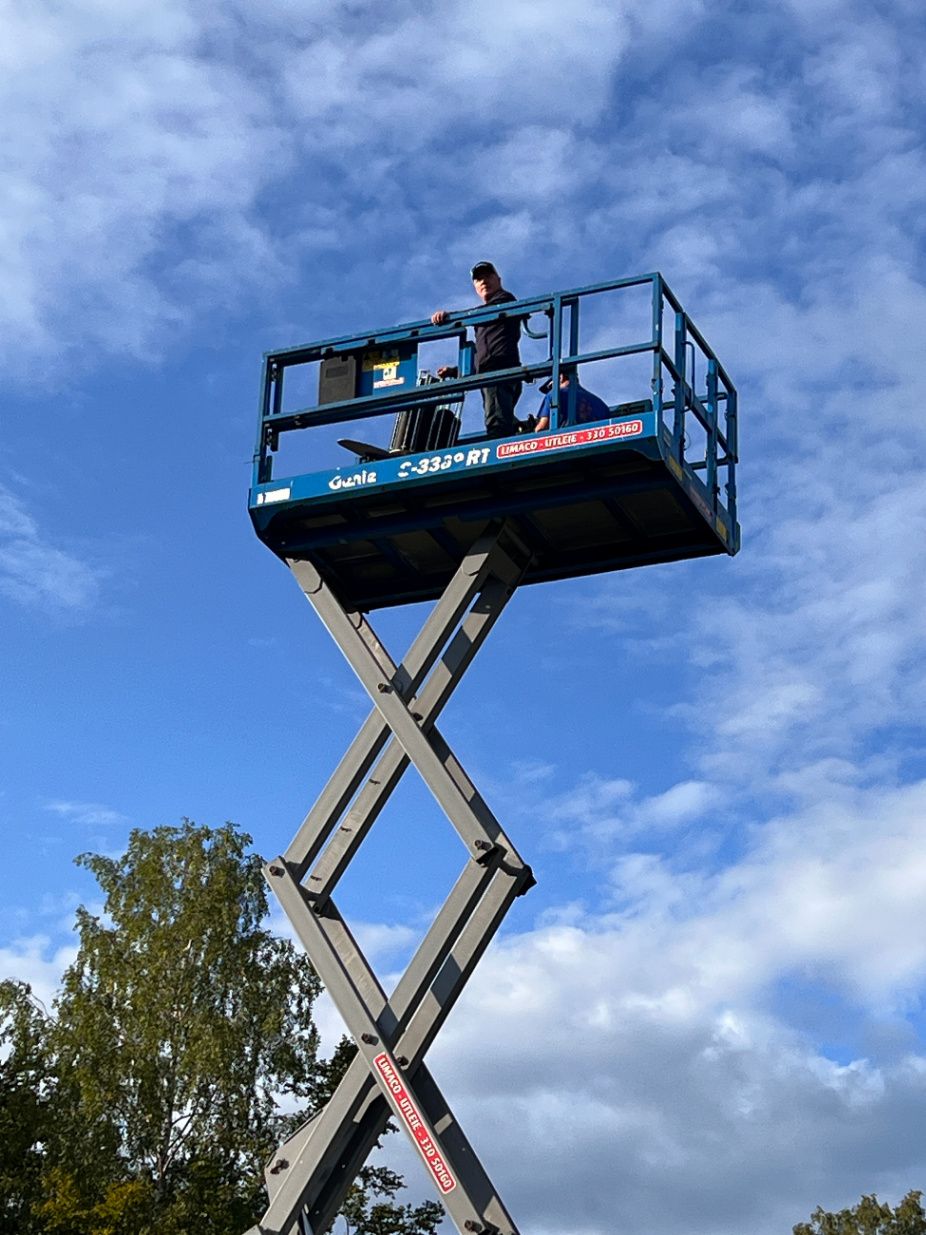
Here in Norway, there are only a handful of commercialised shooting grounds. All the other five hundred grounds are run by the local NJFFs and based on voluntary work from the members. This concept has its pros and cons, but some of the local associations have existed since 1896 and are still going strong, due to the everlasting engagement of hunters, clay shooters, anglers and gun dog owners.
The Norwegian equivalent to English Sporting is called “leirduesti” and evolved gradually to the first National Championship in 1994. Each stand presents two targets, either on-report or simultaneously. As most of our shooting grounds are based in the forest, the range seldom exceeds twenty-five metres, and most targets are shot withing ten to twenty metres. This to simulate realistic hunting situations under Norwegian conditions, where trees and bushes more often than not obscure the flight path of the quarry.
Compak gradually spread in Norway from around 2010 and is today a very popular sporting form in central and southern Norway. The National Championship, first held in 2016, usually sees 150-200 competitors. Sportrap is offered on just a couple of grounds but is highly appreciated by those who can take a miss or ten.
Due to Norway being such an elongated country (if you flip Norway from its southernmost point on the map, the far north will reach all the way to Rome) there are large parts, mainly inland and in the north, where “jegertrap” still is the king of clay shooting, but the technical development of traps and remote controlling gradually conquers the country.
Steel fear? Not here
For a couple of years lead has been forbidden to use on Norwegian shooting grounds. Fears of ricochets and a preconceived notion of inadequate ability to crush clays on ranges beyond thirty metres have more or less been replaced with the willingness to endure slightly more recoil in order to continue doing what we love. After millions of fired steel shots, no reports of dangerous ricochets exist, but when our most eager shooters go to the UK to enjoy targets up to sixty metres, the thrill of shooting lead cannot be surpassed.
The future is...
More and more grounds are subjected to outside pressure, be it complaints about noise or environmental issues, and one large ground just outside Oslo now risks being ordered to clear the ground and nearby brooks of lead and plastic wads at the cost of at least £10 millions. Some grounds take pre-emptive measures in order to survive, some are being closed down, and the majority is trying to find its way into the future in an increasingly more complex world.