Demi-Paradise to Dystopia: A Cultural Erasure of Rural Britain Part II
In light of new proposals threatening the very existence of hunting, I ponder on the last two decades of existential anxiety many rural communities have been feeling, and whether the countryside really is about to face a dystopian future under the next government

‘‘That England that was wont to conquer others
Hath made a shameful conquest of itself’’ (Richard II, Act 2 Scene 2)
The years succeeding the infamous ‘Ban’ of 2005 - that great legislative and symbolic sea change in the rural community - seem to have had a distinctively anxious, almost post-apocalyptic character to them. With the hammer-blow given to traditional hunting with hounds by the Labour government of the early part of the millennium, and the threats which game shooting has increasingly faced over the past decade or so, perhaps these recent years will be seen as the crucial fulcrum in the fight to preserve Britain’s rural community and heritage, the gradual erasure of which I discussed in my last article: (https://www.scribehound.com/lifestyle/s/horses/this-brightly-visualised-world-a-cultural-erasure-of-rural-britain). Nowhere is this more present at the moment than with driven grouse shooting, which, next to hunting, appears as the ‘soft underbelly’ of fieldsports and the likely target for future governments to thrust the knife into.
Two Decades of Anxiety (?)
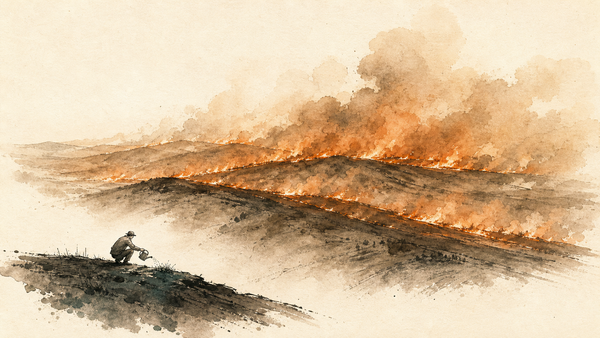
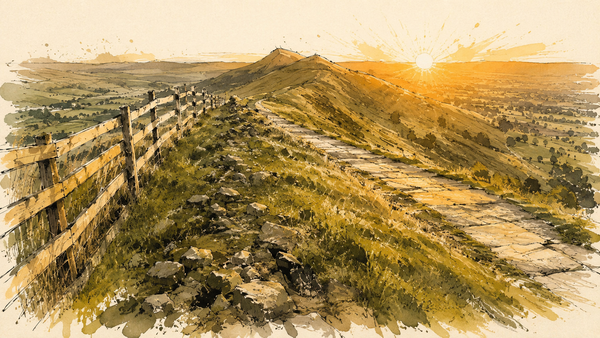
‘Another nail in the coffin’ is the phrase, used offhandedly by a local grouse keeper a few years ago when discussing upland regulations, which sticks in my mind. The last two decades, or depending on your persuasion, the last thirteen years of Conservative ‘rule’ (though I would question their hold on either power or policy since 2016) have felt like inching closer and closer to the edge, and eventual oblivion of the traditional rural way of life. Indeed, each season more that game shoots up and down the country are able to head up onto the moor, woods or stubble fields; each opening meet of hounds - supporters gathered excitedly in the farmyard - seems like a blessing rather than a rightful inheritance. It is a strange, anxiety-ridden existence - uncertain to the point of being tortuous on the one hand - and yet on the other, just as joyful as ever. Yes, the fieldsports community has been limited to trail hunting, moorland management has been restricted due to burning constraints and so on; but crucially, it’s ability to carry on under fire has proved remarkable. And fundamentally the mechanics, or more importantly, the beauty, of the ways of life we love remain timeless. Afternoon sun on the mid-August heather has remained just as gorgeous, and the crescendo of hounds in full cry just as mighty. However, as I’m sure most readers will now be aware, there has recently been a concrete threat to hunting in particular which transcends the bounds of speculation: Shadow Environment Secretary Steve Reed’s announcement that he would ‘eliminate’ hunting with hounds if Labour were victorious in the upcoming election. These plans include a ban on trail hunting and, most cruelly and illogically, possibly even drag hunting. So what precisely is the basis for these proposals, and would it truly be the oblivion we have been managing to coast away from since the last explicitly anti-hunting (ie. Labour) government?

The Cynicism of Recent Proposals
The great problem with this proposition is that it truly reveals Labour’s dislike for what it perceives as the ‘Tory landed gentry’ and their supposed eccentric way of life, more than its purported commitment to true animal welfare. Moreover, its justification as a bill - the idea that trail hunting supposedly conceals illegal hunting and therefore should be abolished - is a strange, quite dishonest way to attack legitimate hunting. In effect, Labour is intending to abolish what is in theory and definition a perfectly harmless and legal activity, with the intention that this will stop an illegal activity (ie. the hunting of live quarry). The fact of the matter is that regardless of those illegal incidents of hunting which have taken place since the ban, trail hunting in its current form, quite simply, is not an activity that involves the hunting of wild mammals. For Labour to suggest that banning it will decrease currently illegal hunting - quite apart from admitting it is incapable of policing this correctly itself - is also them implicating the many hundreds of law-abiding packs operating, and proving that Labour’s goal never was, and likely never will be, an issue of animal welfare. Labour’s ulterior motives for anti-hunting legislation will of course not be news to Scribehound readers. But I emphasise its strangeness and dishonesty as a policy as, regardless of whether one loves or hates the idea of hunting with hounds in its pre-ban form, it has to be admitted that this is a particularly cynical way in which to supposedly crack down on an illegal activity: by banning another separate and perfectly legal one. In other words, trying to eradicate illegal hunting by making sure that hounds literally cannot be taken out at all. Yet if, for example, there was a large national problem with people shooting deer illegally by night, would it not be ridiculous and unfair to prohibit fox or rabbit lamping, just because it could be used as a rhetorical ‘loophole’ to shoot deer? Or similarly, prohibit the sale of roll-up cigarette papers and filters because people may use them to smoke cannabis, instead of legal tobacco? Ironically, it is Reed’s proposals, and not the practice of legal trail hunting, which seem the more disingenuous and veiled. It is he, not the hunting community, who is attempting to slip something through the back door, in this case using a supposed crackdown on rural crime as a conduit to dismember perfectly legal houndsports and their communities.

‘Après Nous, Le Déluge’: Surviving Under Labour
Indeed, all the arguments in support of hunting that pertain to its ancillary and cultural benefits - the equine and tourist economy, the social fabric of rural communities, and its historic tradition - would genuinely be destroyed if hunts were forced to disband following a ban, in effect, of non-lethal forms of houndsports. Quite simply, hunting with hounds could be completely defunct. And if, as some polls suggest, a large Labour majority is on the cards for late 2024, one shudders to think what else they might be driven to by hyper-influential vocal minorities. Having outlawed everything associated with hunting in its original form, is it too far to imagine an ‘XL Bully’ style ban on the ownership of breeds of hound and hunting dogs? Would we see a strange return to the draconian forest laws, this time in an Orwellian 21st century Britain, where anyone found with a running dog, terrier or hound would have it seized? I wouldn’t put it past them.
There is one final comment I will make on Reed’s proposals. In particular, citing popular attitudes, he said support for hunting had ‘not a majority in any part of the country’, and that ‘This [the proposed ban] isn’t to do with urban people telling country people how to live their lives. This is something country people want brought in’. I find Reed’s appropriation of the attitudes of ‘country people’ quite sinister; it seems to feign a democratic mandate, which, even were it there amongst people who now live in rural areas, seeks to minimise the popular base hunting has today and profess his ownership on the opinions of those living across the breadth of the UK countryside. Moreover, if we are to truly use Mr Reed’s argument of democratic supremacy, ad infinitum, must we not then count the posthumous votes of those country people now long deceased? Those sculptors of the sports we now enjoy, those who gave us the countryside to inherit? Did those from generations that built the demi-paradise of Britain’s countryside not contribute to a popular base of the rural community, then very pro-hunting, and do they not have some ownership of it? And likewise, what right do us, the living, have to discount the votes of potential future generations by allowing these traditions to be extinguished irreversibly?
Yet despite what might seem a daunting glimpse over the edge, we must, like the lines I invoked at the beginning - those of John of Gaunt, a character on the edge of oblivion who believes his England is crumbling around him - perhaps take pride in knowing every time the countryside has been threatened, it has, like Gaunt’s grandson King Henry V, risen to face its challenges. And likewise, I would echo Roger Morgan-Grenville’s sensible sentiments in his article ‘Regaining Shooting’s Social License’ (Scribehound, 01/02/2024) that though it is tempting to, we should be careful to no longer stereotype, vilify or indeed ‘partify’ the opponents of our fieldsports; and despite its apparent futility, let us not rule out the possibility of negotiation with a future Labour government, and the opening up of a new dialogue in rural affairs.