Escape to the Countryside: A Tale of Renewal and Growth
The fields have come alive, the vines are murmuring. On the first spring mornings I am an animal coming out of hibernation. I have found my place.


Is it possible for the countryside and a farm to entirely transform your life? With twenty five years of retrospection to back me up, I think I can safely say: yes. If ever you find yourself with a hole deep within, a longing pulling at your insides, the knowledge that something is askew in your life but you can’t put your finger on it, think place. You might simply be in the wrong place for you. And if, in fact, you are in the wrong place, you might not be in the right job either. And if you change your place you might find yourself changing your entire life. At least, this is what happened to me.
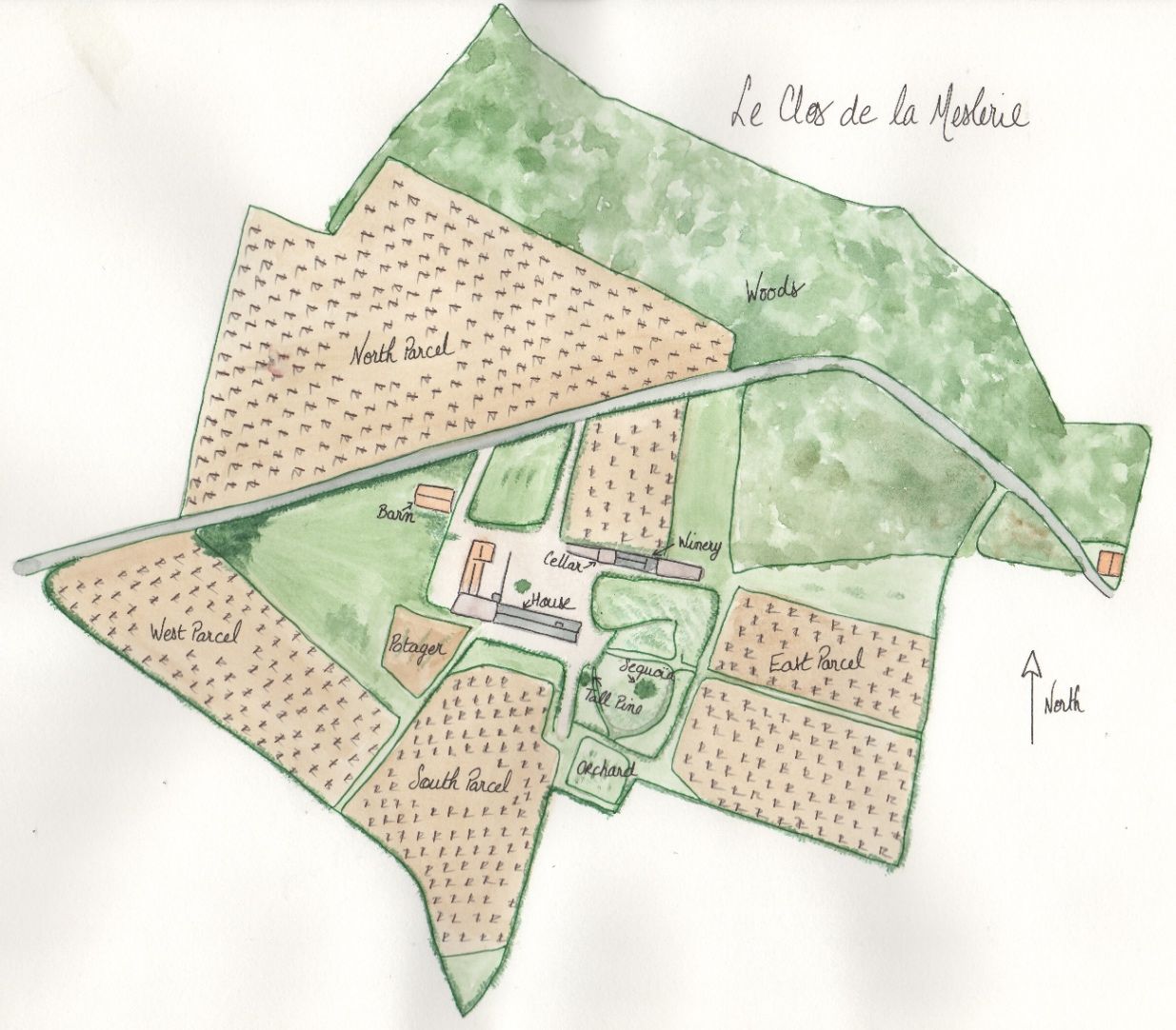
For over two decades I have lived and worked on a small wine farm in central France, called Le Clos de la Meslerie. I arrived here in 2002, and have rarely left since. A four-hundred-year-old pile of a house, crumbling, untouched for decades, encircled by ten acres of woodland, fields and – crucially – ‘Appellation Contrôlée Vouvray’ vineyard, also very much in need of renovation. After twenty-three years of caring for this place, nursing the land and buildings back to health, and becoming a farmer, I realise it will take twenty more, and then twenty again. And I am glad that this project is timeless.
It was sometime near the turn of this century when my world collapsed around me. I was in my late thirties, sitting in a black cab on my way to Heathrow Airport, laptop open on my knees, Blackberry in one hand and mobile phone in the other. It was Thursday afternoon. The sky was an evanescent blue. I had just worked for 48 hours without sleep, and was heading home to recover before my next meeting the following morning. The cab drove into a tunnel and the window was transformed into a mirror; I stared at the man reflected but didn’t recognise him. It was only for a second or two, but it was enough to make me feel vaguely sick. My fists were in tight balls, my body rigid. I felt a floating sensation. The cabbie was asking me something, the words were barely comprehensible, You a’right mate? I turned to see his face in the rear-view mirror but couldn’t speak. I was far from being alright, and would remain that way for some time. There was something I was longing for, but didn’t know where it was or how I could ever get there.
As I mulled over these thoughts for months, it started to become clearer that I wasn’t in the right place and that any sort of meaningful life for me was somehow linked to making a living from the land. But it was like flying completely blind into the sun, with a low-humming instinct. I knew things had to change, and that for me this change would be quite drastic. Gradually, the notion of trading Power-Point slides and Excel spreadsheets for something more elemental became intoxicating. And so much the better if what I did on the land also made other people feel good about themselves or touched something basic about being human. I chose to become a farmer in France. Or, more precisely, a vine-grower. I had been a wine-lover and general epicurean for years, and for a time I played with the idea of opening a wine shop or becoming a wine importer and distributor. But now, deep down, for reasons beyond me, I knew that the land was calling.
Thus, I set out into the winelands of France. For almost two years I spent all of my spare time roaming vineyards in the regions I was familiar with: the Rhone, Languedoc, Bordeaux, Provence, looking for the right place in the countryside. I found Touraine, in the Loire Valley, completely by chance. The more I read about it and tasted wines from the region, the more intrigued I became and started to feel something like a familiarity. Touraine’s climate was the most temperate of all the regions, with mild winters and summers, but with distinct seasons nonetheless. It was green and lush from regular rainfall, with gently rolling hills and valleys carved by the Loire and other tributaries. It is known as the ‘Jardin de la France’ because its fine soils and gentle climate make it ideal for growing a broad basket of vegetables and fruits, including grapes, almost all year round.
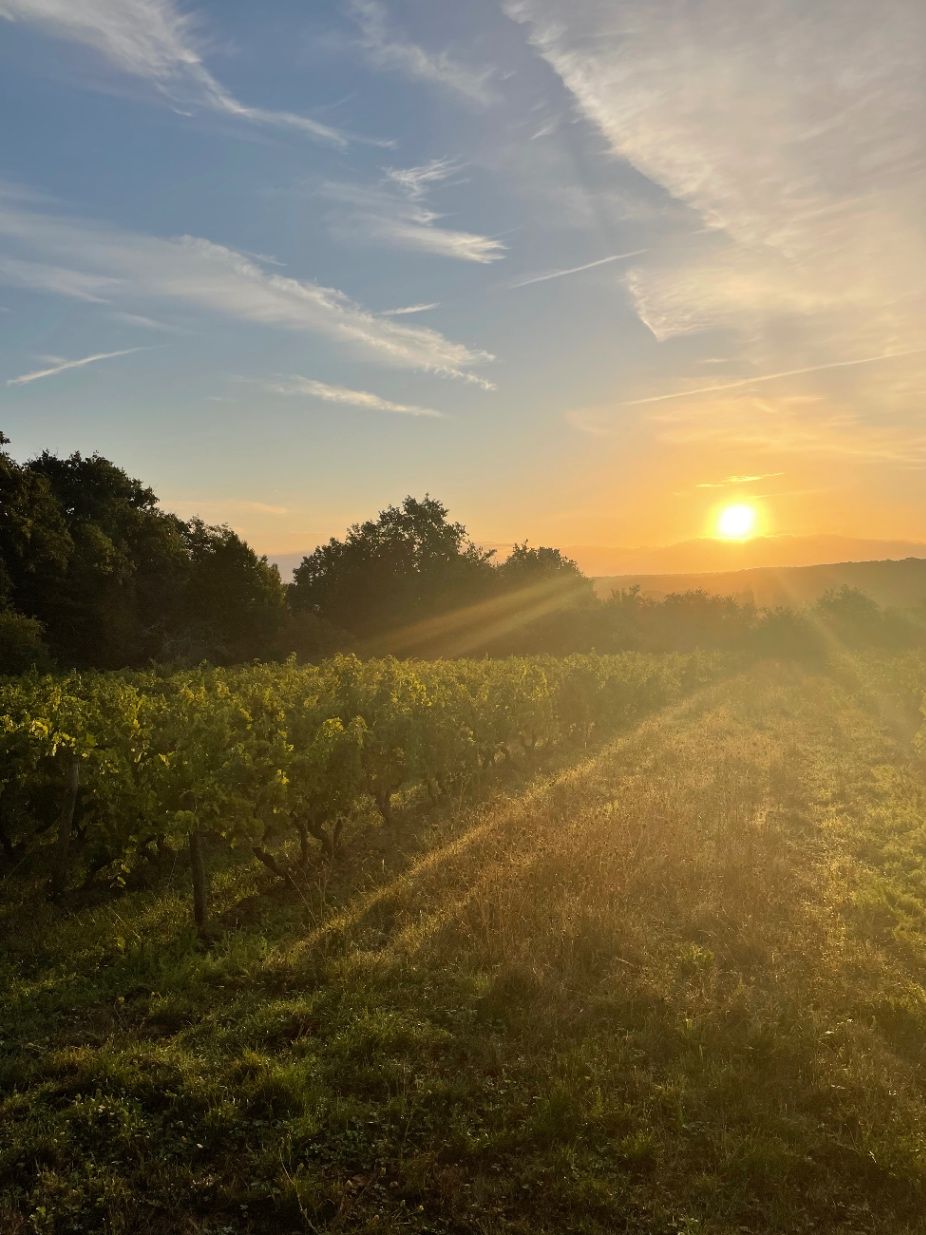
I decided I had to see it, and when the train from Paris crossed the broad expanse of the Loire River, a sense of ease grew in me. I felt welcome. An estate agent picked me up at the station and we drove twenty minutes to the farm. We didn’t speak much along the way; I wanted to look, to really take in my surroundings: the undulating terrain, the small roads winding off towards little hillside hamlets. ‘We’re almost there,’ she said. ‘It’s just up this hill.’When we arrived, it felt like Le Clos de la Meslerie had been waiting for me. More profound than love at first sight and somehow very practical. The feeling was simply: You and I can work together. Rationally, I knew it was just stone, slate tiles, old windows with oak frames, paint peeling off everywhere, ivy growing up into the gutters and onto the roof. I knew it was just grass and trees, gravel, overgrown fields and a dilapidated vineyard. I knew all of this. But I knew something else, too. Finally, I had found it. A place, in the countryside, where I could become myself.
__________________
Peter Hahn is an American who worked in the management consulting industry in London and Paris, and now lives and grows wine in the Loire Valley in France. This article is a modified excerpt from his book about this journey, Angels in the Cellar, which was published in the UK by Little Toller Books on April 14th 2025.