Fly Fishing Adventures: From Chub & Barbel to Monster Roach & Grayling
But most of my early fishing was done with ‘bait’ - bread, worms, maggots and so on - for so called coarse fish. It was great fun but fishing for these species with a fly holds also holds many attractions; lets take a look!
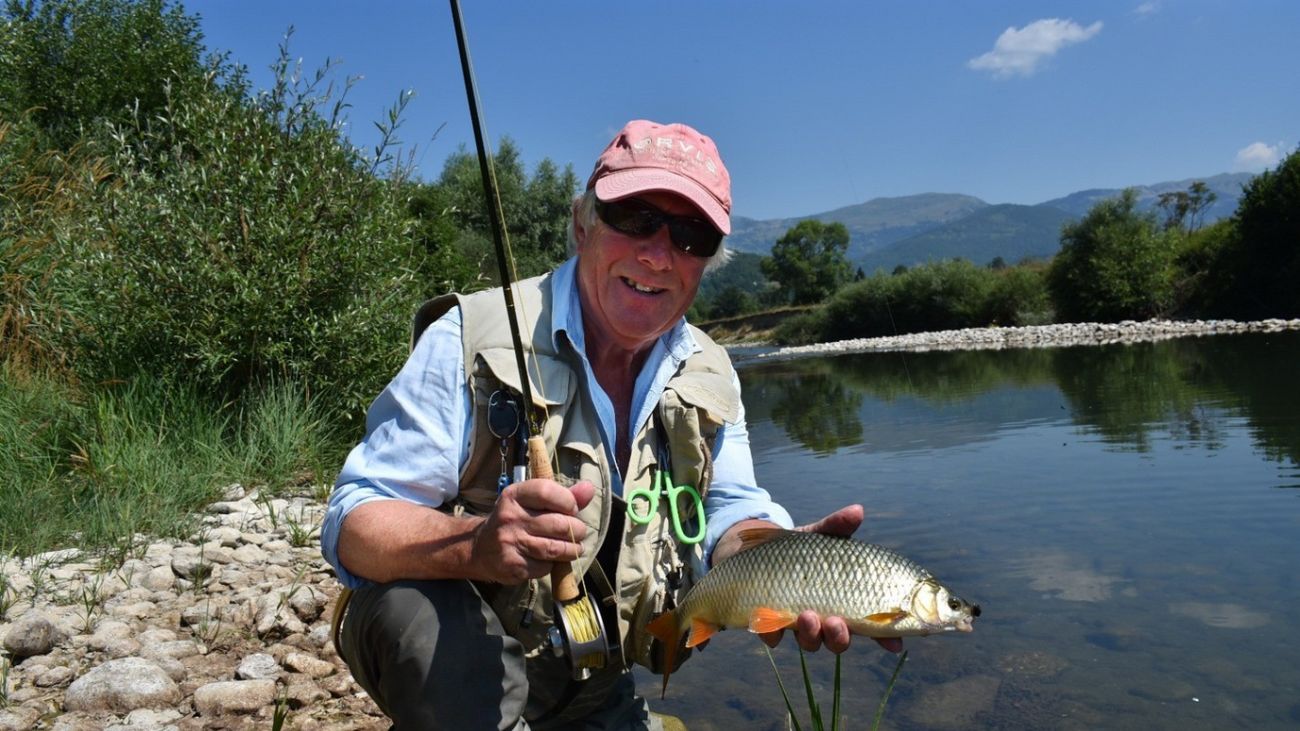
For the past 30 years or so my main quarry has been game fish: trout, salmon and grayling; with a smattering of more exotic species such as bone fish and tarpon thrown in both to spice things up a bit and also to transport me and my fly rods to warmer places than the UK when winter weather bites my Cumbrian home. But most of my early fishing was done with ‘bait’ – bread, worms, maggots and so on - for so called coarse fish.
It was great fun but fishing for these species with a fly also holds many attractions; as Maurice Wiggin said ‘chubbing is a comely sport, when trout fishing is hard to come by’ and for sure, and for various reasons, trout (and salmon) are much rarer and swim in far fewer of our rivers, and in lesser numbers, than they did in Wiggin’s day and chavender, being ‘crafty enough to make his capture tricky’ is a fun and exciting quarry with a fly rod. And for that matter, so are some of our other ‘non-game’ species, although until fairly recently, I had caught only a small number of them on the fly.
A few years ago a population explosion of perch on a local trout lake brought a fish-a-cast to a soldier palmer whilst trout fishing – more an annoyance than a triumph! And once, nymphing in the clear waters of the river Idrijca in Slovenia, my target trout was supplanted by a muscular barbel which fought like a demon as barbel always do; perhaps pound-for-pound more sporting than salmon. But these captures were more by accident than strategic planning or judgement. But things are now changing; I have determined to broaden my fly caught species list.
Barbel and Chub
Last year, on the 16th of June, amidst a bonanza of barbel and chub on the Wye, I put aside my bait rod and, using ordinary nymph patterns plus a couple of ‘specials’ set about upstream nymphing. The chub were shoaled-up and feeding high in the water, competing fairly vigorously - almost fighting - for any loose feed that I threw in when bait fishing, and even after I’d stopped they were obviously very active; so the chances with the fly were pretty high. A largish PTN, tied say on a size 8 or 10 hook, or a simple black nymph – resembling a trout pellet – plopped gently near to the head of the shoal was usually grabbed almost as soon as it hit the surface or, brought back downstream at the pace of the current, pretty soon after. The line would tighten, the rod would heave over and a mighty, though usually short-lived, struggle would ensue.
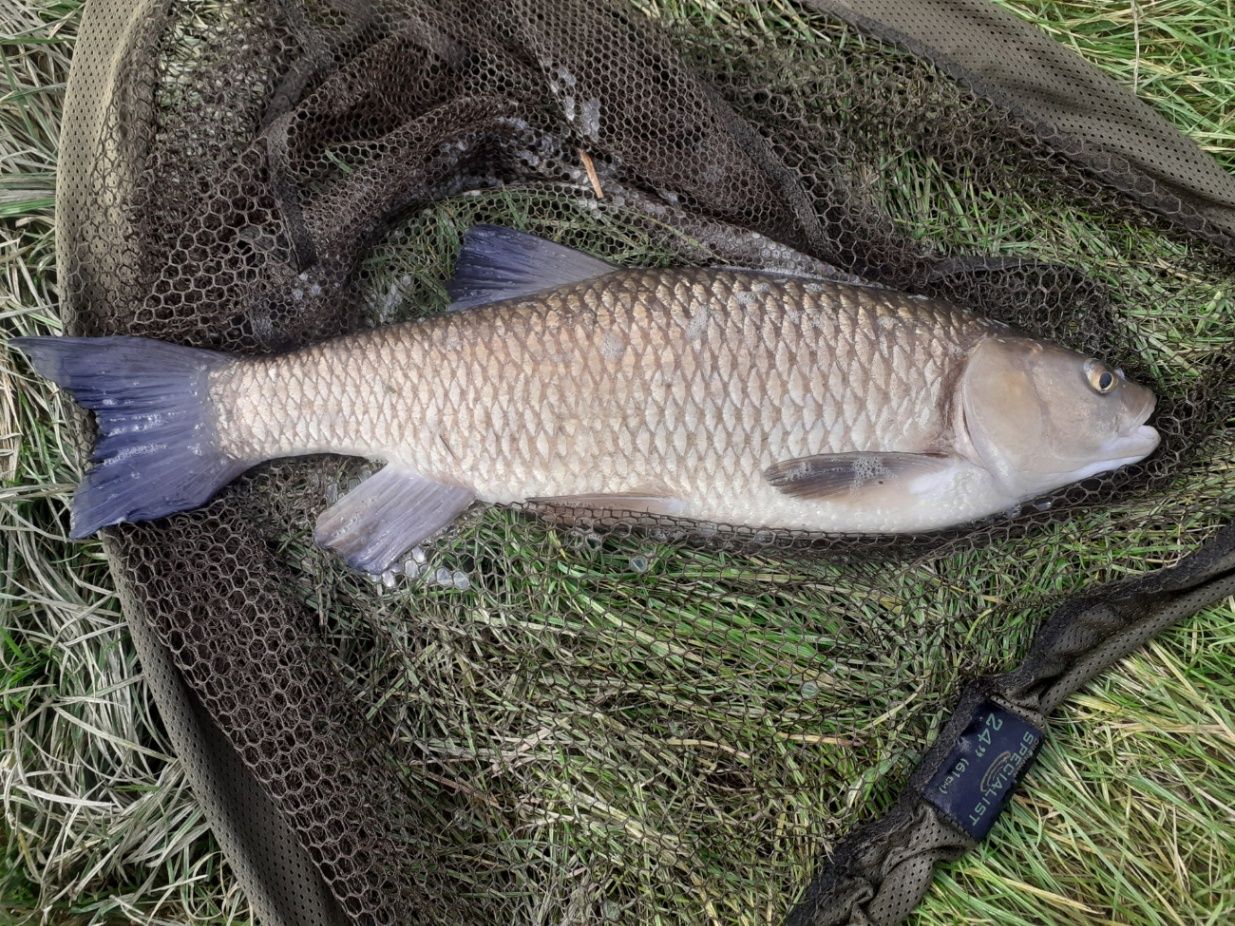
Chub are not noted for their tenacity and stamina; ‘surrender monkeys?’ no, not quite, but they are lightning quick to head bank-ward where they will for sure know all about, and dive head first into, any snags leaving one attached to tree roots, reeds and dangling brambles rather than sweet chavender. A 5 or 6 pound chub may not be regarded as a monster these days, but come on, it’s not a tiddler either! Not too long ago specimen hunters would go a long way for a 5lb chub and here I was with a shoal of these hefty things in front of me.
Anyway, I netted a few but I soon found that playing the fish quickly then drawing it downstream into the slack water where I was standing, brought the characteristic gapping mouth and huge chub-lips sliding to the surface where it was easy to slip out the fly, turn the acquiescent fish and gently push it back into the current where, apparently unperturbed, it rejoined its mates. On a 6 wt rod this was great fun and I knocked out so many fish in quick succession that I soon realized that I had caught enough.
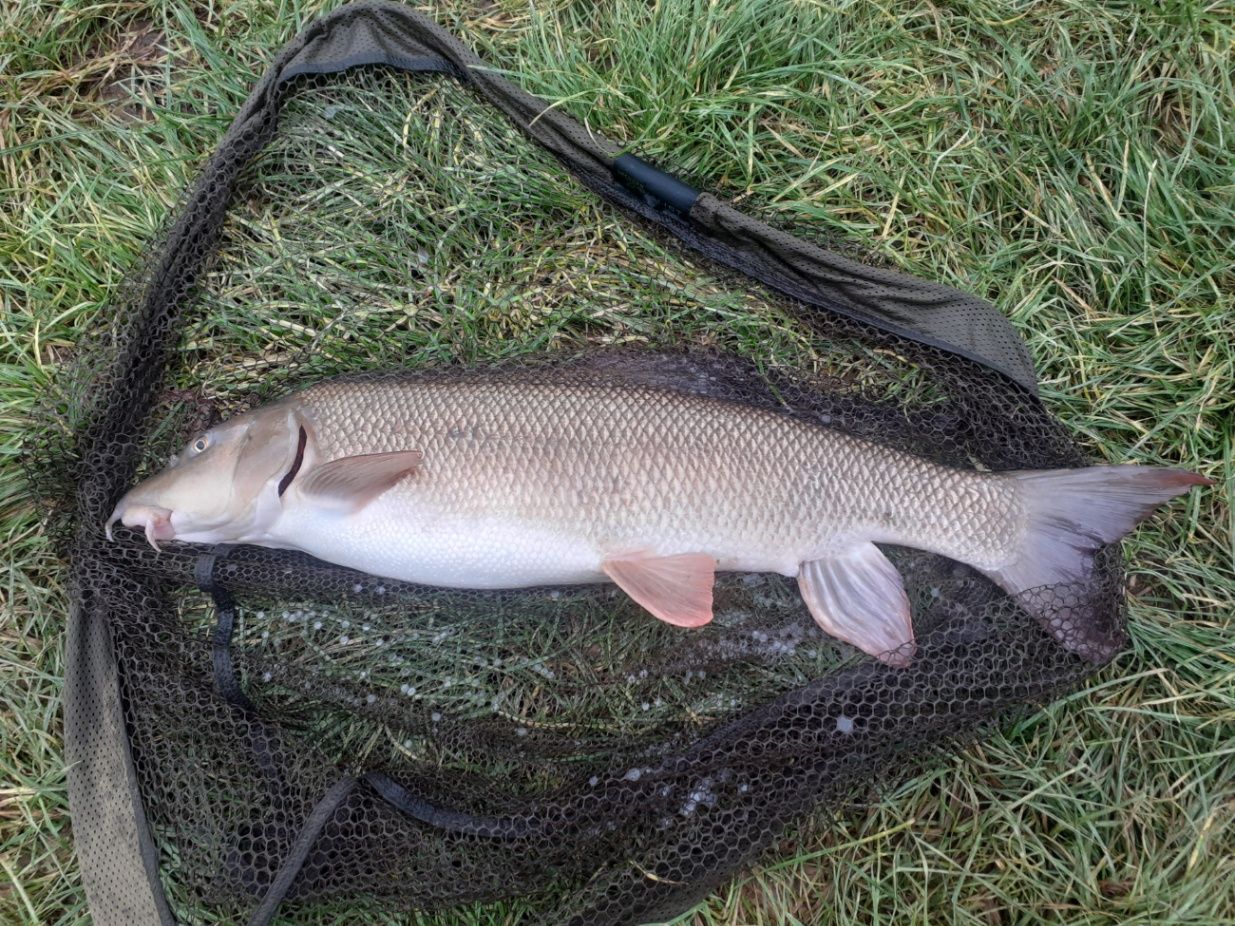
All the time I was doing this I could actually see barbel out to my right. They often come in behind the chub in response to the copious loose feeding, rolling in the current where they would have been taking remnant bits of loose feed missed by the chub and washed downstream; along with nymphs and shrimp, their natural food. In these situations the barbel’s natural reticence seems to be overridden by greed. Barbel, being bottom feeders with under-slung downward pointing mouths; have to either role on their sides or lift up their heads vertically, to take any form of food in mid-water. When they do so, their white underside is exposed giving a nice and easily spotted ‘flash’.
These fish were bigger than the chub by a fair bit; 7, 8, 9 even 10 pounds so I was keen to hook one. A 10 pounder on the fly would really be something. But try as I might, that day, even though I could see the odd fish turn on its side toward my artificial as I steered it past, I could not get a take. And so it remains; the last few times that I have fished this beat, although I have had good bags of both fish using bait, the conditions have not been quite right for sight-nymphing and so big barbel remain on the to-do list.
Part of this new interest in non-game species is the current malaise surrounding some aspects of our sport. I am tired of bad news; tired of reading about pollution, fish predations, salmon farms, re-wilding and the introduction of beavers.
It is so easy to buy into all the doom and gloom and really fishing and the countryside should only bring joy; it should be fun and uplifting and in the present climate it’s easy to lose sight of this. But rivers are funny things and as Tennyson said of them ‘men may come and men may go, but I go on forever’; rivers may have a way of healing themselves and whilst there is no doubt that our salmonids and our rivers need help - we must do what we can to help things and otherwise make the best of it. And whining won’t help, part of my answer is to broaden my outlook.

Montenegro Means Roach
So with my appetite for other species on the fly well and truly wetted, when I heard that big roach plus more chub and also monster grayling were being caught in the rivers around Lake Plav in Montenegro my antenna twitched. I have to admit, that my geography of the Adriatic Basin and that Balkan region was sketchy; I had to resort to Google maps to find out exactly where Montenegro is (basically south of Croatia and land-locked Bosnia and Herzegovina and north of Albania). Anyway, – after a bit of research - on a Sunday morning in mid-July, we flew from our small local airport at some ridiculous hour of the morning, the two and a half hours to Croatia where, bleary-eyed, at 08.30 AM local time we dragged our weighty rod bag though the Nothing to Declare doors of Dubrovnik airport where Ivan, our guide for the next week, was waiting for us.
Introductions over, next came a rather gruelling six hour drive out of Croatia, through the southern tip of Bosnia-Herzegovina and on through the mountains of Montenegro. Plav, our fishing base for the next week, has the look of a low-key tourist town which is emerging from a quieter and more traditional Montenegran past and is now striving, in a hurry, to catch up with its better known relations on the Adriatic coast. It lies at the northern tip of the eponymous lake into which the Ljuca River flows on the western side and the Lim flows out at the northern, town end. These appear to be the two main fishing rivers and they are very different. The Ljuca runs from high mountains, some of which still had snow on their summits when we visited in July, whereas the Lim runs warmer – certainly in summer, when the hot sun shining from a cloudless sky, knocks the chill out of the shallow outflow. The temperature difference makes for two quite distinct rivers.
The Lim, which ran a stone’s throw from the back of our hotel, was our first port of call. The first pool I fished, I could see fish lining up against the far bank trees. The narrow shingle that made my casting platform had high scrub and weed behind it which was pretty sure to capture my largish nymph so a smartish roll cast was needed to get near the fish. My first few attempts, very slightly upstream, fell just short but as soon as I got the nymph into ‘the zone’ - the narrow band of shadow right where the trees met the water - a fish dropped back and followed it. A simple lift of the rod, a little twitch to bring the artificial out into the stream and I watched as the fish wolfed the fly, a quick strip-strike and the rod heaved over as I lifted into my first Montenegran fish which turned out to be a chub of around 3 pounds. I am told that these fish are the exact same species as our UK chub, Squalius cephalus; or Chavender as Izaac Walton or, as we have already said Maurice Wiggin, might call them. But a momentary glance at these fish shows their basic shape to be a little different; to my eye these fish have a slightly flatter body than our more portly cylindrical version. Nevertheless, their golden-bronze flanks, large perfect scales and gapping mouth and lips confirms their ‘chubness’. Anyway, another five of these fellows followed the first, the biggest just short of 2 kilos, and all within 30 minutes, if that.
On any fishing day, an early capture seems to take the pressure off, even though any pressure at all in fishing day is totally self-imposed and verging on the ridiculous; but there it is, and most of us have felt it. So when you get that first fish something is proven, but I am not sure what. Anyway, my first casts into the waters of Montenegro were pretty fruitful; there I was casting into the crystal-clear water of the Lim with ‘fish under my belt’ the sun beating down from a clear blue sky and the skin on my face and arms already beginning to tingle a little when Ivan told me of some shady cherry trees a little way upstream which had a bunch of big roach underneath them. Now over the years I have caught a fair spectrum of species from biggish carp to tiny perch but, as I’ve said, for most of the past three decades my fishing has been mainly for trout, salmon and grayling. Roach have made the odd appearance – by mistake usually – but have not featured brightly on my wish list.
So, given the fun I had just had with the chub, I was game (no pun intended). Ivan showed me the cherry trees and said wade way out into the shadows – no problem in this heat – and use this; at which point he introduced me to the cherry fly a small round black ‘ball’ of chenille wrapped onto a size 12ish jig hook with a small tungsten bead to give it weight. I tied it on and made a short cast into the shade of the tree and tracked it down with the rod tip allowing a dead drift. I watched and just as the ‘artificial’ began to swing out into the current I saw a shadow begin to follow and again a slight movement of the fly and I felt a gentle draw. Gentle at first, but not gentle for long as a roach of over a kilo set its flank against the push of the current and fought it out in the dappled sunlight. I’d never caught a big roach on the fly and this one, and those that followed, for I took another 6 or 7 from the same spot wading only a metre or two upstream for the whole show, all pulled like stink. Not as much as a big wild trout but since I can’t remember the last time I took half a dozen two pound wild brown trout from one pool I’ll shut up!
Oh, and by the way, these fish are not the same species as we get in the UK (Rutilus rutilus) but Rutilus virgo or cactus roach, which is a native of the Danube basin. The two species are very similar but the fins of these fish are more orange whereas those that we see in the UK are of a pronounced red hue, both are very handsome fish.
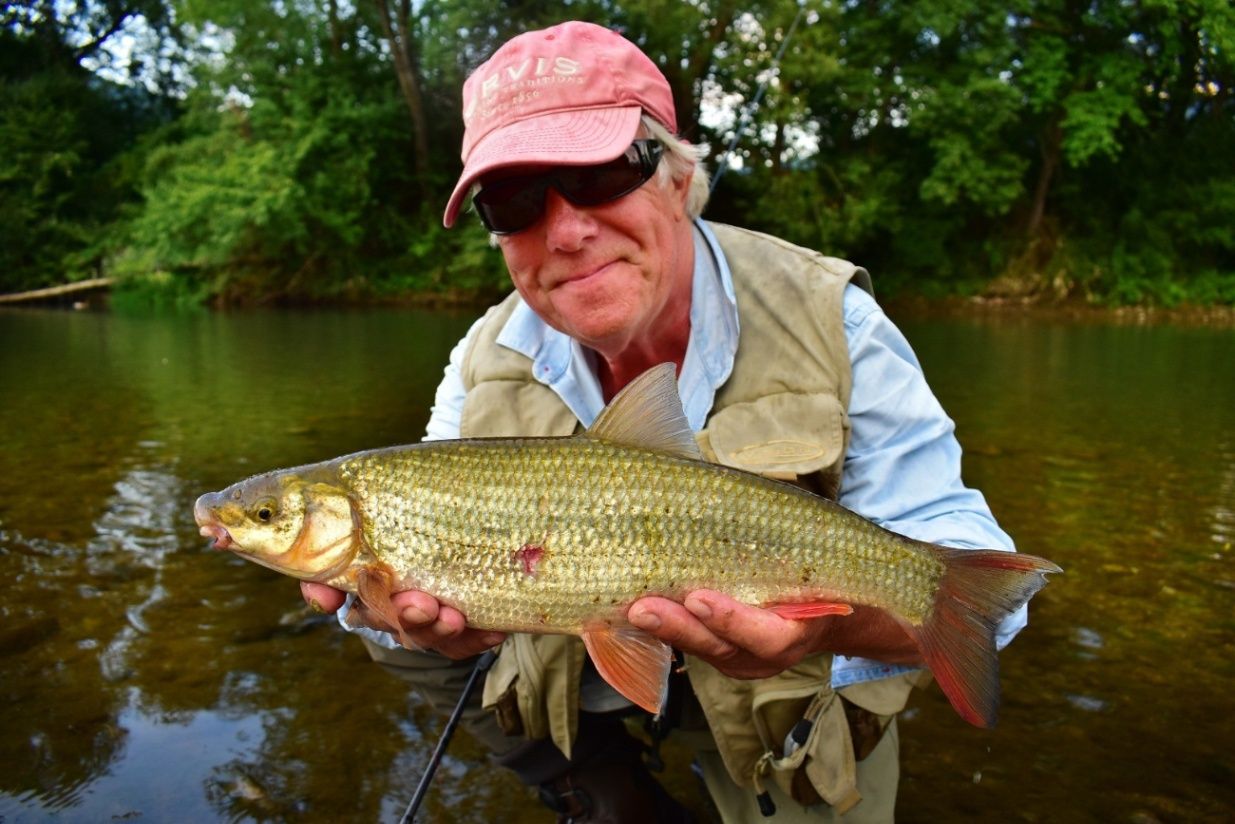
Nase.
All the time we were fishing and wading, one could see fish rolling giving whitish flashes as their flanks caught the bright sun. At first I thought that these were grayling but we were told were Nase or Nases (Chondrostoma nasus). Anyone that has fished these rivers will know them, but I’d come across them only very recently as I researched for this trip, and here they were and in numbers. Rolling and flashing in the deeper water and just lying absolutely unperturbed in the shallowest of margins, and defiantly tricky to catch. The name derives directly from the German word Nase meaning nose, and the top lip of these fish does protrude giving the impression of an under slung mouth typical of bottom feeders such as barbel. In fact the literature tells us that Nase feed on algae, aquatic plants and invertebrates.
Be that as it may, we saw hundreds of these boys all of the time that we were on the Lim but I only managed to hook a few – by dragging a nymph across the bottom right under their, yes, their noses! And this in the edges of the river in the shallowest of water, where when hooked they took off like scalded cats, usually throwing the hook in the process - aloof, non-participatory, nemesis Nases.
Monster Grayling.
The only fish we saw in the Ljuca were definitely grayling and they were huge; pushing 2 feet long some of them, so real specimen fish; the UK record, from the Dorset Frome is 4lb 8oz, some of these fish weren’t far off that.
We were told by the locals that we should be careful when wading in the Ljuca because the water was so cold, one couldn’t leave one’s hand in for too long without suffering pain. And indeed it was cooler than the Lim, and certainly a lot cooler than the ambient air temperature. But being true Englishmen we found it positively tepid compared with what we might find on say the Wharf or the Eden in Autumn and if one used the Tay or Dee in February as the benchmark, one could brew tea with it! The Ljuca runs through open countryside before it enters Lake Plav and its rural setting I found very attractive.
In many places its high banks gave grandstand views into the pools in many of which we could count big grayling. Ivan’s favoured method was euronymphing using something heavy placed pretty much under the fish’s nose. But effective as this method undoubtedly is, us dry fly men all know that it is cheating and totally lacks the charm and grace of casting a fly line. On the Lim, I fished almost exclusively with nymphs but I could not bring myself to throw weighted flies at these beauties of the Ljuca.
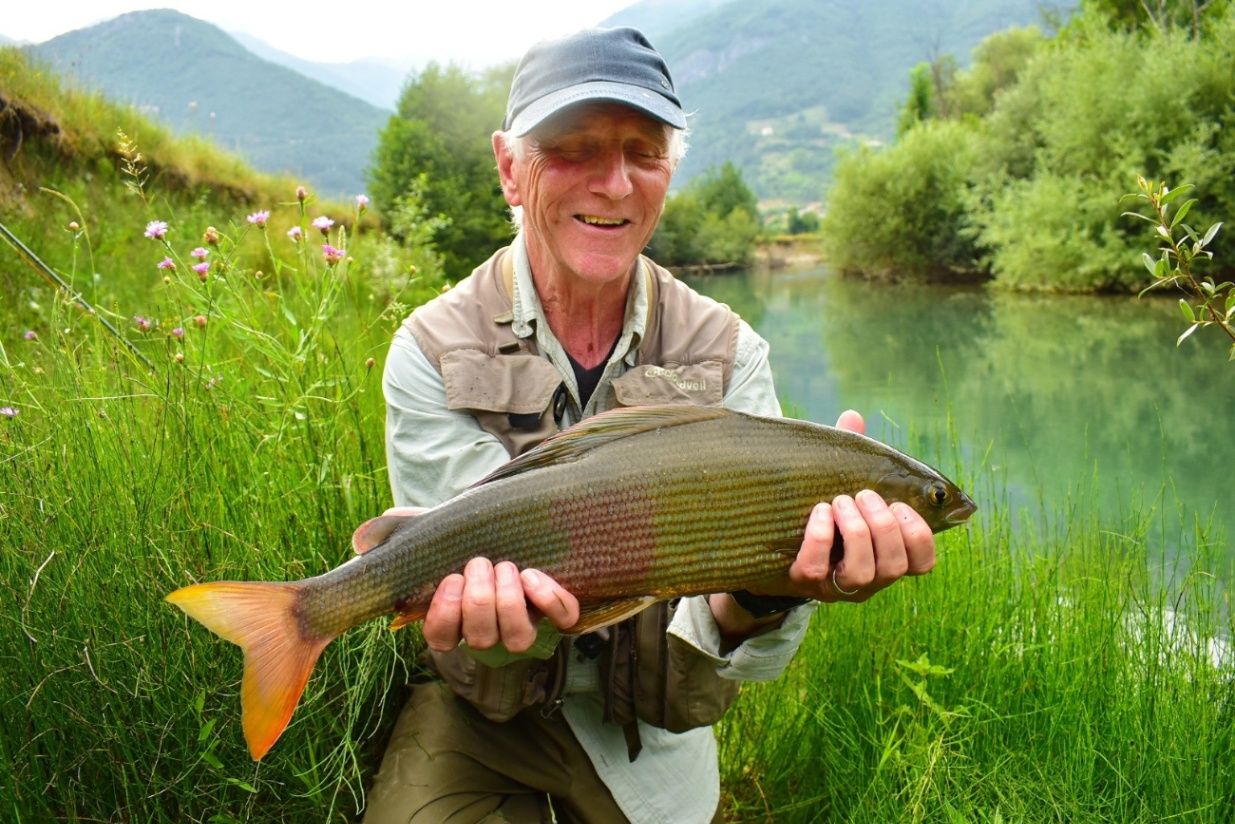
I may have been wrong because although these fish liked my dry deer hair sedges, the Doctor, my fishing companion, using one of Ivan’s heinous set-ups, landed a couple of really hefty fish; one was 53 or 58 centimetres, I can’t remember which, and it doesn’t matter because whoever you are, that is a massive grayling: full stop. And as I said, it didn’t count anyway!
This is an extract from The Ten Thousand Mile Walk - fishing, the countryside and an Arcadian dream by Bob Bradley (Long Meg and Druids Publishing July 2025 E: office.matsurfltd@gmail.com).
Photo credits: Ivan Randjelovic; ivanflyguide.com