From Ruin to Resilience: The Library That Sparked Change
It started with a love of a library in a crumbling old building and ended with the first stately home with a carbon neutral footprint.

The daring journey making a stately house carbon neutral
I always loved books so when I came across a draughty shell of a historic stately home with a library (and several holes in the roof for star gazing), I had to have it.

The dry rot silver lining
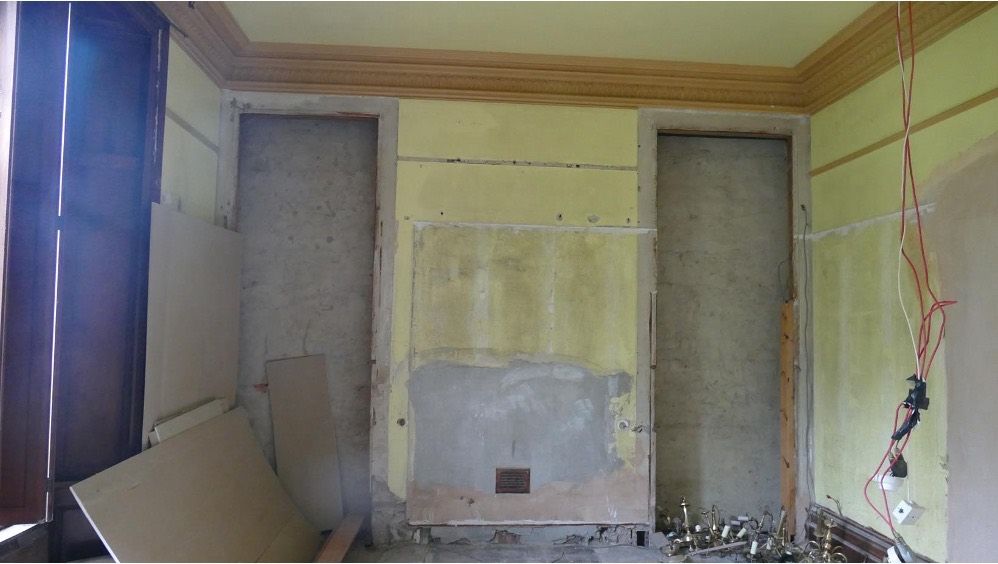
With it being over ten thousand sq feet, I needed to find ways to make it sustainable so I could avoid high heating bills. I like it warm and sitting in my library with five layers of clothing during cold Scottish winters, was not for me. The house was riddled with dry rot, but, as they say, every cloud has a silver lining, and the dry rot is what, inadvertently, saved the house and my pocket. To make sure dry rot is treated, you must strip back the lath and plaster so the stone walls can be washed and treated. After that was done, it was time to rebuild the walls and that is where the silver lining came about. From the outer wall, add an air gap, 140 mm Kingspan, another air gap (for services and of course as further insulation) and then finish off with another 60 mm Kingspan and plasterboard. To keep the heat bridges at a minimum we used vertical i-beams. Do the same to the ceiling and the floors, add triple glazing and you have a house that withstands the heat in the summer and the cold in the winter. Not that summers are generally that hot in Scotland. It was important to live in the house, during the journey to learn and understand, despite the dust, the holes in the roof and the nothingness that aligned with a house that had been stripped to the bare essentials.
Holes get patched and a library appears
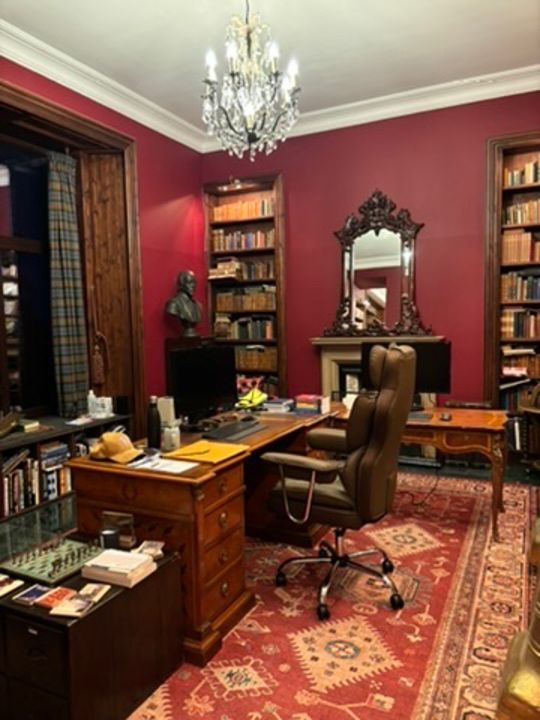
Joining the eccentric echelons of stately house owners was not enough, and it was important to focus on the future, on warm clean rooms, not to mention a library. The library was always the trophy, but being able to afford keeping it heated was, out of necessity, more important. I now have one library and two reading rooms, the latter two being a bit of self-indulgence when I had more books than could fit in just the one. And yes, I do have a bit of a habit, but it kept me going through the years of dust and dirt, and impossible challenges, that luckily always ended up as the silver lining. The house is finally finished, and it is carbon neutral. As part of doing the grounds, I will add solar panels to take it over the line into the realm of having a carbon negative footprint, while still ensuring all the rooms are heated, and jumpers banished to the wardrobe.
Nearing carbon neutral
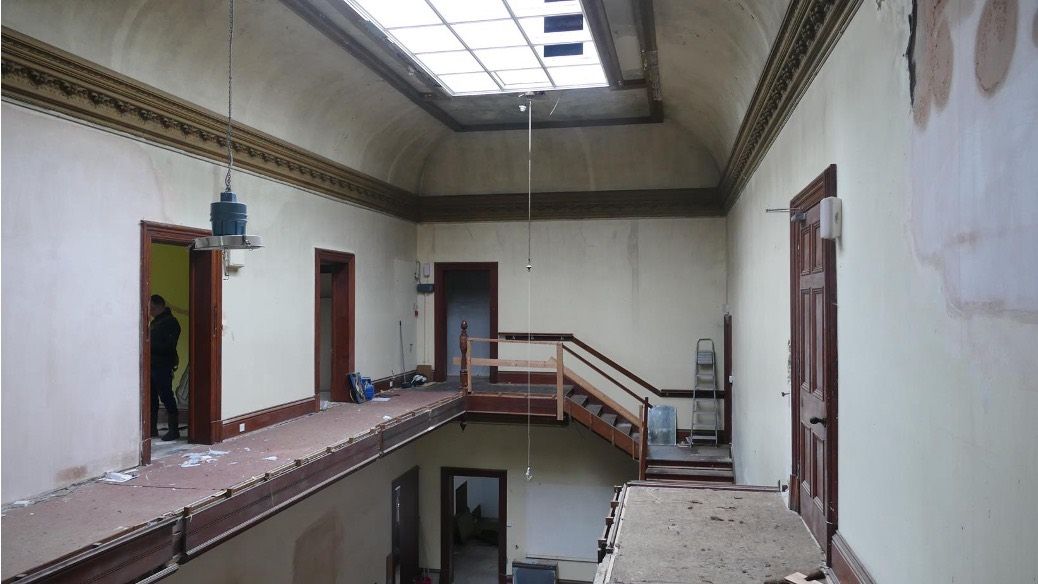
Though not done before, it was surprisingly easy. Perhaps I am just a full glass kind of gal, or perhaps my memory has more holes than the roof had on acquisition. It does, however, show what happens when you concentrate on the long term, rather than just renovating with a quick lick of paint. Not that a quick lick of paint would have been possible with this house, as the dry rot would have permeated the paint job and loosened the cornices. That is of course if the rain did not get to them first. Cornices are, if anybody is interested in this strange piece of information, surprisingly heavy, and can definitely do some major damage where it falls. I know this because I, in my eminent wisdom, decided to get rid of a flaking ceiling rose, by attacking it with a broom handle. My endeavour was successful, but the hole in the floor and the splatter of plaster, opened my eyes to what would surely have been a breach of health and safety regulations.
Success
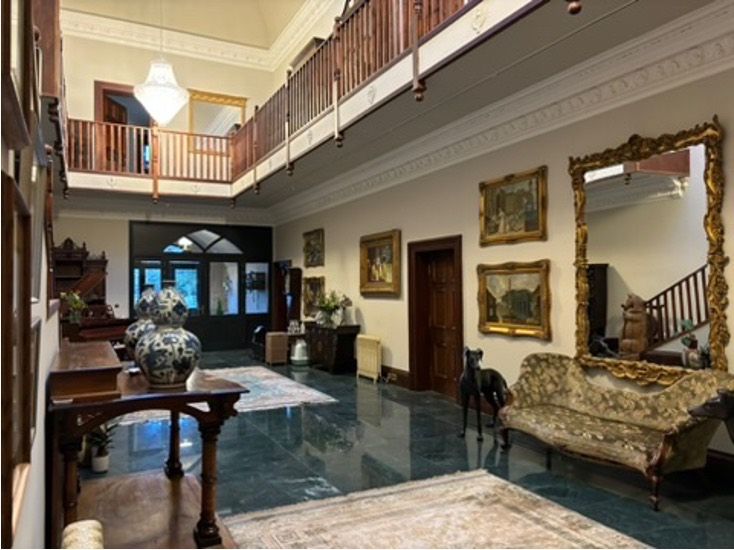
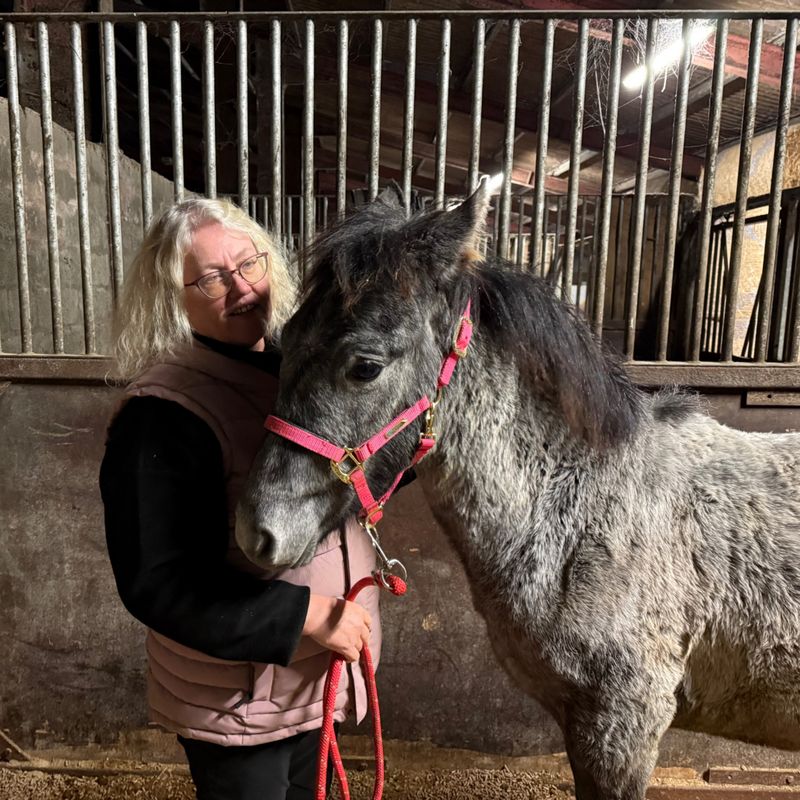
Now it is just the outside that needs attention: a greenhouse in the walled garden for art and spa activities. And, of course, solar panels and a spot of rewilding, hedgerows to encourage wildlife, and, last but not least, well-drained paddocks for the horses. Looking back, I took on the house because I did not know any better. Well, I actually took it on because of the romantic notion of having a library. It seems so easy to do up a house, when you do not know anything about doing up houses, when you are not a builder, when you are not an architect or even an engineer. Little knowledge is a dangerous thing. However, if combined with a pinch of stubbornness, grit and the ability to learn from others, especially via random YouTube videos, then you get somewhere. But the saga does not end here.
Monetising carbon for everybody
Spending evenings in front of the fire in the lovely, newly renovated drawing room, observing sustainable efforts in Switzerland, impelled the vision that others could do the same with the right financial incentives. Based on those thoughts, a new Swiss bank is about to be launched, a regulated bank that allows people to trade their carbon offsets and invest their money for with a safe and sound foundation. The bank also has its own crypto coin backed by offsets, a bit like using carbon for gold. Carbon is gold, if we are to have a world to hand on to the next generation. This makes supporting the countryside financially sound and shifts the economic base back to the countryside where it used to be, and where it rightly belongs.