Gone to Ground: Or How to Bury Your Father
Burying a farmer on his own land could have been complicated, but with the help of a Subaru, a Welsh Male Voice Choir, and plenty of champagne, we achieved his aims. John Howard-Jones, 1931-2005, was buried after a life spent hunting and farming.

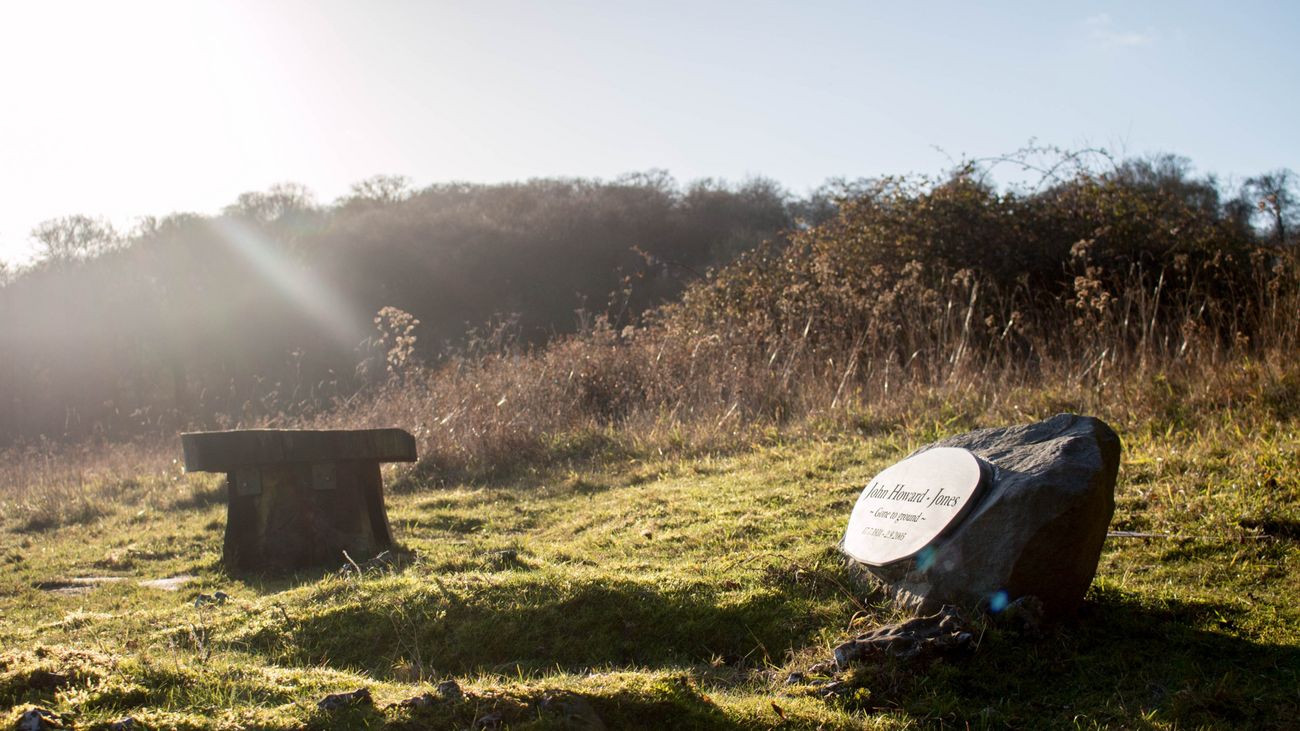
There’s something about burying a farmer on his own land. It’s not just the act itself—the lowering of a simple box into the ground—but the permanence of it, the connection forged between life lived and returning to the soil. My father, a man of singular opinions and the kind of stubbornness that both infuriates and inspires, was adamant he wouldn’t leave our farm in the Chilterns—not in life, and certainly not in death. When the time came, we honoured his wishes as best we could, with plywood, chalk soil, and no small measure of improvisation.
A Character to the Last
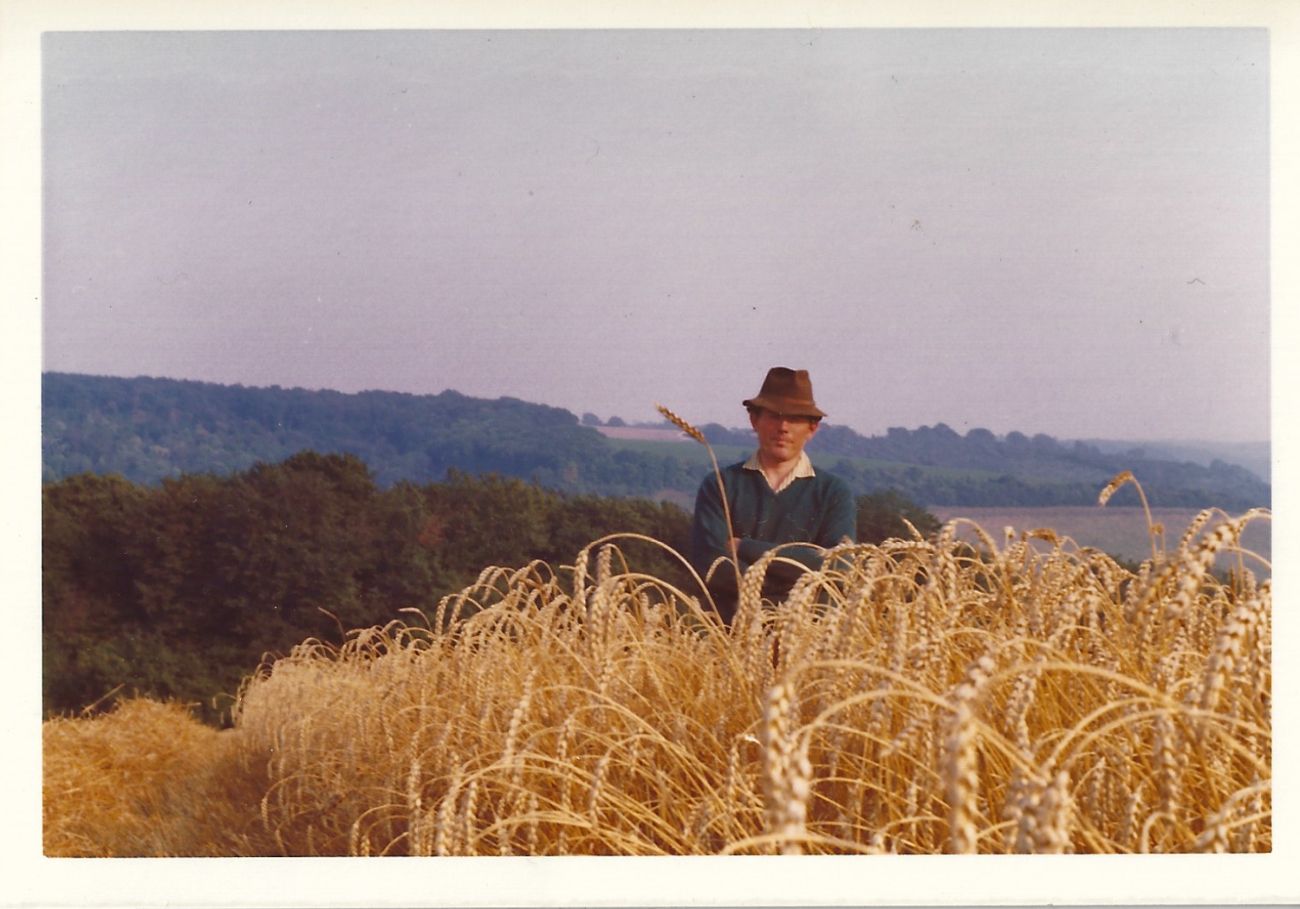
To know my father was to know a man who defied convention. He believed that hiring funeral directors was a waste of time and money. “Why pay someone else to do what we can manage ourselves?” he often said. He had no time for unnecessary fuss and wanted to be buried on the land he had spent decades farming. In the winter, when he wasn’t farming, he could usually be found hunting with the Bicester Hunt or the Vale of Aylesbury (as it was known then). In his thirties, he served as a master of the South Oxfordshire Hunt. He was also a regular visitor to the David Davis Hunt in mid-Wales and the Blencathra Hunt in the Fells, which he would follow on foot, especially if hunting on horseback in our area was cancelled due to fog, frost, or if his horses were lame.
It was fitting that when we buried him, he was accompanied by his hunting horn—a relic from his days as a student master of the Beagles at Cirencester—and his battered flat cap, which was often lost and unfairly blamed on my mother for “putting it somewhere.” “Well, he’s got it with him now,” she would have said, if she had still been alive.
When he became ill, he’d already made his plans. He’d spoken to the local council office, who, in a surprisingly unbureaucratic way, said it was fine—so long as the burial site was far enough from water and residences and marked on the deeds. A few conversations, a bit of paperwork, and the matter was settled. Sometimes you have to marvel at the freedom still afforded to us in this country.
Final Preparations
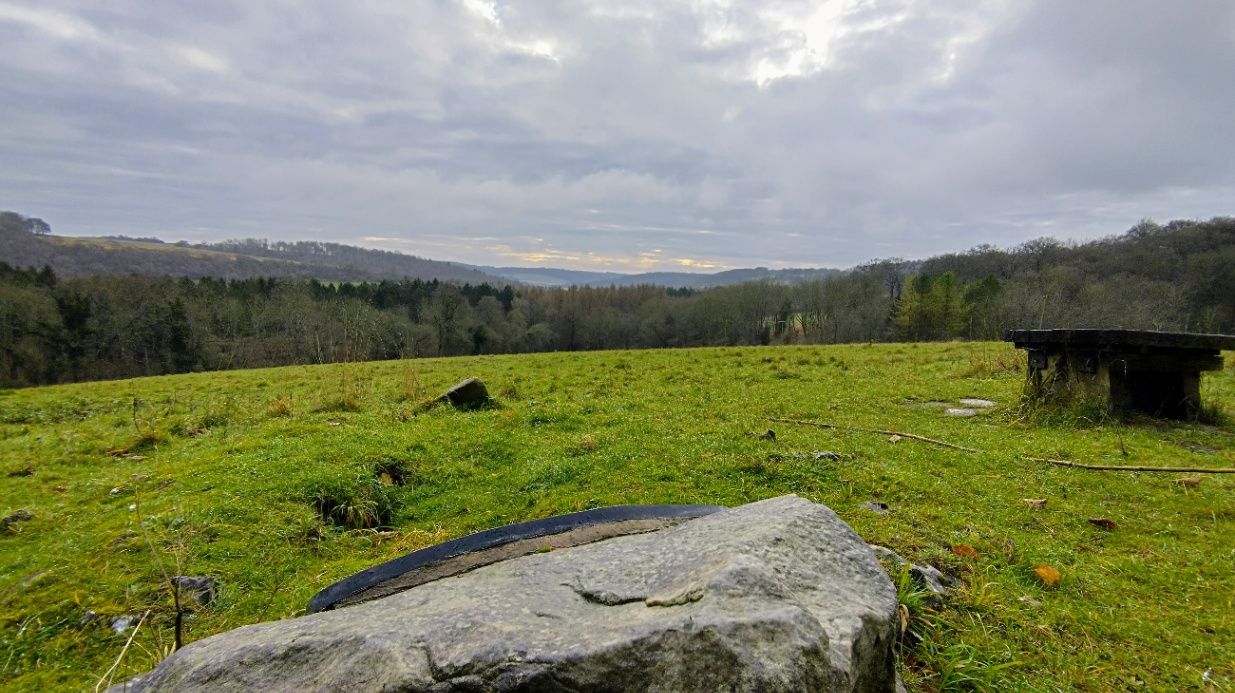
My father’s final weeks were spent at home, cared for by a wonderful team of hospice-at-home nurses, my brother (who later took up nursing full-time), and our long-time family doctor, who made regular visits, often staying for lunch before heading off to the golf course. With their support, he made his last arrangements. A tenant on the farm, a skilled cabinet maker, offered to craft a coffin. “Don’t waste fancy wood on me,” Dad said, insisting on a simple box from plywood. Another tenant, with a digger, prepared the grave, cutting deep into the Chiltern chalk and flint. The site was carefully chosen—close to a footpath for future visits, with sweeping views of the Hambleden and Fingest valleys.
On a warm Friday, we carefully placed Dad into his plywood box, along with his cap and hunting horn, and slid him into the back of his old red Subaru Forester. Remarkably, it was a perfect fit and the boot closed snugly (Subaru, take note). We drove him down to the chosen spot, where the landscape he loved so much unfolded in quiet majesty.
Lessons in Practicality
Lowering a coffin into a grave is not as simple as it looks in the movies. There’s an elegance to it in fiction that reality does not afford. We managed, though not without some awkwardness, and said our goodbyes under a bright sky. A family friend recited an apt poem, his voice fairly steady and clear. Remarkably, the burial went uninterrupted by the ramblers who often traipse the nearby footpath—a small mercy I hadn’t dared to hope for.
But as seamless as the burial was, there were administrative hurdles we hadn’t anticipated. On the following Monday, my brother and I went to the council offices in High Wycombe to register the death. The registrar, courteous and professional, asked for the death certificate and then handed us a slip of paper meant for the funeral director. “Ah,” I said, explaining that Dad had eschewed such formalities and was already resting in the ground. The registrar’s expression shifted—not disapproval exactly, but certainly surprise. “That’s… most irregular,” he said. I felt like Corporal Pike being admonished by Captain Mainwaring.
Apparently, if we’d called the registrar on Friday, he’d have arranged for the necessary paperwork to be completed immediately, as is often done for families needing to repatriate loved ones. “Well,” I replied, “it was a warm day, and Dad didn’t want to leave the farm.” The registrar seemed to accept this—grudgingly, perhaps—and the matter was resolved, though not without a later letter from the Registrar General in Whitehall reminding us, politely but firmly, not to repeat the oversight.

Spend it on Champagne
Not following the accepted conventions does, however, lead to another complication. Whilst my father was an atheist, many of his friends and family would have expected a church service. Indeed, my father rather enjoyed attending the funerals of hunting friends, and speaking personally, I can understand why. A funeral or thanksgiving service, with suitable and well-known hymns, to me at least, is a part of the grieving process. I find solace in the service and sharing that time together with others in quiet contemplation. Thankfully, in my father’s case, we made up for it in some measure by having a wake in the manner he desired, complete with a Welsh Male Voice Choir and an address by one of his dearest friends and neighbours. There was plenty to drink because he said that what we saved on the cost of a funeral director should be spent on champagne. The most poignant part of the event, though, was one of his fellow foot-followers from the David Davis in mid-Wales who, unprompted, got up and sang (as only the Welsh can!) a fabulous hunting song, which had us all in tears.
A Place of Permanence
There is a comfort in knowing my father’s resting place is on the farm he loved. His grave, which we walk our collies past almost daily, overlooks the valley he viewed when cultivating, chasing sheep or simply exercising his own horse. Next to it is a rough-hewn bench, donated by our vet. Sitting on the bench with him next to me after a stroll up from the valley below is always a pleasure. He doesn’t lie in the order of a cemetery with others he may not have known, but in his own ground in the beautiful Chilterns, on a chalky grass bank alive in the springtime with skylarks, hares, and orchids.
As unorthodox as his burial was, it feels fitting. For those considering a similar path, I’d say this: it’s not without its complications, but there is a dignity in keeping things simple. And if you do choose this route, do practice lowering the coffin and have a chat to the local registrar.
Some links & Caveat
https://www.eastriding.gov.uk/living/deaths/home-burials/
https://farewill.com/articles/how-to-arrange-a-funeral-yourself-without-a-funeral-director
Note: This article is a personal account. It is not a definitive guide. Please take advice, but you certainly do not need a funeral director if you don’t want to involve one, whatever they want to tell you!