How Many Farms produce food? Food Security at Risk
Think you know what counts as a farm? Discover how government definitions skew the numbers—and why it could jeopardize our food security and tax fairness.

Emma Reynolds, Secretary of State "My Wycombe constituency is a semi-rural seat and I represent a vibrant rural economy, with 89 farms, fantastic country pubs, local shops and community hubs" CLA Conference November 2025 PHOTO: CLA
Apparently I live in a constituency with 89 farms.
According to her speech at the CLA conference in late 2025, my local MP represents 89 farms. Having lived here all my life, I found the number implausible as I thought I knew - or know of - all my farming neighbours.
Likewise I, and all the farming bodies thought that the governments assertions that their original IHT tax policy would only affect a tiny proportion of farms was rubbish. Their argument was built on sand.
This matters. Because the entire inheritance tax fiasco — the tractor rallies, the anguish, the money spent with accountants & solicitors, and the behind-the-scenes campaigns in Whitehall — was directly affected by this kind of statistical nonsense.
Most people think a farmer is someone who produces food. Milk. Wheat. Beef. Things that end up in shops, or at least in cows. It seems that for the moment Defra has a different definition.

What counts as a farm (apparently)
In Government-speak, a “farm” is anything with more than five hectares of land. Five hectares is twelve acres. Twelve acres is not a farm. It’s a field. Or a paddock. Or, in the Chilterns, a sloping bit of thin ground that struggles to be productive.
On twelve acres around here you can:
- keep a few horses or mow some hay
- own some Alpaccas you talk to
- produce almost no food at all
But congratulations — you are now a farmer. Why? Because if you own livestock, or let a neighbour’s sheep wander about tidying up your pony paddock, you need a County Parish Holding number. That puts you on the Rural Payments Agency system. And once you’re on that system, you’re officially a farm.
So parish councils are farms. Woodland is a farm. Vineyards are farms. People with a few decorative alpacas are farmers. And somewhere in the middle of all this are the people who actually produce the food we need. They are all counted the same. Which is how Wycombe acquired 89 farms.
The minister in wellies
Emma Reynolds — now the Secretary of State for Defra — is my MP. She’s intelligent, pragmatic and, it seems, willing to listen.
Before she was elected, and again afterwards, she came to visit some farms in her patch including mine. The muddy, noisy, spreadsheet-heavy sort. She met dairy farmers, arable farmers, tenant farmers — people who worry about whether the next generation can afford to carry on. These were not tax dodgers. They were not oligarchs. They were not hiding money behind a hedge in Monaco. They were asset-rich, cash-poor and utterly dependent on Agricultural Property Relief to stop the farm being broken up when someone dies — which, inconveniently, farmers still do
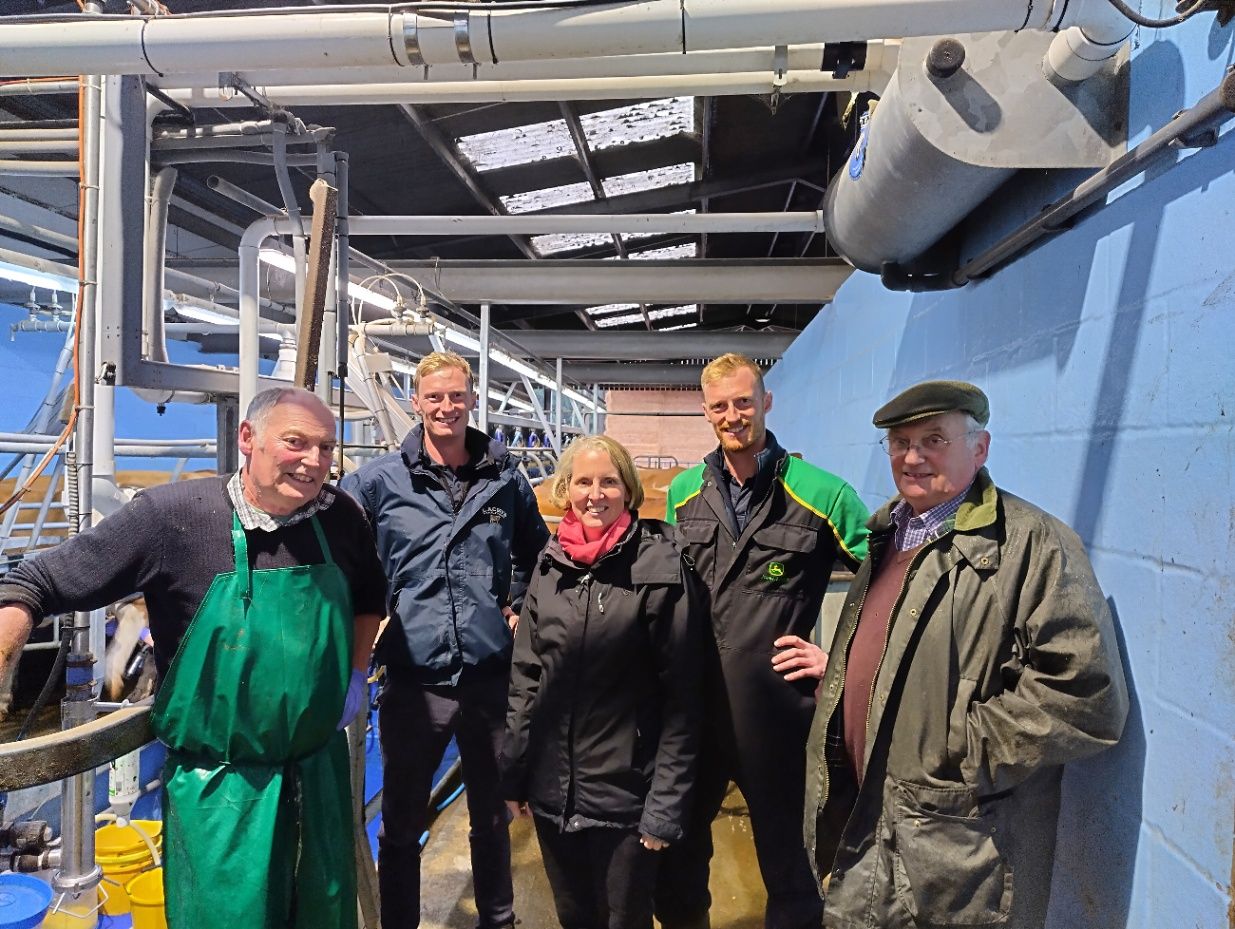
Did these visits help to fix the tax policy? Unfortunately not. There were conversations to be had by Emma and her ex-colleagues at the treasury. Thankfully, just before Christmas the inheritance tax threshold has moved upwards. Credit where it’s due.
The real problem no one seemed to address
The problem wasn’t just the tax threshold. It’s that the Government doesn’t know who the real farmers are. Of those 89 “farms” in my constituency, perhaps 30 actually produce a meaningful amount of food. The rest belong to:
- people with Alpacas or dressage horses they will never eat
- estates owned by people who don’t live here
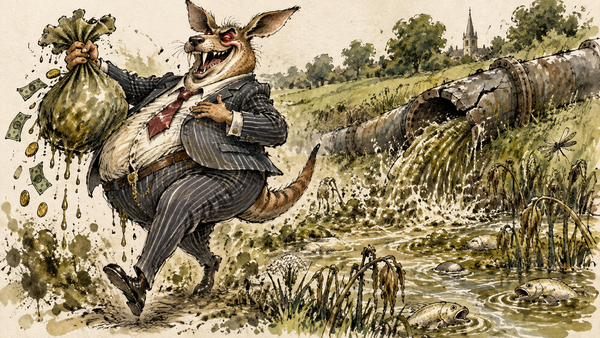
- very wealthy individuals for whom agriculture is largely a tax dodge
None of these people will be forced to sell land to pay inheritance tax. Offshore wealth is perfectly safe. The person who is worried is the one milking cows at 5am.
And the wonks in the Treasury - who have never been on a real farm - looked at the numbers and said: “Only a small number of farms will be affected.” Yes. Because you’re counting 'holdings' not farms.
Of course the people Rachel Reeves thought she was going to tax, including the super-wealthy who would not know how to start a tractor, lamb a ewe, understand what FYM was or why you needed an SBI were not too concerned about paying 20% over 10 years, it certainly wouldn't disturb their sleep in their Swiss ski chalet.
The thing we quietly dropped
Here’s the really irritating bit. The EU — yes, that EU — had a concept called the “active farmer”. The idea was simple: if you want protection or support from your government, you should probably be doing some actual farming. Managing land. Taking risk. Producing food. Although the bar was set rather low, presumably to protect many of the small-scale and part-time farmers in France etc.
I’m pleased to see that the active farmer concept was raised by Minette Batters in her report, but the bar seems pretty low to me. Perhaps she didn’t want to burden us farmers with yet more evidence tests.
Emma Reynolds has listened. She has moved the dial. That deserves some credit, but it would be better still if she could persuade the Treasury that their policy was deeply flawed from the start and drop it entirely.
Perhaps she could also ask her colleagues in Defra address the difference between someone who owns land and someone who farms it productively. The question isn’t how many holdings there are, it's how many active farmers we can afford to lose before someone in Whitehall realises that pet Alpacas are not the same thing as food security.
I'm not the first to raise this, Minette Batters spotted this issue back in November 2024, but my research in the Wycombe constituency seems to validate her viewpoint.
'There are serious questions to be asked as to whether the advice given to ministers is correct'
Ministers claim that 73% of farms will not be affected by the changes. Yet they haven’t explained how they got to that figure. I suspect it includes so-called ‘lifestyle’ farms that don’t produce significant amounts of food and comprise less than 40 acres. Remove these and, according to the NFU, at least 50% of family farms will incur inheritance tax. It’s imperative that the Government publishes the data on how it came to 73%. Ministers must also consult with the industry and conduct a full impact assessment on the effects for farming, rural communities and national food security. Left unchecked, the entire fiscal bucket for food producers could have far-reaching consequences.
- Minette Batters - November 2024 - Country Life Magazine - Article
How to test this in your own constituency
If fellow subscribers would like to stress-test the Government’s figures locally, the method is straightforward especially with modern free-to-use mapping systems such as The Land App
- Overlay your constituency boundaries with Land Registry data
- Cross-check against scheme participation - available in the Land App
- Apply your local knowledge.
- Ask one simple question: does this holding produce food at scale as a viable business?
Then compare the result with the number your MP or Defra believes represents “farms” in your area. If you would like help - just pop a note in the Comments and I'll try and respond.
Footnotes
- ONS definition of a commercial agricultural holding: Includes land parcels over 5 hectares or smaller areas meeting minimum crop or livestock thresholds. Office for National Statistics, UK Agriculture statistics.
- County Parish Holding (CPH) numbers: Required for livestock ownership and interaction with the Rural Payments Agency.
- Active farmer principle: Introduced under EU Common Agricultural Policy reforms (2013 onwards) to distinguish genuine agricultural activity from passive land ownership.
- Farm Profitability Review: Published by Defra, December 2025, chaired by Minette Batters.
- Inheritance tax threshold change: Announced December 23, 2025, raising the agricultural threshold from £1m to £2.15m.
- Recommended: the Scribehound article by George Browne Am I a Farmer