Is it time to rail-in HS2?
Central England's rural tranquility is disrupted by the HS2 high-speed rail, causing environmental concerns, delayed construction, rising costs, and doubts about its original benefits. The project's sustainability is questioned.
.jpeg)

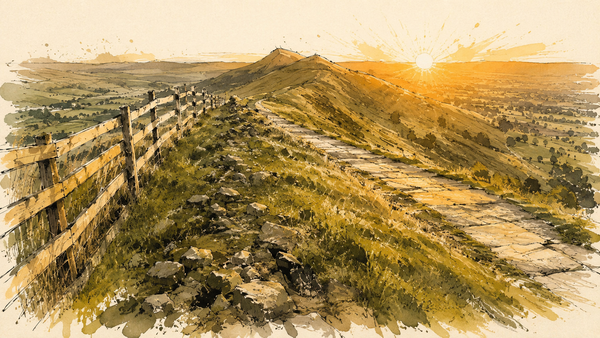
In this part of central England we are lucky enough to have many fine views and landscapes. Green fields and woods, blue skies with billowing clouds make for calm and contemplation.We appreciate the sounds and smells, the stimulus to our senses, the connection with the weather and the changing seasons in the great outdoors away from our concrete environments.
But this only works if devoid of intrusive sounds from road, rail or air. Although already much debated and having been living with it for more than a decade the real impact of HS2, the high speed rail line from London to Birmingham, is only just starting to be felt. Sadly, it is has already compromised our quiet contemplation and seems to aggressively attack our way of life but without conversation, engagement, seeking permission or leave for its behaviour.
A line of division
On average one working site has been opened up for every single one of its 140 mile length. Each of these sites cuts through precious farmland, woodland and lakes. The countryside is severed with farms cut in two, cherished footpaths closed, rural roads blocked permanently and intermittently, intrusion at every turn and a way of life put on hold. Traffic lights, road closures, diversions and relocations add to the misery of country folk in local villages.
Farmers, their mental health compromised, stare into an abyss of uncertainty. Few landowners and farmers along the route, whose land has been taken whether temporarily or permanently, have had compensation agreed, let alone paid out, and see little early prospect of being able to return to the normality they might have once enjoyed. At present the small towns of construction workers offices and plant kick up dust, create noise and obtrusive light. The volume of traffic alone is of an urban magnitude.
Meantime HS2 finds generous budgets to relocate crested newts, badgers and bats, all under the watchful eye of special interest groups.It is after all an environmentally friendly project, in tune with continuing worries about climate change, intended to encourage travellers out of cars and aeroplanes to the more eco-friendly train.
But its impact thus far has been negative to the environment and local communities. Vast swathes of land have been occupied by faceless contractors wearing hi-viz suits and helmets, most of whom seem to stand around supervising someone else, perhaps so Health & Safety protocols might be observed? Contractors ride around in brand new vehicles with flashing lights on the roof. It feels and looks like an invading foreign army that no one had invited but who decided they would just take land and then decide what they might want to do with it.

Nimbyism or environmentalism?
We are told it is unacceptable to be a NIMBY - Not In My Back Yard- but if we are to recognise the value of our rural environment it is surely vital that we continue to challenge the impact of such development in the countryside?
Just how green is HS2? What is the impact on the environment for wildlife, natural resources and the people who live in the countryside? What is its energy footprint? By hoovering up resources, not just of building materials, skilled contractors and plant, but of labour and housing, how is it contributing to general inflation? Will the impact of its construction be mitigated any time in the next decade?
The HS2 team and its army of advisers are for sure intent on a mission, the mandate for the delivery of which has cross-party support from the political elite in London, Birmingham and further North. The HS2 delivery team is well rewarded, with the, now recently departed, chief executive having been paid the same as four Prime Ministers. So against this backcloth and even with the announcement the line will no longer go beyond Birmingham, there would seem to be little prospect this gravy train will be brought under proper control.
The project has already indelibly scarred our green and pleasant land. Conceivably, it might not have been had the project been kept on schedule. It is clear now that no one knows when it might be finished, indeed how would they since it is only partially designed ? No one knows how much it will finally cost but we do know it continues to negatively impact our countryside, without end.
Originally projected to take just eight years to build it is now expected to take almost double that at 15 years, with completion scheduled in 2033. Back in 2012 London to Manchester was budgeted at £33 billion, now London to Birmingham alone is projected at £68 billion.
If this project had a good cost benefit when first contemplated can this calculation still hold true ? Perhaps there might be a clue here, when all the major political parties are in agreement it's a vital need ; groupthink may have taken hold.
What has gone wrong and how can we be confident now that something of value might be retrieved from this monumental folly ?