Land Use Strategies: Why Farmers Need to Speak Up Now
Are farmers being sidelined in crucial land use consultations? Are decisions being made for them, not by them? If you missed the LNRS, don’t miss the Land Use Strategy—this one could shape your future.


Government Consulting with Farmers: Is It Working?
Have you heard of LNRS? If not, you're not alone. The Local Nature Recovery Strategy consultation has been running for the past few months and is nearing an end, with 48 local authorities supposedly engaging farmers. Yet, many farmers haven't heard about it or perhaps not realised its significance. The Office for Environmental Protection, which is monitoring the schemes on behalf of central government, admits that authorities have struggled to connect with the farming community.
It's little wonder that farmers and landowners have not been much involved, as press coverage of the LNRS, has been scant. A quick review of either Farmers Weekly or Farmers Guardian brings up very little information, so I turned to my contractor, who is a well-connected NFU member and dug out a 2-page briefing and blog. Likewise, the CLA has briefing notes and blogs and has actively encouraged members to engage. They are also monitoring the progress of each of the 48 LNRS plans. But the APR/BPR issues have likely knocked coverage down the agenda.
Does it matter?
So why does this matter if you are a farmer or landowner? Because these strategies will shape the future of farming—impacting your SFI/ELMs applications, planning permissions, and Biodiversity Net Gain (BNG) opportunities.
And just as the LNRS consultation ends, here comes another one: the Land Use Strategy was launched at the end of January and is available for consultation for the next three months. It is long overdue, so it's good to see it finally published, but it's a weighty document and seeks to encompass the needs of many different and competing sectors for land.
So who is involved in these consultations?

Judging by the announcement on the GOV.UK website the usual suspects—big environmental groups, wildlife trusts, and policy professionals—will have their voices heard. After all, they’re paid to engage. Farmers? Well, I'd hope so, but many farmers I know would not have the time (or inclination) to fill out surveys or attend workshops.
As farmers, we manage 67% of the land. Most of the proposed policies will have to be delivered with our cooperation, yet our representation in these discussions, based on my experience, is woeful. If the LNRS process is anything to go by, the policies won't be shaped by farmers, but by others. I doubt our voice will be proportionate to the amount of land we manage.
Take my experience. Farming 200 acres in the Chiltern Hills, I first heard about the LNRS through a CLA meeting, which flagged that councils were running consultations. Had I not been involved with the CLA, I might never have known. When I joined an online ‘stakeholder engagement’ session run by Bucks Council, I quickly realised how unbalanced the conversation was. I was the only farmer. The language used was rather technical and policy-driven—not the kind of straightforward discussion farmers need.
Later, I attended an in-person meeting in Aylesbury (Bucks Council office) that was meant to be the conclusion of all the online and smaller meetings. I was hoping for a broader farmer turnout. But again, the room was packed with environmental professionals and council officials, with only three farmers present. We spent hours listening to presentations about ‘stakeholder input’ and ‘nature recovery ambitions,’ but I had to ask: where was the real input from those actually managing the land? And who will deliver these schemes!
Practical matters
On a more practical level, the maps being produced by these 48 Responsible Authorities will be digital maps, but according to the chap responsible for the mapping at the Aylesbury meeting, it seemed that they had free rein to design their own taxonomy and that there was no common standardisation. In other words, they could all be very different. I asked whether I’d be able to import or add their maps to my usual mapping tool. They hadn’t thought of that! So it appears that not much consideration has been given to how these new policies and maps will actually be used by farmers. Bonkers, shortsighted, or just incompetent?
Driving home, it was clear that if we don’t participate in these discussions, decisions will be made for us. Our local authorities (in the case of the LNRS) need real-world insights from farmers to create strategies that balance food security with environmental goals. But the current setup makes it nearly impossible for working farmers to engage effectively. The people with the most influence are those who can afford to sit in these meetings all day—Wildlife Trusts, Water Companies, and government-funded ‘ecology officers.’ Meanwhile, farmers are left struggling to have their voices heard.
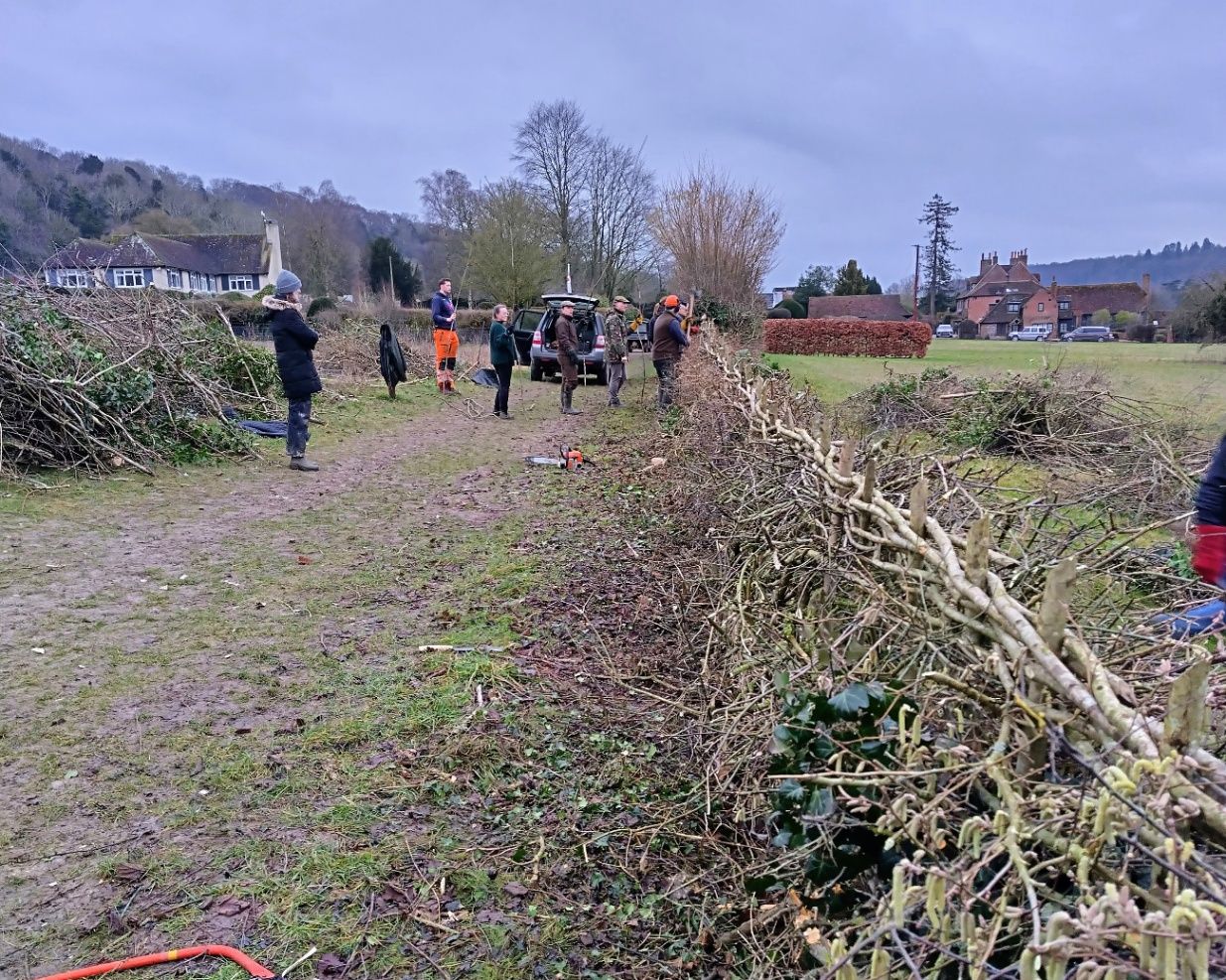
Yes, landscape-scale conservation makes sense. Many of us already plant hedgerows, restore ponds, and engage in Countryside Stewardship schemes. But if we are to improve the landscape on a county, or national scale, it has to be done with the active engagement of farmers and they have to be a large part of the conversation if the goals of the government are to succeed.
If you missed the LNRS consultation, don’t miss this one. The Land Use Strategy undefined is open until April 25th.
If we as farmers want a say in how our land is used, we need to take the time, because no one else is going to do it for us.
The CLA has analysed the Land Use Strategy here
Download the 36 page Land Use Strategy consultation document here.
If you are in Buckinghamshire or Milton Keynes, and have yet to engage with the LNRS, your last chance is here.