Never Squander a Guide
A few thoughts on how to get the most from a guided fishing day.


Arguably my greatest asset is almost certainly my greatest weakness. In the course of my career I have had the good fortune of fishing in some simply stunning destinations and in the company of some of the most experienced and qualified guides as well as had the shoe on the other foot. I hope, over the following paragraphs, to offer some anecdotal evidence to help make the most of a guided day of fishing.

Guides
It’s a large financial outlay taking a guide. Be it rolled into your fishing package on a remote atoll or booking a day with a guide on a tiny New Zealand stream; you have elected to employ a professional to help. So the first most important thing to learn is let them guide you.
No matter how many times you have been fishing and how far flung; the man (or woman) on the ground is in the moment, immersed in the atmosphere and has the measure of the vibe. Almost invariably you have just arrived, you are tired from travel or work or both. You might have been on 4 other beats/areas already that week and gained a fair understanding of water height or tide. You might even have landed some exceptional fish. But that was then and this is now.
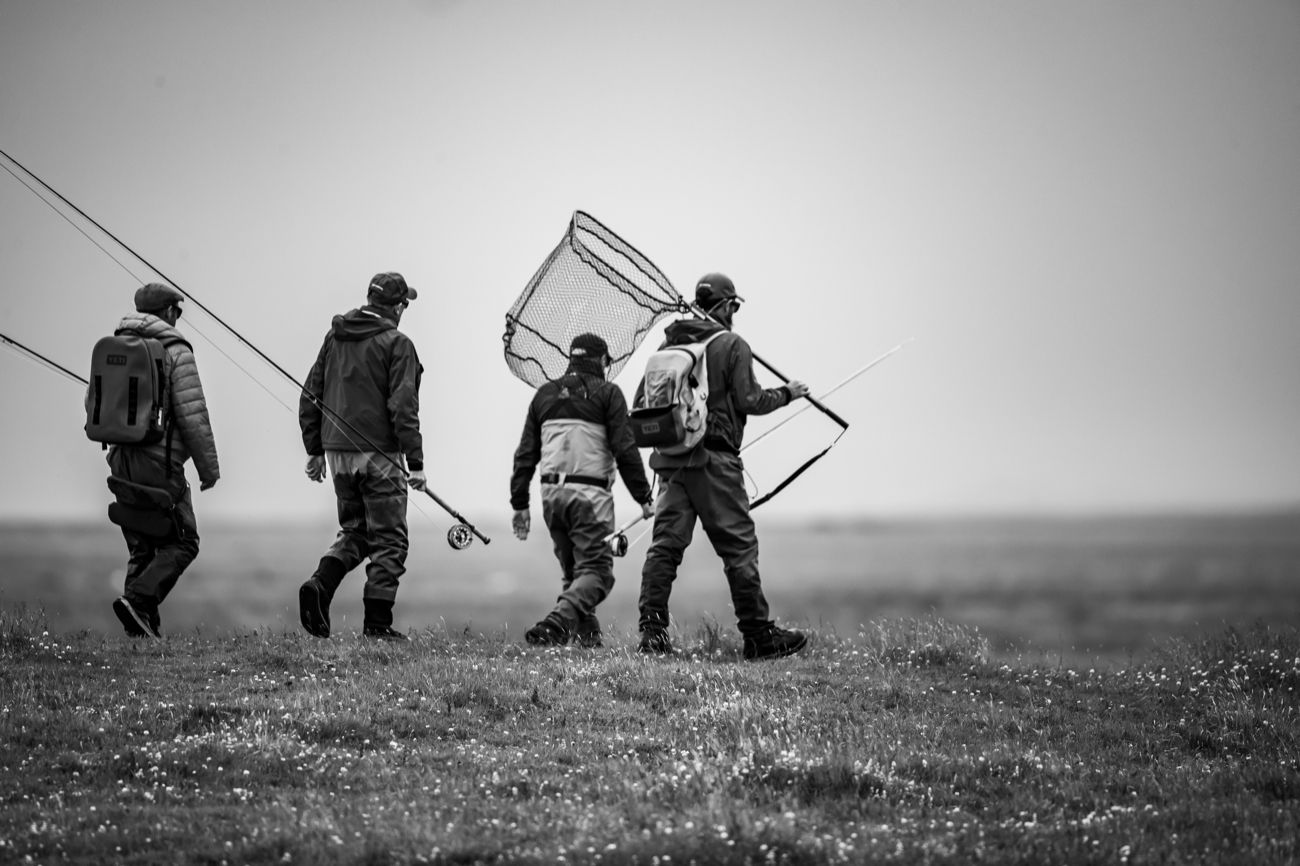
If you completely surrender your preconceptions I promise you will learn a little something and usually a lot.
Never the same
Many years ago I was fortunate to be allowed to guide on the Ponoi in the Kola region of Russia. I certainly was not there for my vast Salmon experience but I worked hard to learn the secrets of the river and those of the big tent too.
One morning I arrived at the boats and on getting everything ready to head up river my clients explained that they would tell me where we’d go and for how long that day. After some careful explanation of how I saw our day ahead I realised they were not to be persuaded by the new boy and we followed their “experience” based plan.
If you really think about it water is ever moving. Even a hill loch on the stillest of days changes and swirls. A bird lands here and a fish moves there. The estuary tide moves some sand here or the sand eels turn there. A 3mm river drop here or a rock moves there. It matters not how big or small everything has an effect. Add to this the weather, the time of day and the fish having their own agenda and you have an ever changing environment in which to pit our wits.
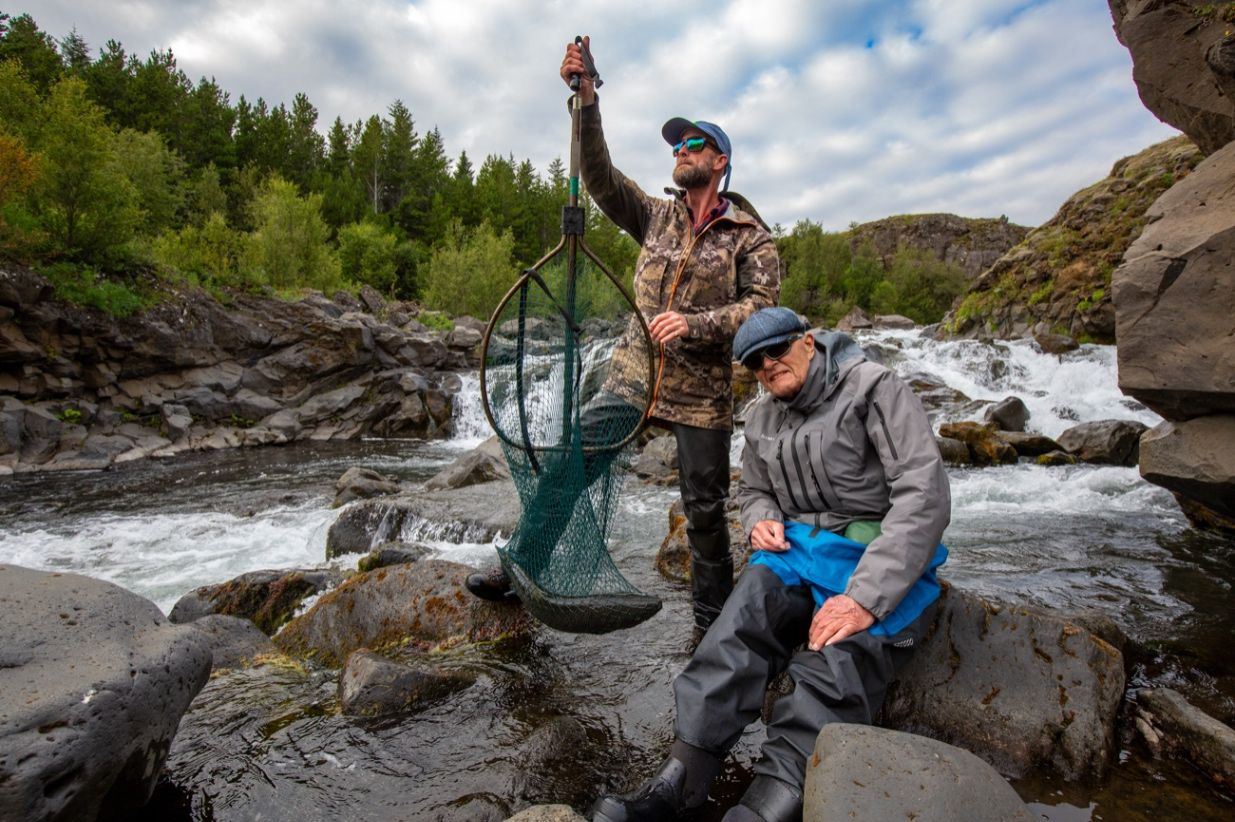
Sure enough many years of experience on the river produced a few hard fighting Atlantic Salmon but not a typical morning of Ponoi spring run fish. After lunch I again offered my thoughts on a spot to try and my whim was indulged. I pulled up to a spot that had been fruitful all week and dropped anchor. “Not at this height” I was told. Of course as I started the drop I started to question my own decision and a few metres down I started to look about to see if I had got things wrong as fishing and flow were a little slow. Then the Salmon flood gates opened and I was rewarded with happy clients for the rest of the afternoon. I may not have got the perfect spot but I knew more of the river than I had realised.
Don't be afraid to ask
With fishing taking one to all the corners of the world it is an inevitability that guides will very often not be communicating in their first or even second language. It always pays to start with the basics and get to know a little about the non fishing side of their lives (if willing to divulge) as it’s usually a fairly easy thing to communicate. This paves the way for an open dialect on the more technical aspects of the job in hand and sets everyone at ease.
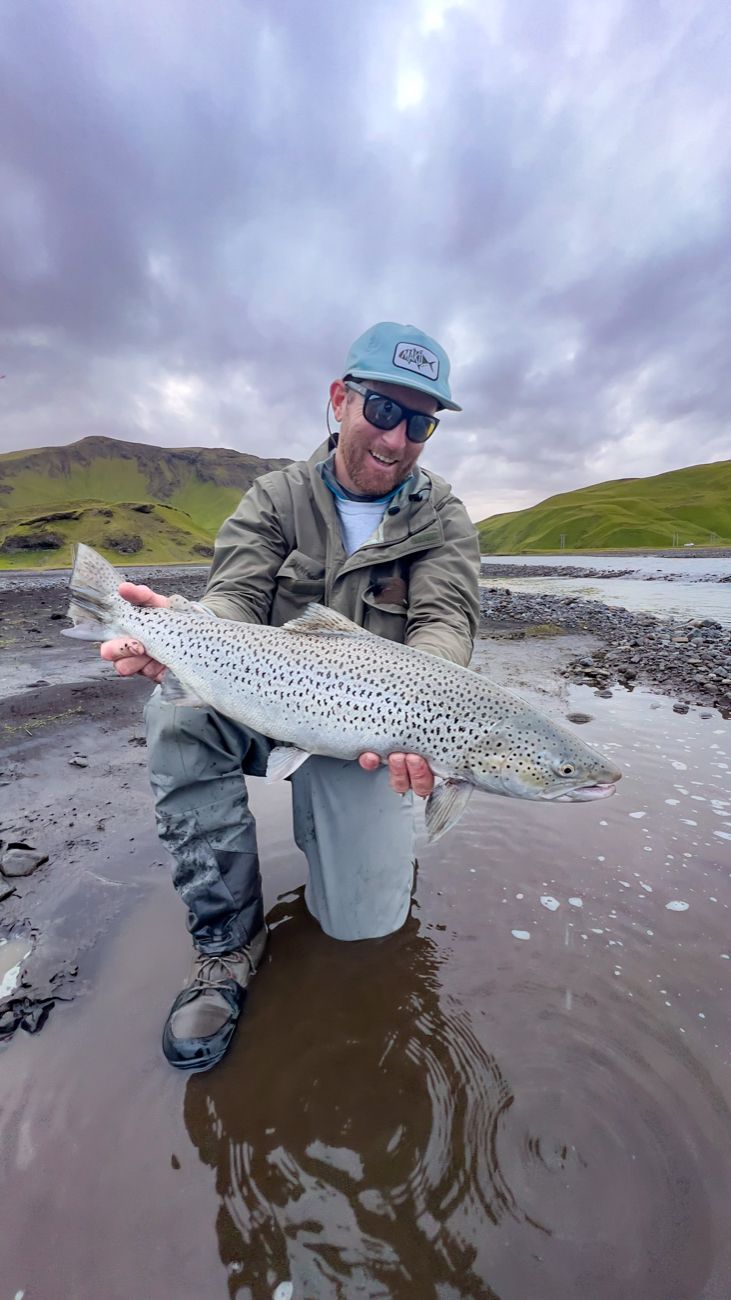
On one particularly early season Yokanga week my guide, whose name I forget, was not much for talking. I was fishing with a photographer named Roy and by the end of the week we had few fish and fewer words form our guide. I elected to head up river alone with our guide, away from the fishing, in order to let my clients have access to the more productive pools and for Roy to get some images. Little was said as we inflated boats, set up rods and began to row to the start of the fast water. A couple of casts into the draw above the rapids and a fresh 28lbs Yokanga fish came to the net with relative ease. This not only opened the batting for my week but also the conversation.
I had neglected to try to get to know my guide in my haste to get fishing. And in his turn he had done the same in fear of telling me what to do or how to do it before I had caught a fish. Before long we were reading English poetry from a book in his wading jacket and he was showing me how I had spent all week skipping over the best water in the rapid windows by catching fish out of half of them. All because I had failed to properly break the ice. This man lived for this job and I had wasted 5 days thrashing in the dark.
Don't be too proud to borrow
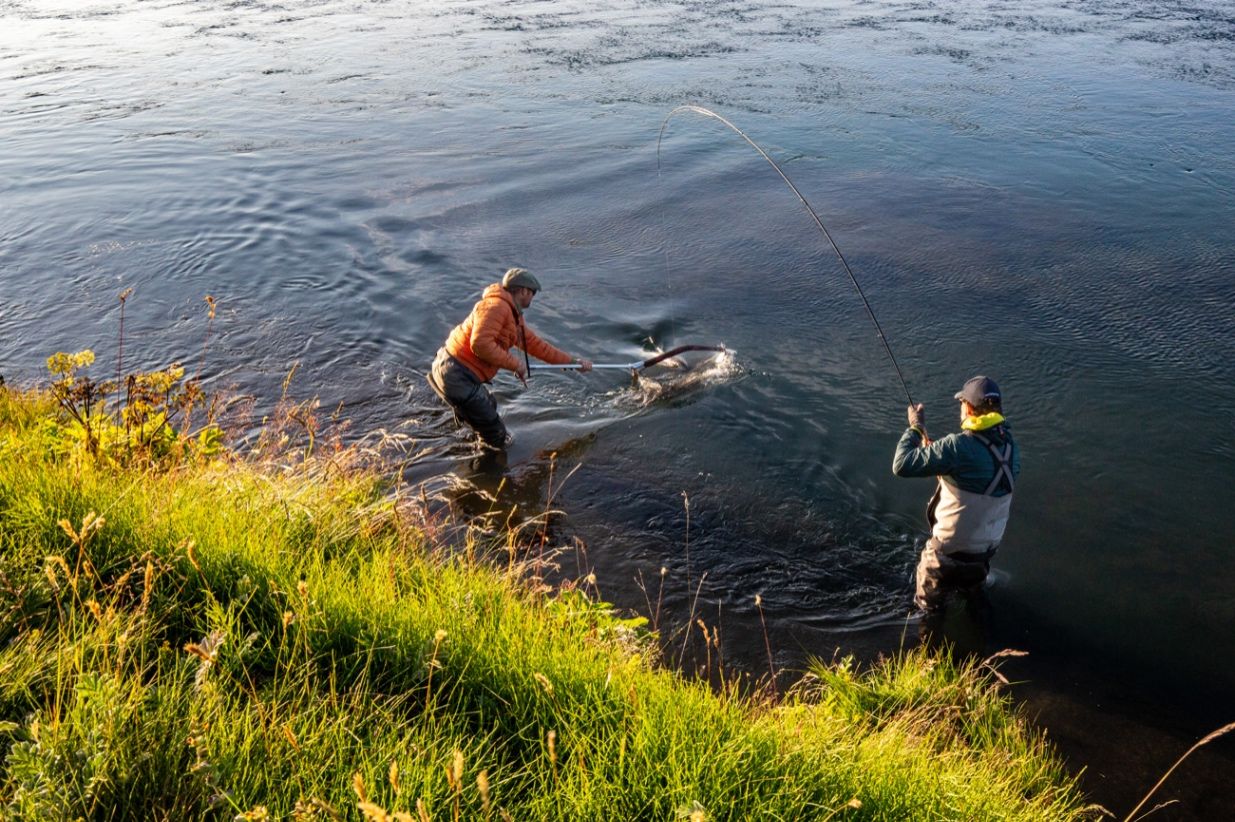
I see it very often on the rivers of Iceland, a client arrives full of excitement with a whole raft of tackle. Either a collection of years of visits to different rivers around the world or bought or borrowed equipment. As lovely as it is to use your own kit certain rivers require certain approaches and tackle very different from others and of course different times of year change things. A double handed rod with a long belly floater and size 8 double is no more welcome on a clear technical river on the West coast of Iceland as it is unwelcome on opening week on a Russian salmon river.
Most lodges have loan equipment and most guides know how and when to set these kits up. Sometimes the stars align and conditions are prefect for that full float Rio Midspey you have had since 2005 but don't be too stubborn to borrow the very best kit as supplied by the guide.
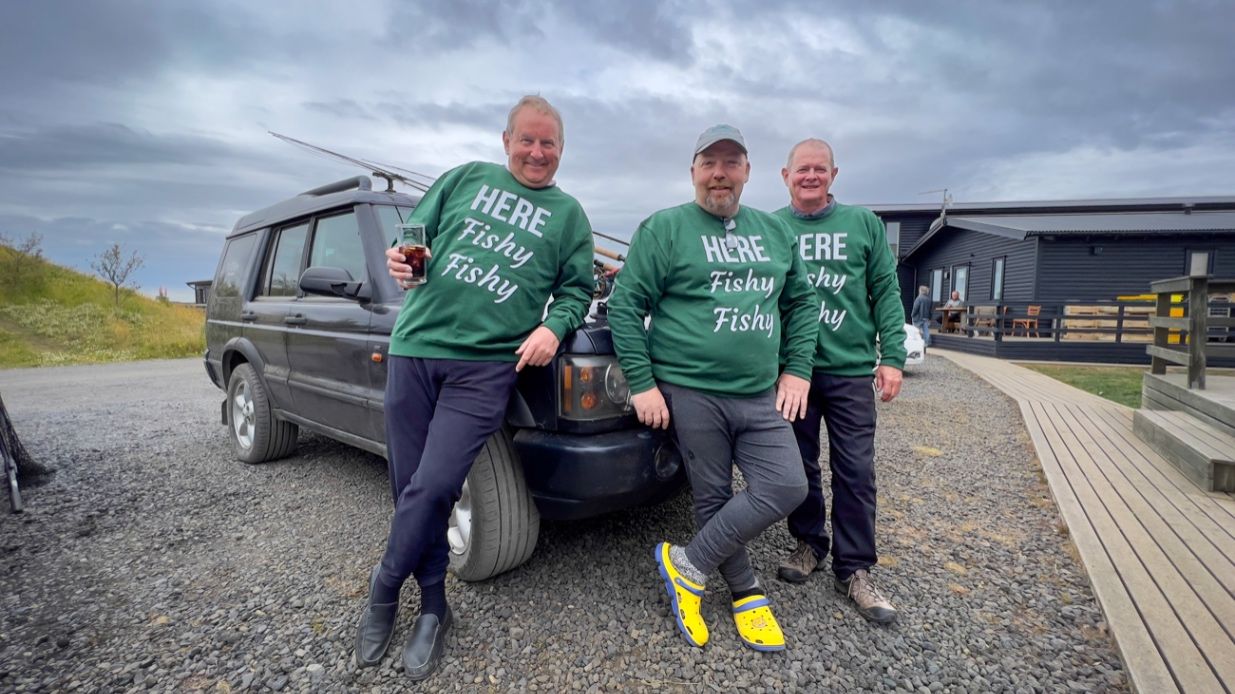
The flip side of this is when a client has been dutiful and forward thinking and has headed to his nearest tackle emporium to get the perfect set up. Many a time I have had to carefully explain that the many hundreds of pounds spent on kit might fall everso short of the best kit for the conditions we have here and now. If you are keen to get some new kit for the trip contact the lodge or managing agent and ask them who they recommend to supply the correct kit and knowledge. But also ask for a pre-travel document or a kit list so you can first check how much of your current kit fits the bill.
A guide is not alone
It is easy to think that a guide has no more than their time on the river at their disposal. He or she are a part of a team. Part of the whole set up and as such shares a wealth of knowledge from all sorts of sources including you. By night it’s easy to retire to the lodge bar and hear stories of Sea Trout won and lost over a bottle of good Malbec or the GT that took at the rod tip over a sundowner cocktail. But don't discount the work that goes on when you are off the water.

A good guide is a part of a network. Not just made up of guides but also lodge staff, managers etc. Like a web of information flowing in every direction good communication with your guide can lead to a better lodge experience or travel tips. Confide in your guide and see how it improves the overall experience. They don't just know that a massive mend to get the fly deep into the cut bank will make or break the morning. They also know who fished here yesterday and how. They know that on the last day of fishing you can be packed and out of your room buying precious extra minutes on the bank. They know who to ask about local tours or restaurants. They even know how and where to book your next trip and in some cases might be guiding there too.
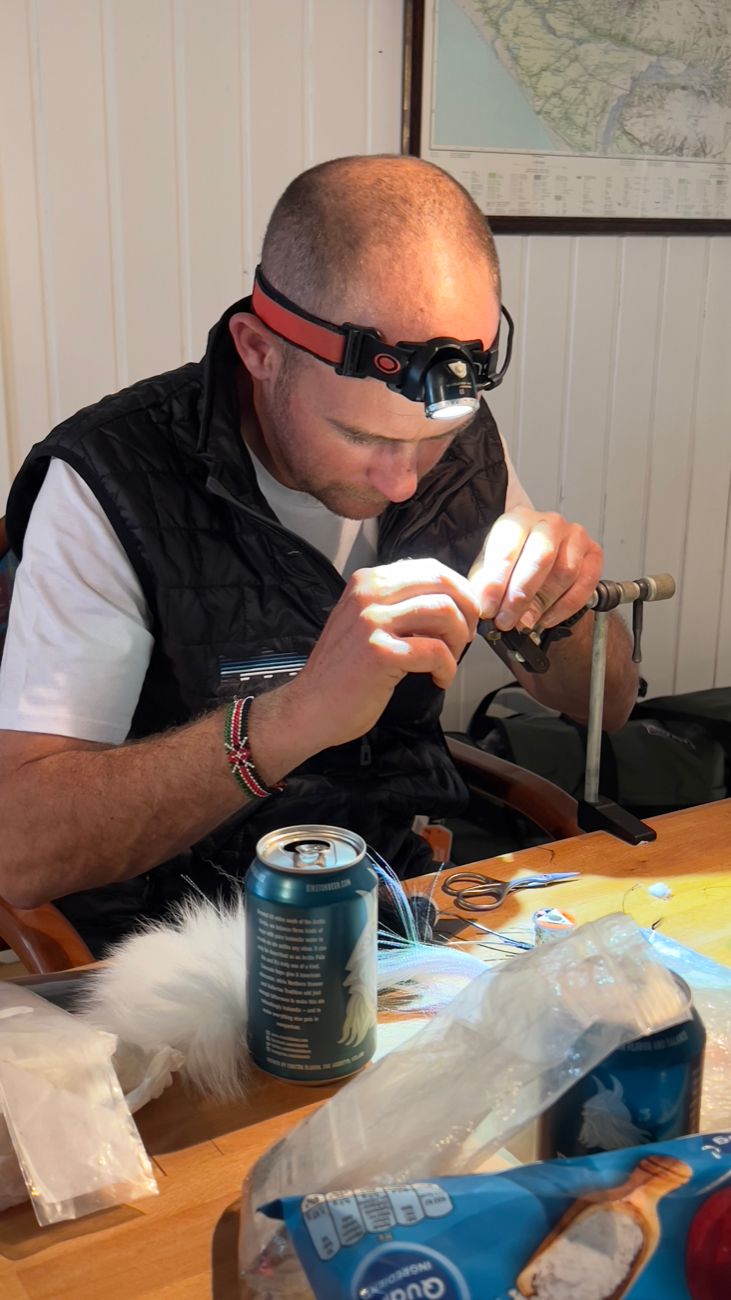
I know this, not because I have been around the world fishing with guides or because I have managed fishing lodges, but because I have been in those teams. I have learned so much more about fishing sitting around the tying bench with a Einstök Blue or in the staff kitchen over a vodka. There is no one guide who knows it all but a vast array of differing experience and nuance all rolled into a global network of professionals all with something different to offer.
The exception
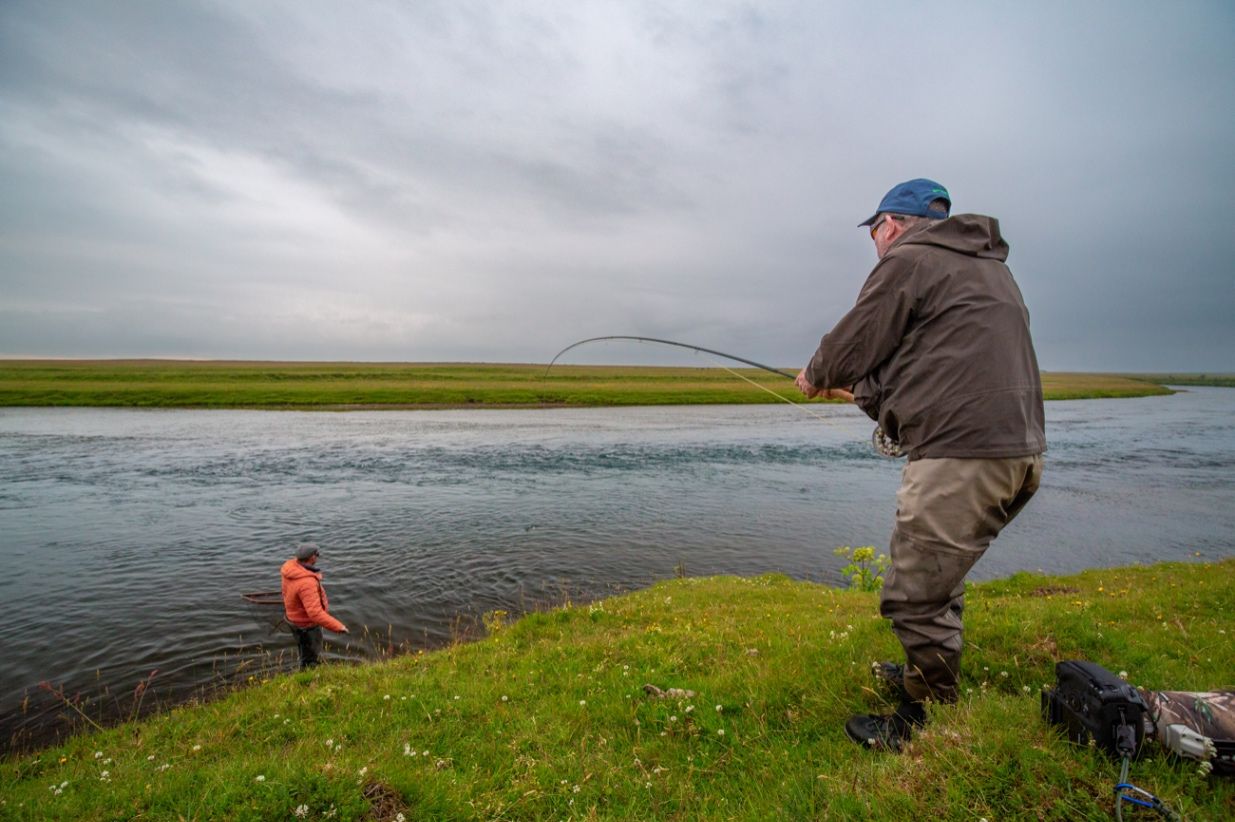
It is true that on occasion you don't get on with your guide. I often rebook people for the following year and they ask for a different guide. This is ok too. It’s human nature that we don't get on with everyone we meet. But if you find yourself in a boat, car or helo with a guide that grinds your gears take a breath, toughen up and glean all you can whilst you can. Even the most disappointing guide has a wealth of information and no one knows everything about fishing despite what they might tell you. But if the vibes not good the fish just know. And for everyone's sake be generous with goodbye...