Permission to speak, Sir?
Trying to undo two hundred years of tradition, not always good, on the chalk streams is tough for a newer generation of river keeper. Permits, paperwork and pointless permission doesn't help.


Over the last few years, it’s become noticeable that I shout at people more frequently than I have ever done so before. River keepers are quite well known for their short fuses but even after a lifetime on the river I’ve noticed it’s not always at the wretched water companies but more and more at those supposedly on our side. Usually, actually always, it’s directed at those who claim to be in charge. I inevitably apologise although the awkward silence means that they know I meant it and a raised voice usually wins their attention. Shouting at people in charge inevitably happens as you get older and more experienced, unwilling to put up with pointless bullshit. Of course that hard earned experience has not all been positive and I for one have learnt much more through bad experiences than good.

There’s no doubting that this generation of river keepers are being made to jump through ever increasing numbers, whilst ever decreasing in size, hoops, partly because of the dinosaur behaviour of our predecessors’ desire to tame and manufacture our streams into put and take stew ponds. It was initially our fault however, this constant battle with irrelevant paperwork has become a barrier for the younger, eco friendlier river keeper and to the progress of river restoration in trying to undo the ‘Kew Garden’ look afforded to some of our chalk streams over the last one hundred and fifty years.
Meetings about meetings
A lot of my mate’s dads were Southampton dockers back in the seventies who were quite possibly the most militant and laziest ‘workforce’ around. They would routinely, once they’d drawn cards to see who could go home that day, have a meeting in the morning to arrange having a meeting the following afternoon which is the kind of traditional non-sense and pointless delay that river keepers have to put up with while listening to uninterested pen pushers reading from an out-of-date script staring out at them from their dubious source of god like information, a computer screen.
You realise that you know more about the given subject than the person sat in front of said all knowing computer screen with plenty of letters after their name but unable to understand the workings of a specialist subject, in my case a chalk stream. Unfortunately, these pompous people know very well the power they hold and can dash our brilliant ideas, thoughts and plans of river improvement with the nonchalant flick of a black biro pen.
They can curtail excellent work by refusing permission for all manner of ridiculous reasons most of which are bureaucracy (excessively complicated administrative procedure) lead. Yes I had to look it up, but I found it amusing that right in the middle of the word bureaucracy the letters EA jump out at me. Why do river keepers have to constantly rage against the machine of government? The Environment Agency, Natural England, Wildlife Trusts and local councils each of whom demand non sensical requirements before giving, or often not giving…permission.
I’ve learnt over a lifetime of working on the chalk streams what improvements and restoration is needed after generations of over management of my beat. I know what is good, beneficial to the river, my knowledge and opinion of moving water honed from forty years of experience both good and bad and taught to me by old keepers who themselves were taught from keepers before. The experience I learned from these men from ancient times was often poor and I disagreed with much of it, but I still learnt. Old keepers did what they were told to do often by his Lordship and the river’s wellbeing was not always top of the list. They were fishermen keepers first and river keepers second and the one thing they never had to worry about or attempt to seek, was permission. Sorry to say that the river sometimes suffered because of it. Everyone, even river keepers, need to be kept in check.
I’m interested by all manner of history and spend much of my time on the river wondering about those who have been before me doing the same jobs. The workings of the chalk streams are well documented with many books on the subject but to be able for me to meet older keepers who like their fathers before them spent a lifetime on the river is a real eye opener and while I do at times feel burdened following in their footsteps, eventually the time comes when we’re not afraid to question them or challenge their thoughts. Traditional ways are not always the best way but to be the one to suggest change after two hundred years takes real courage and needs an extremely thick skin.
Bad Tradition
I remember my early days on the river and the instructions for the day’s work from the he who must be obeyed head keeper.“Start at the top nipper, and finish at the bottom. Anything that looks green or thinking of growing needs razing to the ground. It should take you about a fortnight.”I was in awe of this old keeper, he’d been on the river all his life and surely knew everything there was to know on how best to look after a chalk stream beat but even to a young, starry eyed under keeper desperate to learn and obey, cutting down fringe at the end of the fishing season seemed like a pointless and damaging thing to do. Still, as a young under keeper in those days you did as you were told and wouldn’t dare question him or his fifty years' experience.
“Putting the river to bed Donny has been October’s job for a hundred years or more, short back and sides, always remember that.”
Thirty years later looking at my beat on the top of the Test in autumn time I wonder what the old boy would think. He wouldn’t be impressed. He’d probably say it looked like an overgrown mess and accuse me of being an idle sod. The fringe still standing, the ranunculus not scalped to within an inch of its life and the cress and water celery still reaching out into mid-stream. He’d probably shake his head in disbelief at the large numbers of grayling on show that were looked upon as vermin in his day and a vital part of his duties was to blow them and the pike from the water using his trusted 12 bore and as for the dozen or so fallen trees left anchored to the riverbed. Heaven helps us.
Breaking with age old traditions is always a tough thing to do especially so on chalk streams completely enveloped in the history and the mostly out of date bullshit of fly fishing. As a young keeper on the Test, I found the thought of upsetting the apple cart a sobering one and was swayed in what I really wanted to do by not wanting to question an old keepers’ lifetimes worth of experience. I have a great interest in the history of the rivers and the keepers that have worked them but have little time for pointless tradition and admit that the introduction of higher levels of ‘management,’ has helped change it mostly for the better however, the excessive number of pointless permissions now required is damaging that progress.
The people in charge that I shout at are always younger than me, much younger than me, in fact most would appear to speak a different language such is the insistence on using their ‘system’ which distances them from that thing called common sense. Their beloved system is all part of the ‘process’ of which removes human involvement and the tricky matter of having to make awkward and unpopular decisions. Not so much artificial intelligence but rather officially unintelligent. One EA water resource manager once explained to me that, “the process is flawed Donny. We all know it’s wrong.” When I suggested that they make a name for themselves and make a change to a flawed process the answer was as woke EA as could be. “I’ll reach out to my team leader Donny.” I’m pretty sure a phone call would be easier, I thought people only ‘reach out’ to the Samaritans but no, a flawed process causes the same reaction.
Rewild to what. To when?
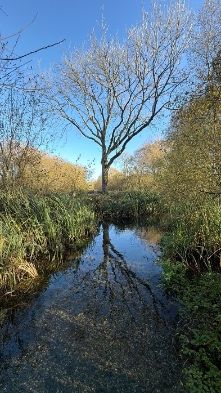
What has finally caused this river keeper to put pen to paper? An example as to what I have to go through to work on my chalk stream beat; I detest the phrase “rewilding.” Rewild to what, to when? Fifty years ago, five hundred a thousand years ago? The river Test is one hundred percent man-made and has been for hundreds of years with its crystal water sucked from the aquifers into main channels to drive our mills and flood our water meadows. To completely and quickly abandon something man made back to nature is vandalism and shouldn’t be done without thought by just this one meaningful generation of green people however, the edges of now redundant man-made ness can be, with sensible thought, carefully knocked off. I spotted such an opportunity within one day of arriving at my new beat on the top of the Test.The river had been lifted by about six feet to feed a watercress farm sometime in the fifties involving thousands of tons of gravel and some serious civil engineering. It looked terrible and made worse because if you looked carefully you could see where it used to run snaking through a small woodland. I was going to put it back onto its original course. I told everyone of my plans and all without fail thought it a wonderful idea quickly followed by, ‘bloody hell Donny, good luck with getting permission!” But everyone I had shared my plans with including the EA, Natural England, Wild Trout Trust and all the other keepers thought it was excellent so it should be pretty straightforward no? No. From then on I basically had to ask permission to get out of bed in the morning. The Test is a SSSI – site of special scientific interest - and my proposed job sits alongside a meadow managed by Natural England. I should have stopped there.
My job. Undo the civil engineering of a stream
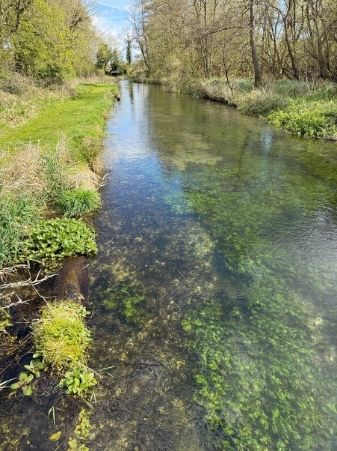
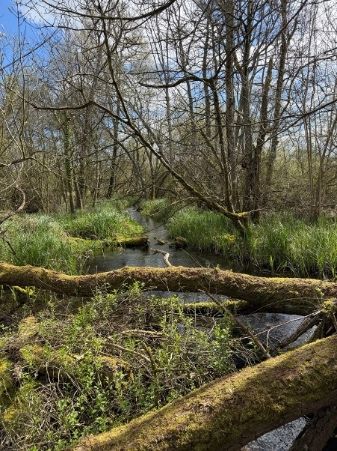
It has taken more than two years of non-stop meetings, discussions, arguments, head shakings, paperwork quite literally stacked on my desk and the small matter of thousands of pounds in fees for permits needed for absolutely everything, and absolutely nothing. The same fees for the same routine checks and screening that every job on the same river has to go through. A licence to delay and frustrate.
The Dorset coastline
After contracts had been signed between local EA, NE, local council, contractors and owners, I looked forward to the start of this £250,000 job this coming October however, the flawed process people had one more kick in the teeth for me. An email came through from national EA and NE saying they’d discovered another site that needed screening in case our job would in some way affect it. Our job is about five hundred yards long at the very top of the Test moving a stretch of river about twenty feet back into its original channel. The site that they now thought they needed to screen and charge another £849 for was on the Dorset coastline. About forty miles down the river, ten miles through Southampton Water along another forty miles of the Solent, English Channel to the Dorset coastline.The Environment Agency and Natural England have both been alarmingly complicit and their silence deafening as the water companies dump their sewage into our waterways including the river ten miles downstream of this proposed job, yet they now pounce onto this made-up nonsense.
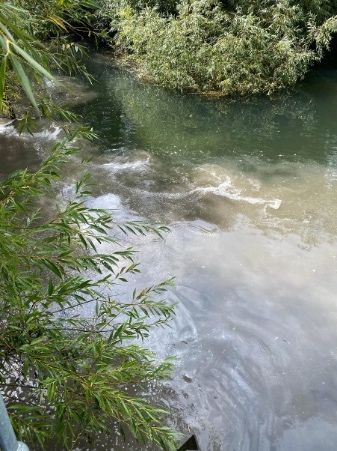
I had a few discussions about this new fee and about how our job could possibly affect the Dorset coast but got nowhere. I spoke to the national EA responsible and got nowhere. They explained that if the £849 wasn’t paid within ten days our whole application could be delayed or refused. Surely akin to blackmail? The last team leader lady I spoke with finished with my original quote, ‘sorry Donny there’s nothing I can do, it’s a flawed process.”The river keepers who I have desperately tried to keep interested in this job as something we should all be doing have now long gone amazed at my gullibility and any lingering respect or acknowledgement for those ‘in charge’ has gone with them. What a PR disaster, a missed opportunity. I feel sorry for my local EA who are also hugely disappointed and embarrassed that the decision is seemingly non-negotiable.
Those that I shout at are all part of the flawed process and would appear to accept it without question but must understand the frustration of trying to gain unnecessary agreements are damaging the much-needed movement of river restoration. There are experts waiting to work on our rivers who are being held up and put off by this obsession with paperwork, permits and non sensical permissions. They claim to have seen off a generation of outdated owner and keeper who have damaged our chalk stream only to replace them with a system, a process, official unintelligence. Flawed indeed.