Ploughing Through History: From Shakespeare to Sustainability
Copied from my ‘The Ruralist’ Substack, a story of soil, toil, and the ways in which we hold on to our traditions and also let them go.

“The Cut Worm Forgives The Plough”
“He plough’d her, and she cropp’d”
In case you needed any illustration of how fundamental the humble plough has been to shaping this country’s cultural as well as physical landscape, take it from the two heavyweights of English Literature quoted above: Shakespeare, the randy old badger, referring euphemistically to the act of ploughing as a fornicatory pastime in ‘Anthony and Cleopatra’, and William Blake in his ‘Proverbs of Hell’ where he invokes the magnanimity of the soil’s invertebrate population, when tearing through the earth and its occupants becomes necessary to the pursuit of satisfying other human appetites.
More recently, Sir Elton’s plaintive song ‘Goodbye Yellow brick Road’ contains a lyric about going back to his plough, while turning his back on the highly conditional glamour and trappings of fame to pursue a more humble and fulfilling existence on the land.
There are plenty of other examples where ploughing and the plough are used idiomatically in the English language; ‘to plough a lonely furrow’, ‘to plough on regardless’, and ‘to plough the sands’ are just a few that spring to mind. There’s even a constellation of stars named in honour of this vital piece of cultivating equipment.
An indisputable civilisational touchstone then, the plough has come a long way from its primitive origins of the wood and bone contraptions that were first employed by ancient Mesopotamian agrarians.
Though the materials used in the plough’s manufacture have benefited from a substantial upgrade since the first time a gemsbok horn was attached to a stick and used to crack the soil’s surface, leading to the modern day reversible, six bodied polished steel Kverneland, the basic design (notwithstanding some variations on the theme) which has since Saxon times consisted of the ploughshare, coulter and mouldboard, has not required much improving upon.
Pre-mechanisation, the process of turning the sod made use of teams of oxen or horses and their highly skilled handlers, which gifted us with an entire lexicon of land-based measurements, determined by how much ground could be covered by man, beast and their earth-turning equipment in a given time period. Rods, chains and furlongs were what came to describe portions of cultivated ground, especially back when the commons were collectively farmed.
Since then, tweaks and improvements like Harry Ferguson’s three-point linkage system, hydraulic technology, and GPS tracking have given individual farmers the ability to cover vast acreages in a day, and while these modes of precision cultivation (plus incentives for maximised production) have often caused a reduction in the wildflower-rich headlands and field edges, since machines are able to cultivate right up to the hedge line, they’ve also arguably led to the preservation of hedgerows in many arable fields, as there’s no need to remove them to make room for unwieldy machinery.
Advancements in technology aside, the art of ploughing has in its own right developed as a competitive sport, with tournaments held across the northern hemisphere for both modern tractor and traditional horse-drawn machinery. Ireland in particular tends to return a disproportionate number of champions in both forms of the discipline, which is impressive for such a tiny island.
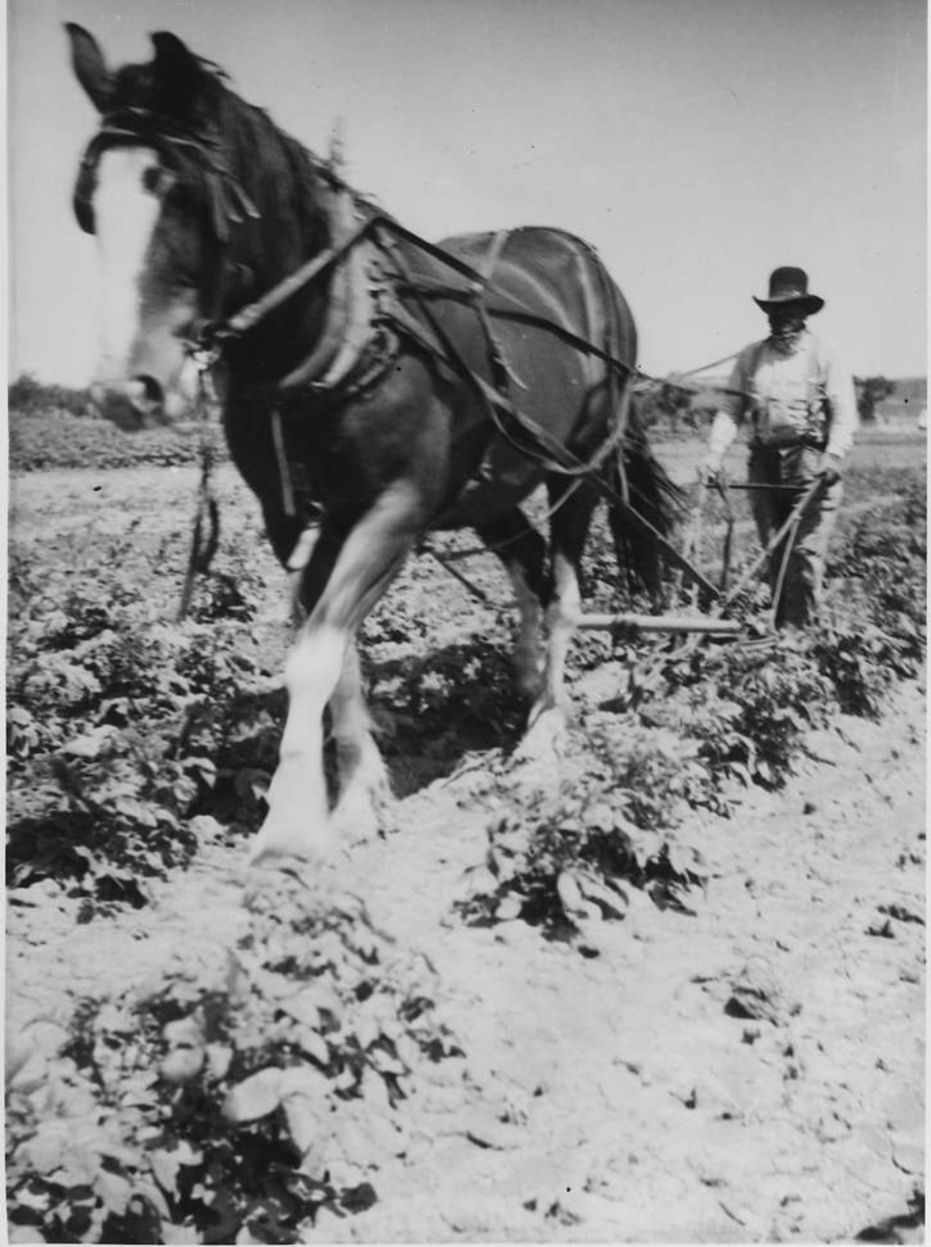
I met a British former champion of horse-drawn ploughing competitions many moons ago, when I ran a pub in rural Gloucestershire. At that time I also had the loan of an almost 18 hand high shire horse called ‘Prince’ who lived in the two and a half acre pasture adjoining the premises.
The ploughman, Roger, who was in his eighties then, had cycled the twelve mile round trip from nearby Newent to Staunton where my pub was, to come and meet the big lad after hearing about him on the local grapevine.
Prince and Roger, both a vanishingly rare sight in our engine age, presented a moving spectacle as they connected over some soft words and gentle pats. In a different era they might have been colleagues.
At any rate, Roger said his quiet hellos to Prince, then turned and matter-of-factly informed me that the big fella was a ‘rig’ and that I’d better be careful if there are any mares about.
Sure enough, Prince was soon to make a short-lived career (until we reluctantly handed him back to his owner) of hopping the field boundary and trotting off down the A417 to visit some mares stabled nearby, much to the horror of myself and the assorted motorists whose brakes he thoroughly tested on those occasions.
Toil and tillage, then and now
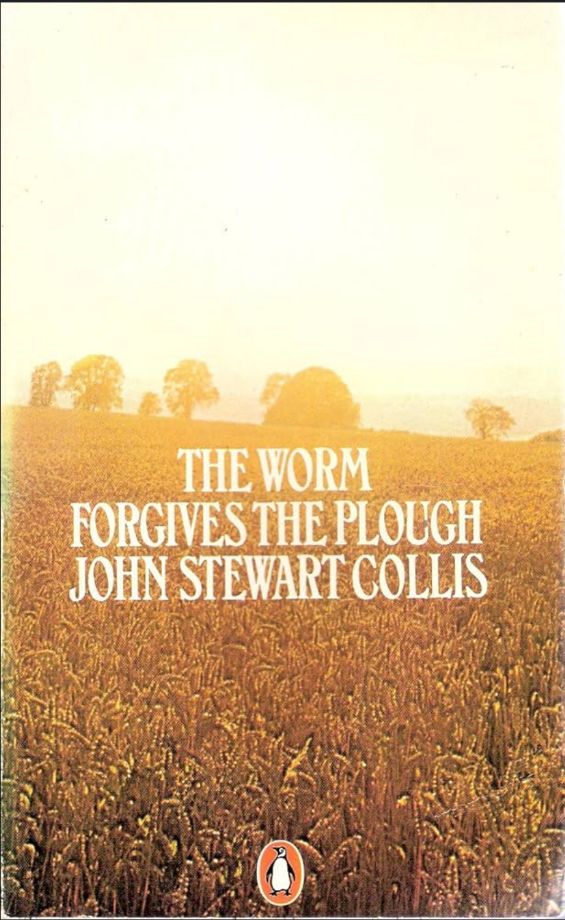
In his superb book ‘The Worm Forgives The Plough’, whose title paraphrases that Blakean sentiment, Irish academic and author John Stewart Collis gives an elegant and at times almost poetic account of the sort of work that Roger and his contemporaries would have undertaken, in a beautiful series of essays drawn from his time in the British Land Army during the Second World War.
It’s set at the point when agriculture was transitioning from the old fashioned, labour-intensive and often mixed farming practices that pre-date the Norman conquest, and into an era of increasing mechanisation which, thanks to the war effort and discoveries made in the manufacture of chemicals, was ramping up to usher in the modern era of vast monocultures and specialisms in harvesting and husbandry.
In the book he (often quite fondly) recalls his own and his colleagues’ successes and failures in the relentless work of keeping food on the tables of British households, when many men had been conscripted, and the message of the day was to “Dig For Victory!” so worms were having to extend their benevolence to the spade also.
The events take place on two farms in the south of England, where horses, wagons, hay-rick building and hand threshing, plus a fairly large workforce were still employed, despite an acceleration towards the types of modern technologies that would be more familiar to farmers today.
A confirmed townie with no previous agricultural experience, Collis manages to overcome his limitations, while dealing with his more seasoned colleagues’ frustration at having to instruct and constantly monitor a hapless urban rube, until he gets into the swing of things. And he does!
Although a lot of what he describes comprises of the kinds of hot, back-breaking and monotonous tasks that made up much of farming life back then, and that mechanisation has since taken over, while doing it he learns to appreciate the novelty of fresh air, a proper night’s sleep after a hard day’s graft, good food - any food, the camaraderie of other farm labourers, and the immense satisfaction of a job well done, especially in the construction of cottage-sized hay ricks.
While there are plenty of moments of pure tedium where he wishes he were anywhere else, he does concede that the occasional company of bikini-clad Land Army girls, and the aerial dogfights that occurred twice daily over their heads as they worked helped to spice things up a bit.
In his writing of this rural chapter of the wartime effort, he lovingly brings to life the dignity and fortitude of working folk in the Dorset and Sussex countryside, in a series of keenly observed, painstakingly detailed and often hilarious character studies.
His reflections on the rise of the machines and the realities of farm work are written with warmth for the common labourer, and he recognises the implications of such change, but does so without sentimentality. He doesn’t take an ideological position on whether the growing use of synthetic fertiliser (referred to as “artificial”) or the diesel engine represents a net positive or negative in the work he’s employed to do, but notes the changing nature of the farming process to a backdrop of the growing need for increased production and food security, with an almost detached fascination. He also dedicates an entire and lengthy chapter to the brilliance of ants, which reads like a love letter.
Since that period, and as a result of this direction of travel, Britain currently achieves a level of food self-sufficiency at somewhere around the 60% mark, across the board, down from a peak of almost 80% in the mid 80s. This has not come without some drawbacks, however.
These drawbacks mean that ploughing has fallen out of favour in some quarters recently, most notably in the environmental sector. It’s often argued that ploughing the soil leads to a broad range of “ecologically disastrous” consequences such as destruction of the soil’s microbial life and mycorrhizal networks, compaction, flooding and erosion to name but a few. It also releases carbon dioxide back into the atmosphere, along with other greenhouse gases like nitrous oxide, which is no laughing matter.
The charges against ploughing the soil are fair enough in some contexts, and there have been many such cases where insensitive use of the plough has been seriously problematic. But, like any tool, it has its place.
There’s a nascent but growing interest in non-till (and minimum till) agriculture, which can trace a line straight back to philosophies out of the 1970s from the likes of Masanobu Fukuoka and E.F Schumacher. In their respective works ‘One Straw revolution’ and ‘Small Is Beautiful’ both men argue for a lighter touch in growing food, with a greater regard for the ecological impact of doing so.
Fukuoka put his money where his mouth was in his commitment to no-till, and really ploughed his own furrow (metaphorically speaking) working to find ways to achieve success in what was then an extremely non-conventional practice, on his own farm in Japan.
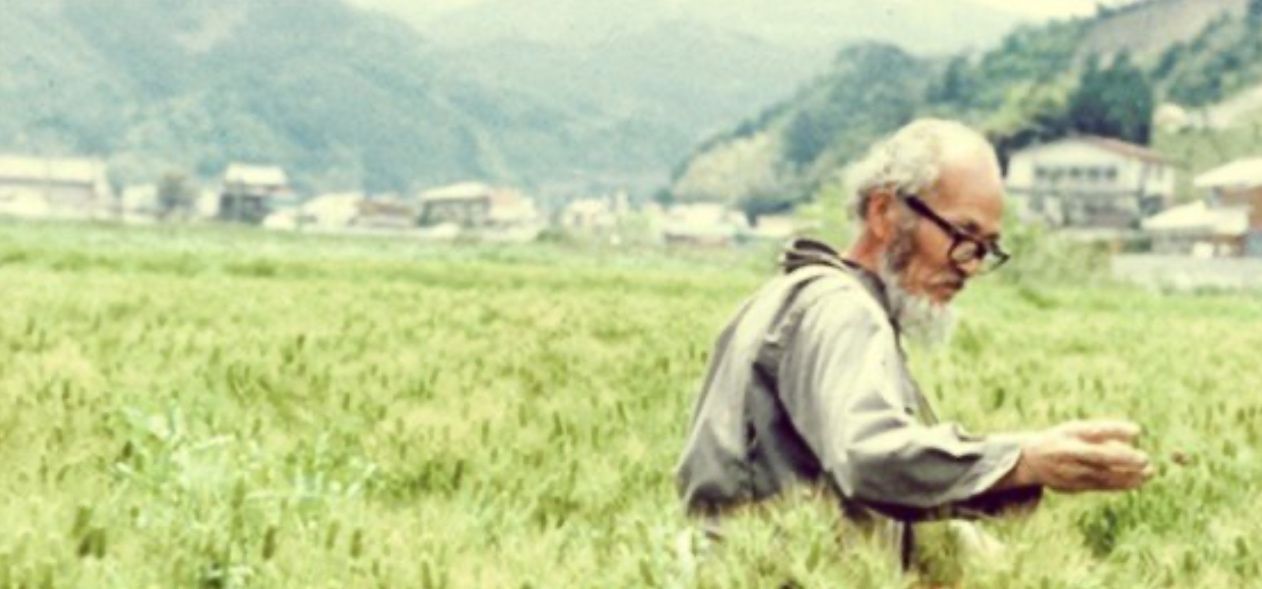
While coming to their conclusions from quite different backgrounds and disciplines, Fukuoka and Schumacher seem to agree that less is more, from an input standpoint.
In a world of diminishing resources and growing input costs they make a convincing argument. Add to that the fact that we lose tons of our topsoil each year due to, among other things, the pressures of crop cultivation, and it’s clear that we’re staring down the barrel of a coming crisis in food production, at yet another point in our human story where rapidly shifting geopolitics, as well as climate and economic factors, are going to bring questions of food security back into sharp focus, as they did in Collis’ day.
Plenty of present day dirt sorcerers are experimenting with different modes of cultivation, and are employing the kinds of techniques and strategies first pioneered by the likes of Fukuoka with great success.
Others find that their situation can’t easily support these methods and for them to not plough their soils invites poor drainage, compaction, unmanageable weed competition, and a too high soil pathogen burden to grow a commercially viable crop, a situation largely learned through bitter experience. Many more are taking a mixed approach with a range of tools and techniques depending on their particular contexts or willingness to take risks. Most are simply doing what they’ve always done as a tried and tested approach.
For the most part, the farming we get is determined by the wider requirements of commodity food markets and the edicts of environmental schemes, such as they are, because that’s the world we live in.
I think at this point it’s worth addressing the small matter of how the way we farm and grow food is being increasingly framed by and filtered through the kinds of culture war, purity spiral narratives that have captured the minds of many who presume to direct how we live and work now.
Ideologically driven policy seems to dominate in some sectors, making otherwise presumably rational folk lose the run of themselves, leading to them posting embarrassing messages on social media that often just serve to highlight a level of ignorance about the very things they profess to care about.
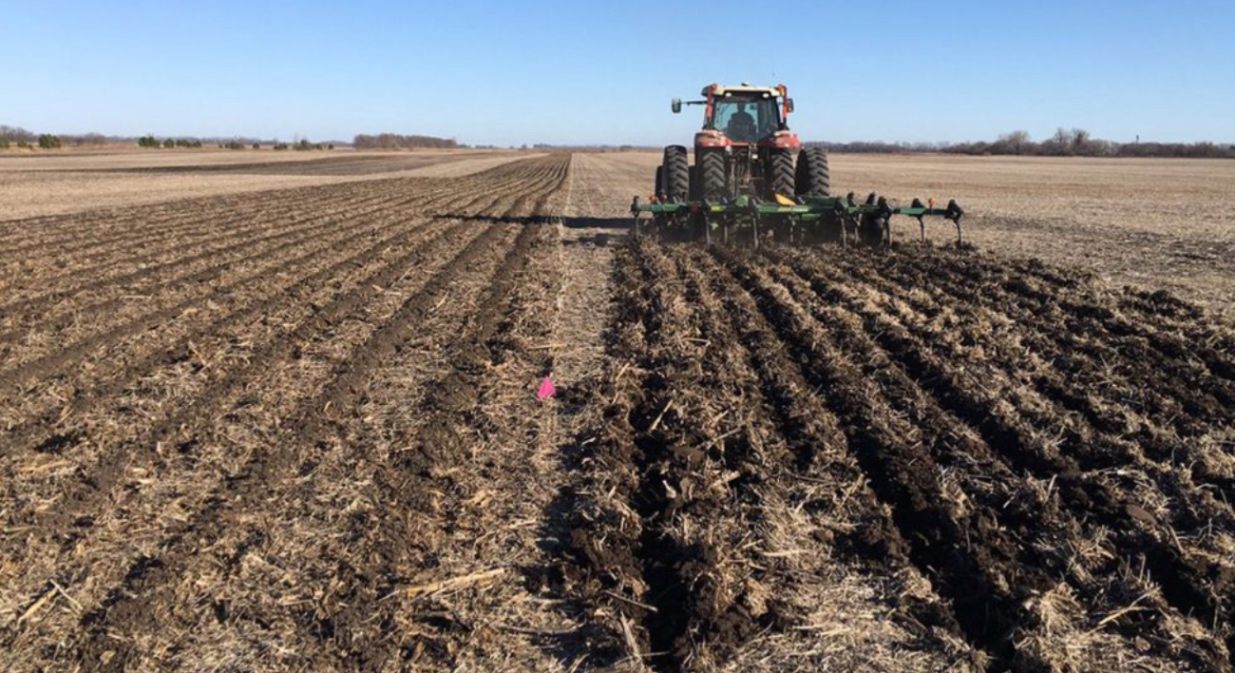
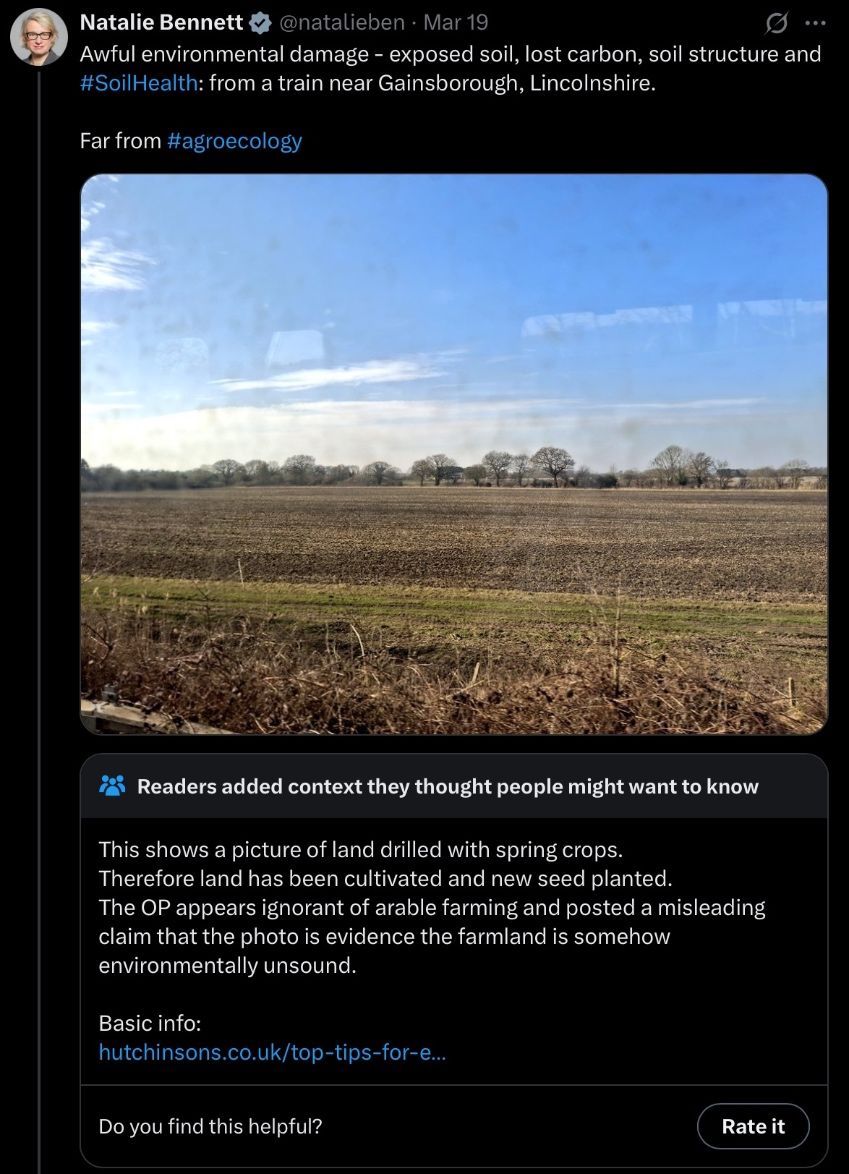
Case in point; earlier this year Natalie Bennett, former leader of the Green Party tweeted (X’d?) from her city-bound train seat a photo of a field that had been turned, harrowed and mostly likely drilled with a spring crop. Captioning this, she decried what she considered to be a degraded and desolate scene of ecological vandalism, and had to be corrected by people who, with varying degrees of tolerance for this sort of knee-jerk, ill-informed sermonising, could identify an arable field in the fens looking exactly the way it ought to at that time of year (top tip Nat; if you are heading up a political movement that advocates for the broad scale adoption of plant-based diets as part of your manifesto, probably learn to get comfortable with scenes of broad scale cultivation?).
History has pretty consistently shown that our tribal tendencies to cleave blindly to ideological positions that are prescriptive and inflexible in how they seek to guide us seldomly result in great outcomes, particularly in the arenas of farming and agriculture (*cough* Great Leap Forward *cough*). The bottom line here is that, while it would be sensible to explore other options, we should be in no hurry to throw the big sharp metal baby out with the ecologically-inclined bath water. If a worm can forgive the plough, then an elected member of parliament shouldn’t find it too difficult.
Food growers, be they conventional agrarians, agro-ecologists, regenerative farmers or rewilding enthusiasts are all out there doing vital work, under enormous pressure from the multitude of variables beyond their control, and with an increasingly hostile treasury that seeks to make them underwrite all endeavours to feed us with the diminishing returns they receive from their tireless efforts to do so.
Thanks to this shortsighted and seemingly spiteful impulse to hold the farming community’s feet to fires that have been largely started by the financial incompetence and mismanagement of past governments, a great many of the acres which had benefited from recent gains in biodiversity and carbon sequestration, resulting from the various publicly funded environmental land management schemes that were previously available, will most likely from here on, like Elton who tired of his city penthouse patrons, be going back to the plough.
Land sparing has now become a luxury few can afford since the plug has been so unceremoniously pulled on the rewards and incentives that were ring fenced to safeguard nature, so we’d better hope the worms are still in a forgiving mood.