Primal Connection: Reflections on Stalking in the Scottish Highlands
Jamie Culpan offers an intimate reflection on Stalking in the Highlands.

Stalking in Scotland
With the current controversy surrounding Deer populations and culling in Scotland, I found myself reflecting on my last experience and stalking as a whole.
The Stalk Begins In Scotland, traditionally, we don't hunt deer; we stalk them. And a stalk doesn't start with you heading out on the hill and end with you dropping a beast off to the game dealer. As any seasoned stalker will tell you, it begins with a trip to the shops in whatever urban metropolis you live in. You are on a mission. This year, you will find the perfect jacket/trousers/jumper/hat to replace the one you ripped/lost/sold/threw away at the end of last season. You think you can get away with, perhaps, something a bit more pedestrian from a Mountain Warehouse type; you test it on a dog walk and find it wanting. You return to the shops, but this time, instead of taking a left into the town, you take a right, heading for the rural country clothing shop. It is here you find the treasure you have been seeking. And given the price of some stalking clothing, treasure is the right word. One of my biggest fears relating to my gear isn't that it'll let me down; it's that if I die, my partner will sell it for what I said I paid for it. I understand that some still adhere to traditional stalking tweeds and plus fours to make it through the heather, valuing history and tradition. As someone who often shoots, I typically appreciate this perspective. However, my experiences on numerous stalks have led me to a different view. Crawling through streams or lying on damp grass for hours leaves tweeds utterly soaked, doubling their weight and leaving the wearer freezing. This has led your correspondent to embrace the advantages of modernity offered by brands like Deerhunter, Ridgeline, or Harkila.
Navigating the steps to a successful stalk differs vastly based on one's circumstances. For those fortunate to own land or dwell in the countryside, close to the heartbeats of local estates, the world of stalking unfolds quite differently from my urban existence. I recall the days when my father and I, through the kindness of a local farmer, had the liberty to roam his lands in pursuit of deer. Those days are etched in memory for the freedom they offered and the connection they fostered with my dad, the land, and its creatures. This time, I've booked a day with a Ghillie stalking on an estate in Kingaussie in the Cairngorms, Scotland's most extensive mountain range. I've previously shot Sika on this estate but now I'm after a Red.
Deer in Britain
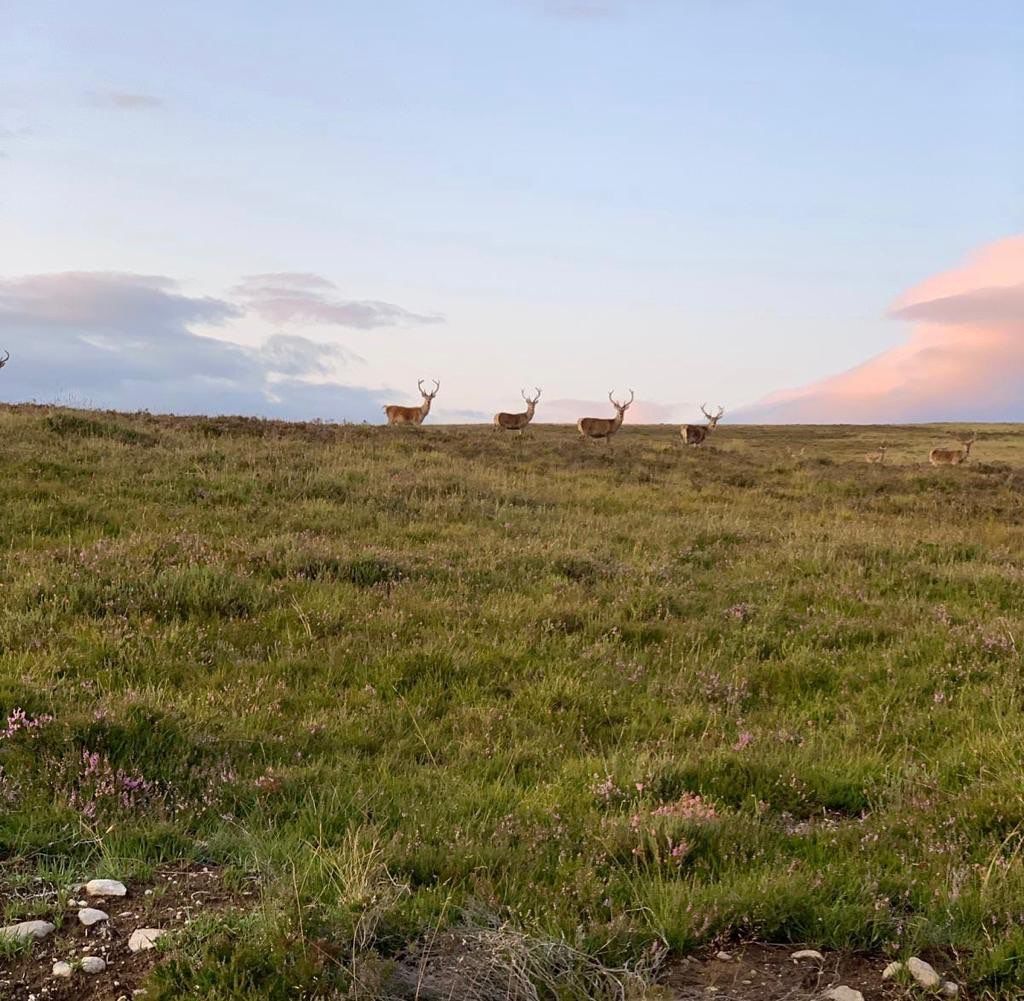
There are six different species of deer living in Britain, and it is one of my many sporting ambitions, alongside joining the Woodcock club, to successfully stalk each species. In my experience, shooting Red Stags tends to be the most expensive, with Roe Stags being the cheapest; this could be simple economics of supply and demand, with Roe Deer having the broadest range of any deer in the UK, making their homes everywhere from the Highlands of Scotland to the Valleys of Wales. In addition to the regal Red and the ubiquitous Roe Deer, Britain's countryside is graced by four other deer species, each with its own unique allure.
The Fallow Deer, easily recognisable by its distinctive spotted coat and palmate antlers, frequents the deciduous woodlands of England and Wales. The Sika Deer, an introduced species from East Asia, has adapted well to the British Isles, particularly thriving in the heaths and coniferous forests of Scotland and parts of England, known for their elusive nature and the distinctive white spots on their summer coats. Then there's the Muntjac, often found in the dense undergrowth of Southern England's woodlands. These diminutive deer are a testament to the diversity within Britain's deer populations, with their barking call and small, unbranched antlers making them a unique stalk. Lastly, the Chinese Water Deer, with its distinctive teddy bear face and long, downward-facing tusks instead of antlers, occupies the wetlands and riverbanks of Eastern England. Unlike other species, they lack antlers but make up for it with their tusks, used during the rutting season for fierce battles over territory and mates.
The anticipation is over
Travelling to the estate can take many forms. When it comes to travelling, sometimes the old ways are the best. (However, if somebody would like to donate the use of their helicopter to me, I would wholeheartedly embrace modernity) The sleeper runs from London Euston all the way up to Inverness, stopping off at Kingaussie, Newtonmore, and Aviemore along the way, which is a remarkably civilised way to travel. Upon arriving in Bonnie Scotland, depending on the estate, your host may greet you at the station or arrange a taxi to your accommodation. I'm lucky to know the Estate Manager where I'll be shooting, so I'm met at the station and, a short drive later, have a beer in hand.
My day's stalking begins reasonably ritualistically with sausage, bacon, potato scones, black pudding, haggis, a buttery, and beans accompanied by strong black coffee and draughts of orange juice. It may sound like a heart attack on a plate, but it's a stalker's breakfast, essential to provide the fortification needed for a long, cold day on the hill. Following breakfast, it is time to get dressed. The morning before skiing and the morning before stalking are the only times I'm insurmountably jealous of young children and royals, both of whom have handy people close by to dress them; I throw on layer after layer until I am standing in my bedroom sweating. Once dressed, I go to the Keeper's Bothy for a second cup of coffee and a rundown of the day's plans. Plans agreed—I say agreed as if I have any say in what we will be doing - I don't. When out on the hill, the Keeper is the Captain of the Ship, and as such, his word is final. If he tells me to duck, I'll duck. If he says to crawl, I'll crawl, and if he tells me it's not a safe shot, regardless of my opinion, I won't take the shot. Previously, this has resulted in me crawling about half a mile through a stream, ducking behind hillocks, all to be told, "Ach, not quite". But as my father would say, it's all character forming.
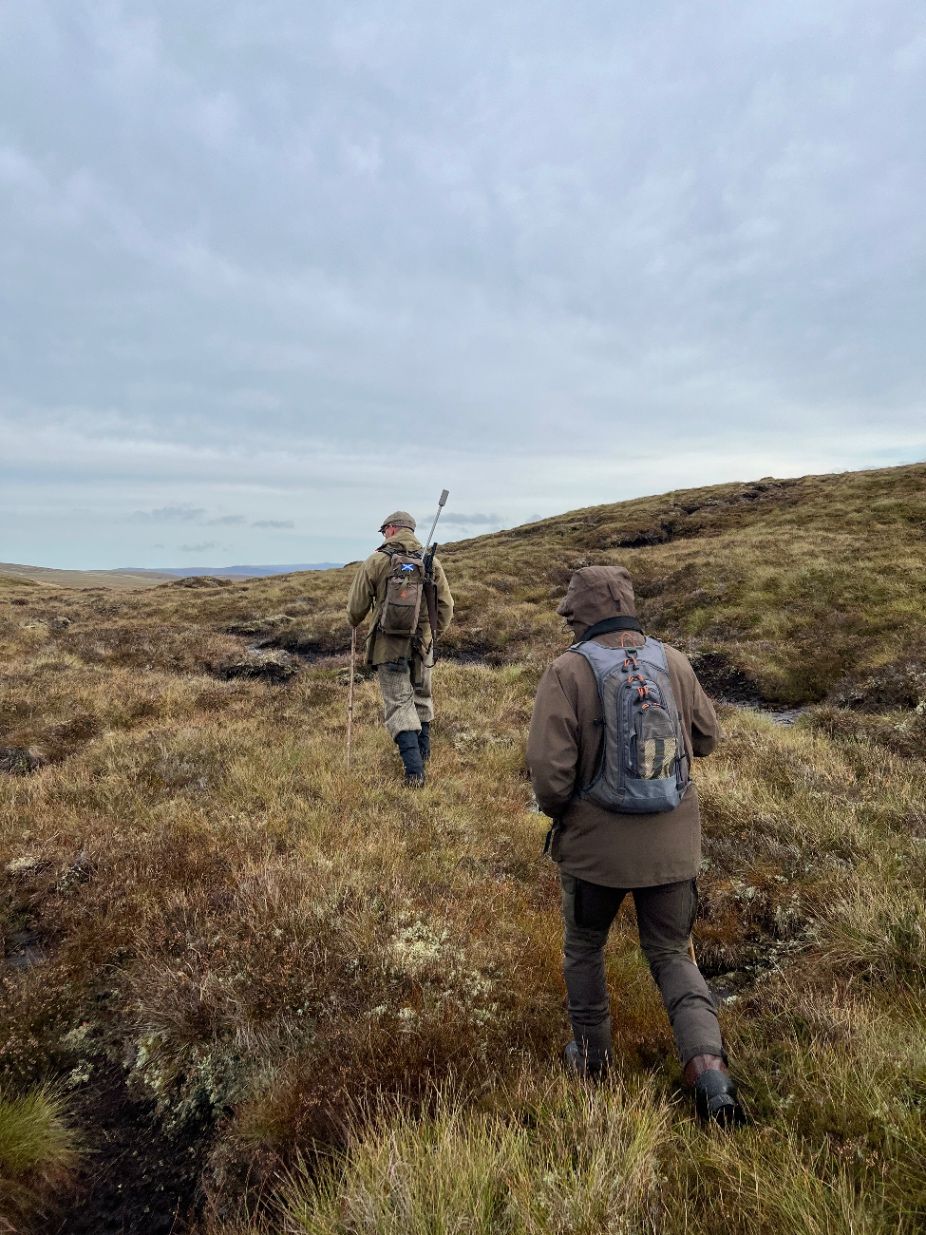
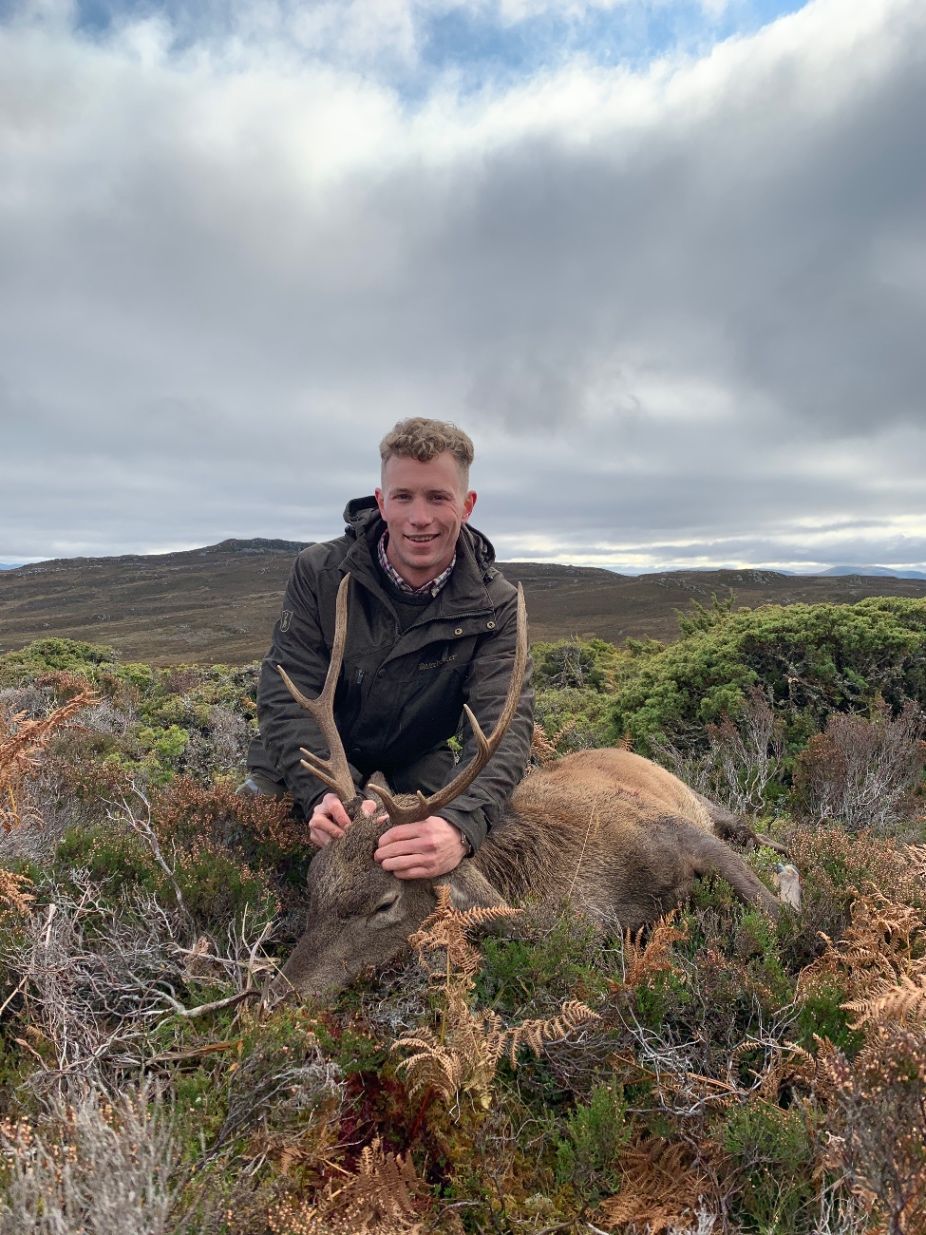
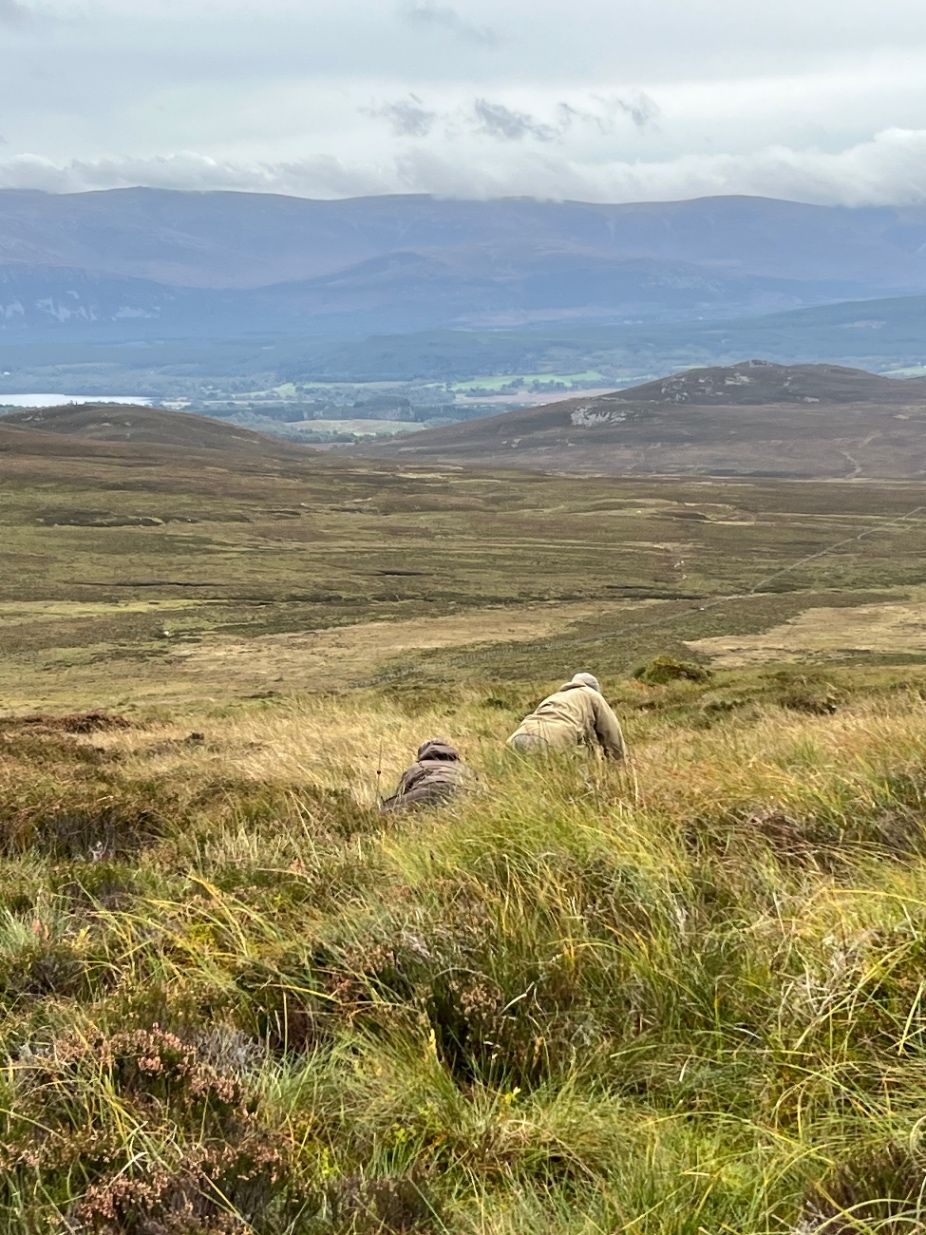
With that, we're off. The whole thing, from starting off with breakfast to returning the beast, gralloched and headless to hang in the larder, takes about 8 hours. We start with a few rounds into the deer target to check my accuracy and then walk at a ridiculous pace to a hill the Keeper has in mind. We defy gravity, driving the all-terrain vehicle up an almost vertical slope before hopping out and peering through binoculars, dividing the opposite hill into quarters and working trying to find those brown spots standing out against the heather. "There you go, to the left of that crag, you see them?" I hear the Keeper whisper as he gestures to where I should be looking. Once locked on to the Stag lying with his harem, again, I defer to his instruction; we are going to be shooting downhill onto the floor of the valley, so it isn't that important that we worry about wind, more about being seen. We begin to crawl; the crawl in question is about 400 yards long, not too bad, you may be thinking, but it's downhill at an angle that would be considered a red run if I decided to ski it. I'm forever trying to wedge the toes of my boots into the ground to stop myself from falling forward. God knows where the mind goes because one overwhelming memory I have of the descent is passing a toad at head height as I slithered forward. We're finally in position, and I'm finally passed the rifle. The shot is about 120 yards and is good, meaning the Stag only walks one pace to the left and then falls. The harem scatters seeing their patriarch fall, and as we descend, I can't help the heaviness that falls over me; it's almost impossible to put into words the feeling of shooting a stag.
Stalking Reflections
There is something primal about stalking that just isn't there on shoot days; even walked-up days are more of a jolly than anything else. There is something pure and wild and raw reserved just for stalking, a connection with the land and the game that transcends mere sport. In the stillness of dawn, as the mist clings to the heather and the mountains cast long shadows, you feel an ancient rhythm, a heartbeat of the wild that courses through the veins of the earth itself. The act of stalking is a dance of patience and respect, a silent dialogue between the hunter and the natural world. Each step is measured, each breath calculated, in a pursuit as old as time. The terrain challenges you, testing your resolve, your skills honed by the landscape itself. In these moments, with the earth beneath your feet and the wind whispering secrets of the glen, you find a profound connection to the natural order of things. Stalking is more than a hunt; it's a journey into the heart of what it means to be part of the wild, an unspoken bond with the rugged beauty of the wilderness. And what a wilderness it is; to describe the Highlands as beautiful is so overdone; it is cliche and reeks of Tourism Scotland's latest brochure.
The vista itself is majestic, the grand theatre of the Scottish Highlands is unparalleled, and the seemingly never-ending expanse of hills, crags, lochs and gullies unlocks something in us, something that's always been there but finds itself stifled by our modern-day society. It is here, amongst the various verdant shades of green and the ancient, whispering breezes, that one truly comprehends the profundity of nature's artistry. The air, crisp and invigorating, seems to imbue a sense of clarity, a rare simplicity that modern life seldom affords. Each step taken in this rugged landscape is a step back through time, where legends feel tangible, and the echoes of history resonate in every glen and valley. This is a land where the sky feels boundless, and the dramatic weather paints ever-shifting portraits across the sky. It is a place that doesn't just satisfy the eyes; it nourishes the soul, reawakening an intrinsic connection to the wild, a primal call that hums in the blood of those who traverse these ancient lands. In the Scottish Highlands, one doesn't just observe the world; one becomes a part of it, a fleeting yet eternal part of its enduring splendour.
I remember every Stag I've ever shot; aside from my first pheasant and some occasional high birds, none hold any real memories for me. Stalking is taking something from the land, something the land has sustained and nurtured, and with each Stag, there is a weight of responsibility and a deep sense of reverence. Each animal is a testament to the rugged and untamed beauty of the Highlands, a creature that embodies the spirit of this wild place. When you take a stag, you're not just taking a life; you're engaging in an ancient ritual that connects you to the land and its history. There's a narrative woven into each hunt, stories etched into the landscape, tales of survival, endurance, and the timeless dance of predator and prey. These memories are vivid, etched in the mind with a clarity that transcends the mere act of hunting. They carry with them a sense of gratitude and respect for the animal and the land that provided it. In the quiet moments after the shot, amidst the haunting beauty of the hills and valleys, there's a profound connection felt, a reminder of our place in the natural world and the delicate balance that sustains it. Each Stag is a chapter in the ongoing story of the land, a story that I am humbly a part of, etched in memory and the very soul of the Scottish Highlands.