Proposing a ban on lead was not a very smart move


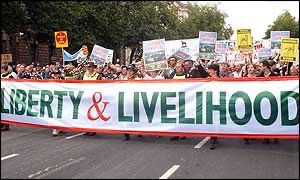
When still Dutch, I lived in London from 1964 to 1966, and thus I am well aware of being considered a Bloody Foreigner as far as commenting on British issues is concerned. Yet, I can not help myself, and feel it necessary to criticize the supposedly “pro shooting” organizations in the UK. It is now over 25 years ago that this terrific march took place, and it seems to me little has been accomplished since, if not to the contrary.
In my humble opinion the decision in 2020 to come out of the blue with the proposal to ban lead shot across all game shooting in five years was a very ill considered one. No discussion was held beforehand with the cartridge manufacturers, gun makers, shoot organizers, land owners, etc. and worst of all it was not brought up for discussion with their members and/or supporters. Presumably the thinking was to score a one-up over the anti shooting community, although I fear those groups have not yet stopped rolling over the floor laughing since the announcement was made, in one stroke something was accomplished which would have taken them many years of action, if even successful.

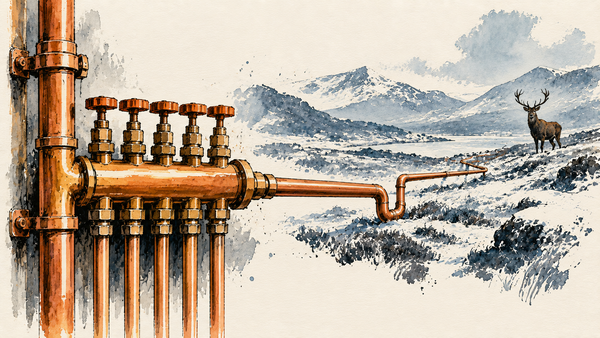
I do understand that lead is far from ideal, especially in bullets and for waterfowl, the ban on lead in that case makes sense. For rifle shooting, alternatives are available that are acceptable, such as copper and tungsten, and further development will happen. If bullets become much more expensive that is not a huge problem as only a few are used in normal stalking and such. It did not cause much of a problem for shooting waterfowl here in the USA as the bag limits are in most states between 3 and 5 birds, so not many shots are fired, although of course many complain how expensive the cartridges are these days, but that is human nature. From personal experience I noticed how unethical steel shot was on ducks, I used only Tungsten Matrix after that initial discovery. Shotgun cartridges for driven game are a different matter, these are used in quantity. Owen Williams, and others, have written extensively quoting present day available scientific evidence of the harm done by lead. I do admit that I have my doubts as to some of it, but this is not the place to argue that. I believe that the millions of houses in the UK with lead water pipes are a much more serious issue that needs to be addressed, as is lead in roofs, still used today, where the run-off gets into the ground water. Lead paint is still very prevalent, especially harmful to children. Around 55% of UK homes were built before lead paint was labelled (1963). Around 82% of homes were built before most lead paint was banned (1992). Today, around 6-9 million homes in the UK probably still have some lead pipes or lead-soldered copper piping. All these I believe represent far greater risks than birds shot with lead pellets, and although not a concern of the shooting community as such, it needs more attention, and money, from the government and environmental organizations than banning lead cartridges. Back to our game birds. The RSPB authorized a study by Cambridge University. For this they used eight pheasants obtained from a local farm shoot, hardly a number that can be considered serious, and I imagine not birds shot at a great distance. Of these seven were found to contain lead pellets. I imagine the eighth bird must have had a fatal heart attack in mid flight or hit a tree head on. On average 3 1/2 pellets were found.
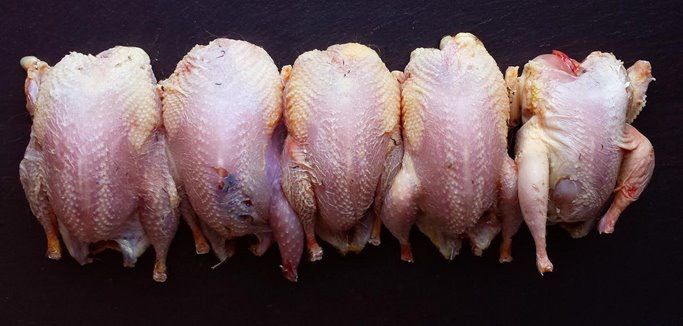
The conclusion of the report states that “Eating pheasant killed using lead shot is likely to expose consumers to raised levels of lead in their diet”. I am no expert, but the word “likely” does not sound as definitive scientific proof to me. To quote Public Health England on the subject: lead is more likely to cause harm following exposure for a long time or following exposure to very large amounts in a short space of time. It seems that lead attracts the word likely. I have been shooting game for 61 years, but I have never heard of a bird being exposed to shooting for a long time, except for the heroic hen on a cock only day passing the entire line of guns without getting hit, although all the guns fired at it, and while getting shot does happen in a very short space of time, most birds will get hit by 1 - 3 pellets, not large amounts. I have also been unable to find any example or evidence of a human getting sick from lead poisoning after eating shot game, I would be most interested to hear of such instances, provided it is not hearsay but with serious proof. There is indeed evidence that game shot with lead can lead to poisoning of raptors and scavengers. A study in Canada of 184 dead raptors found that 3-4% died of lead poisoning. Unfortunately it does not mention what the rest died of. A study in Spain dissected 229 dead birds of prey and found cases of lead poisoning, although no number was quoted and all were thought to come from having eaten deer carcasses if I read it correctly. Meanwhile it is my opinion that considerably more game birds shot at with steel shot will die from either bleeding to death or infection by rusted pellets under their skin, than the above quoted 3 to 4 %. If we assume that on a 250 bird driven pheasant day an average line will shoot 1:4, a quite competent group of guns, that means 750 birds were missed. If we suppose that 150 of these were hit by 1 or more pellets, I think I am being conservative with this number as it is considerably less than the number killed and picked, yet have flown on past the picker up’s to die later, that is 15%. Are we therefore saying the life of a raptor or scavenger is five times more important than that of a game bird ? Bismuth has a tendency to shatter on impact, and certainly at distances over 25 yards is at least 30% less effective than lead and three times as expensive while Tungsten, I believe the best of the three, is five times as expensive as the top of the line lead cartridges.
I fear it may be too little too late, although the HSE request for more time may give a glimmer of hope, but it would be good if the Countryside Alliance, the GWCT and the other signatories, the BASC seem to have made an about face, admit that they made a rash and hasty proposal, that a serious study not funded by the RSPB or other anti shooting organizations is needed before the ban comes into effect next year, which considers all aspects and consequences of such a ban. I imagine there will be many volunteers among the shooting community to eat game shot with lead and then getting tested for increased lead in their system and whether it is an increase that can be considered harmful. I would not be surprised if this ban has a significant effect on driven shooting. The many people with perfectly good old side-by-side shotguns will not want to shoot the new ammunition through these. It is not so much the barrels, all the choke can be taken out, that they should be worried about, it is the action and especially the rib. All these alternative types of ammunition require heavier loads and to the best of my knowledge there are only two suitable 2 1/2” 12bore non lead cartridges on the British market for guns made after 1954. Older guns may not be suitable at all and at a minimum will have to be reproofed, which costs money and carries major risks with it.
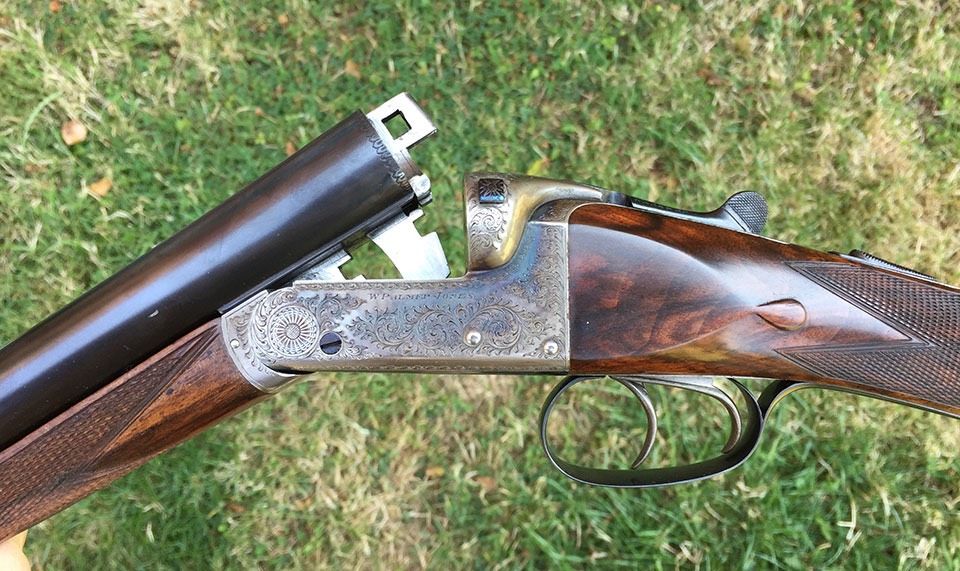
I suggest that all guns should be checked by a knowledgeable gunsmith whether they can be used for the intended ammunition. Larger loads than 30 grams and 2 3/4” or 3” cartridges in shorter chambers can over time cause the rib to loosen. This will not be visible, but rainwater will get under the rib and rust will start to form. This is only the case with side-by-side guns. Heavier loads can also loosen the action. I am not familiar with 16bore or 20bore steel shot cartridges in 2 1/2” and the choices in both calibers are a lot more limited, especially for 16. If you shoot 28bore, there is an extremely limited and expensive choice of bismuth available, and Hevi has some Tungsten, otherwise you are out of luck unless your gun can handle 3” cartridges then a few can be found with steel. In addition, the steel alternatives to lead are not acceptable from an ethical point of view and the others may cause objections from financial considerations. This will have consequences for driven shooting, not just local farm shoots, but syndicates will reduce or entirely halt their activities, while many European and American visitors will move their shooting to the continent. If I am right in this, and I know my American friends that I travel with are in no mood to shoot steel on driven birds, it will have far reaching consequences for shooting and all those directly involved with it, while hotels, pubs, taxi companies, caterers, retailers, etc. will also be feeling the results. And I do not believe that the nasty little bureaucrats in Brussels will be able to make the villagers and farmers in France, Spain, Italy, Greece, Hungary, Czech, etc.stop shooting lead, outside the ban in wetlands. Countries such as Denmark and The Netherlands have banned lead ammunition, but the latter enjoy being what they imagine is anti establishment.
As I stated at the beginning of this article, it was a very ill considered decision in the humble opinion of this Bloody Foreigner.