Riches from rags

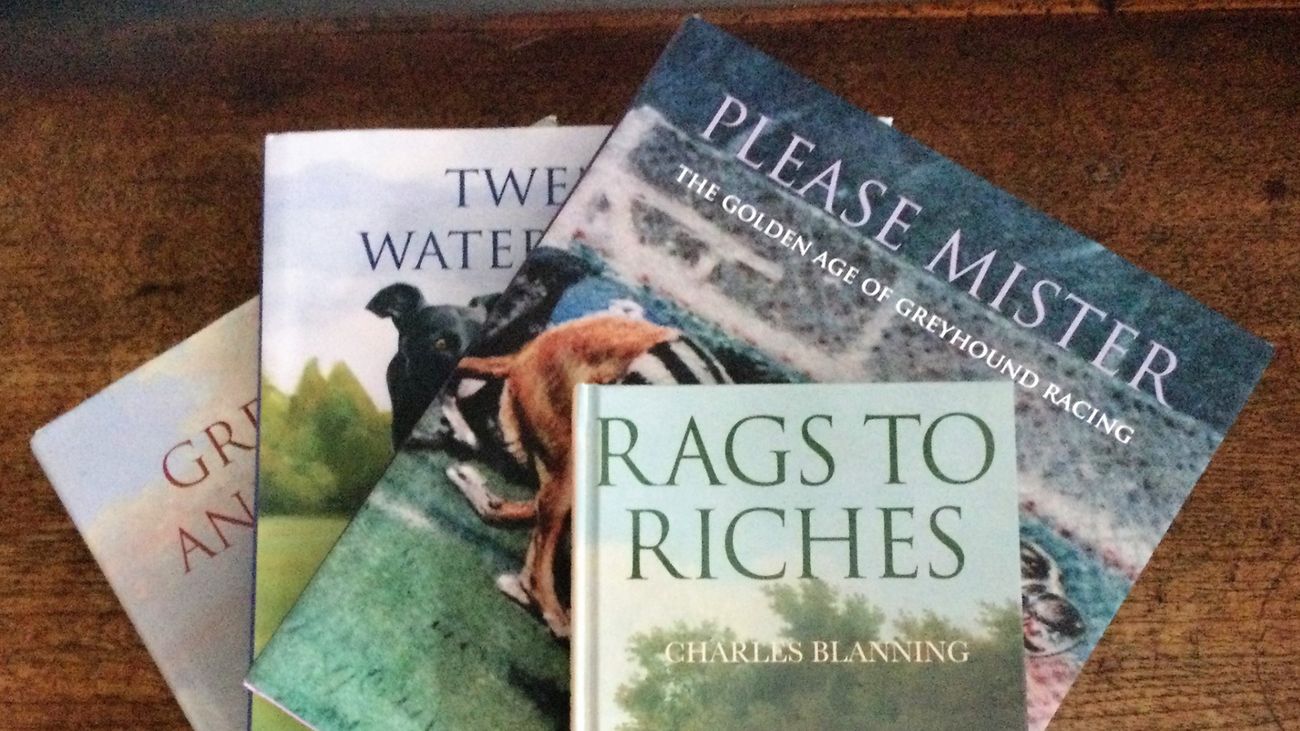
RAGS TO RICHES
The board rubber struck me just over the right eye. “Wake up Blanning 2,” snarled the scowling face at the head of the classroom. The class turned and sniggered loyally.
“Buster”, my English and Scripture master, was one of the few people who physically curled their lip when they showed displeasure. I completed the all too familiar ritual by fielding the board-rubber with its lethal wooden backing and returning it to Buster’s desk. Don’t blub, just don’t blub.
Buster taught me many valuable lessons apart from rigid self-control in the presence of pain. Another stated, “Always put your sweater on after playing games.” The most important was, “It’s the first sentence that counts.”
Last November I sat down and wrote, “A cloud passed across the moon. Blackout.”
As a schoolboy I had dreamed of writing novels for a living, (or being a famous actor or a barrister.) I always had a Penguin paperback by Ernest Hemingway or George Orwell drooping out of my blazer pocket.
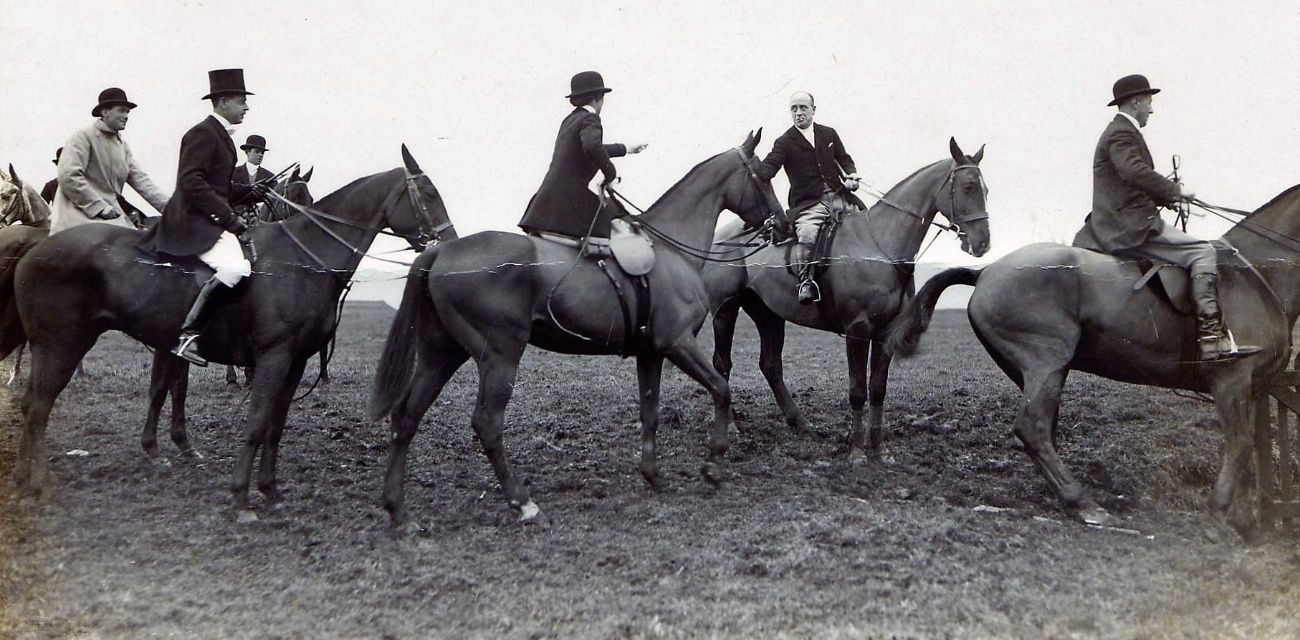
At last I had got round to it. My first intention was to write a story about a horse winning the Grand National. I boldly typed “Flying Home” and then “Chapter One” at the top of the first page. I already had in my head the beginning of the plot which would have the hero going over to Ireland just after the First World War to buy hunt horses.
But I also wanted a greyhound in it, and so I invented a girl who had a black dog called Danny and who would fall in with the hero and his horse somehow.
I expect that proper grown-up novelists, who sell books in thousands, work out all the characters and the plot-lines before they start to write. I didn’t. I just sat down and began to write. The story immediately ran off with me. Every morning, when I went to my desk, I had no idea what was going to happen next.
Enter Rags
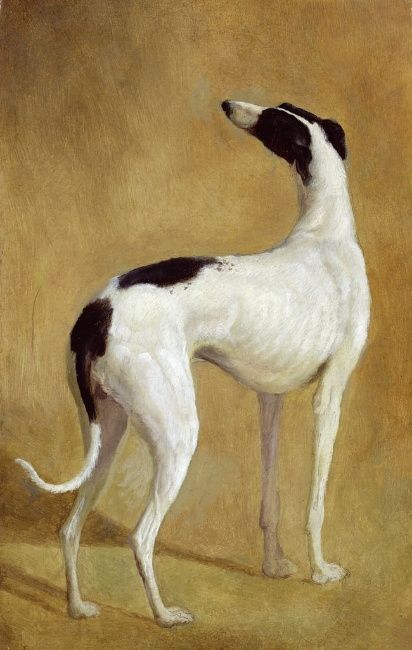
The girl and her greyhound immediately became as important as the man and his horse. I didn’t like the name Danny much, and then my sister suggested the name of one of our father’s pet terriers when he was a boy - Rags. If it was to be Rags, the greyhound would have to be patched white and black. I was also becoming quite fond of the girl and, as I like bitches better than dogs, I thought that Rags should be a girl too. All too soon “Rags To Riches” replaced “Flying Home” on the title page.
The central figures were purely invented. Jack Howard, who finds Flying Home in Ireland, and Sam, the orphaned owner of Rags, walked out of the shadows of my imagination. So did Mr O’Sullivan, the breeder of Flying Home and Rags, although if you can find a church of Saint Brigid somewhere on the Tipperary-Limerick border, you will have some idea of where his farm was.
Creative writing teachers always tell their students to write about what they know. Although my novel is set in 1920, characters and incidents kept pushing in from my memory of people and stories which I had been told. Rather stupidly, as the story stormed along, I called them by their real names. By the time I was finishing, the book was so thronged with old acquaintances, it was like desperately pushing through a crowded bar to buy a drink.
My wife, Sheila, who proof-reads all my work, insisted that I should anonymize several characters simply to avoid confusion. My grandfather, also Charlie Blanning, plays a largish part and had to become Charlie Manning, “or otherwise the reader will mix him up with you and wonder what you are doing in 1920 with a cigarette dangling from your lips.” His kennel man, Frank Marchant, became Ben Marchant because we already had a Frank in the story.
Fairy Stories
My “Author’s Note” to the book claims, “This is a fairy story. I made it all up,” but several characters emerged lightly disguised from history. I based my seedy financier, Sir Buckland Rippers, on Horatio Bottomley, the founder of the “Financial Times” and “John Bull”. My character uses a fraudulent scam which sent Bottomley to gaol in the 1920’s.
I fell in love with Sir Buckland’s beautiful wife, Daisy, a musical comedy star from the West End stage. She seduced me and my hero, Jack Howard.
My ruthless one-legged British intelligence officer, Captain Harding, was based on the real-life Captain Jocelyn Hardy who was a prime target of Michael Collins and his gunmen in the Irish War of Independence. The volunteers nicknamed him “Hoppy” Hardy because of the way he dotted along on his wooden leg. He had lost his own limb to a shell on the Western Front.
You don’t need to be a clairvoyant to realise that Lord Warminster, who nominates Rags to run in the Waterloo Cup, is based on the Marquess of Bath. Lord Bath, later famous for his Longleat safari park near Warminster, was the enthusiastic patron of the Frome coursing club of which my grandfather was the chairman. All the running was over Lord Bath’s farms and his lordship had some good greyhounds of his own.
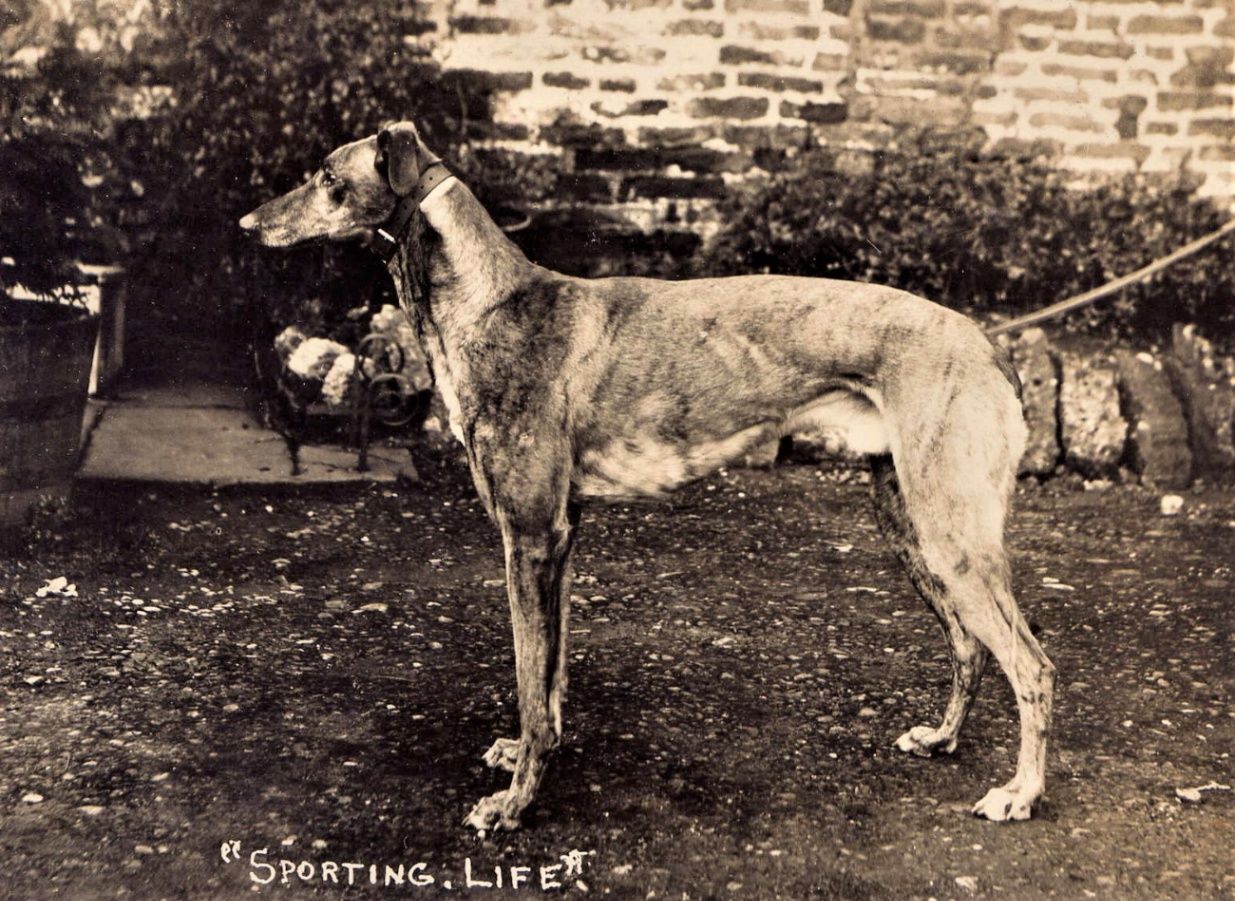
My grandfather’s great dog, Sporting Life, in the book appears as “himself” as they say in the movie cast lists. I am looking at his collection of silver cups won at Frome and elsewhere as I write. Grandpa’s steeplechaser, Sundowner, in the book wins a hunt race just as he did in the 1920’s.
The setting is real. When Flying Home wins a point-to-point at the Nine Barrows Hunt races, I could walk you round the course today where the Mendip Farmers ran when I was a boy. I could show you where my great-uncle Tom Blinman jumped two sets of railway crossing gates in pursuit of the hounds in the middle of Radstock, a Somerset mining town. I could show you Easton Hall where the main characters live.
You won’t be surprised to learn that the description of the 1921 Waterloo Cup which features towards the end of the book is exact. You can trust me for that.
You must forgive me but I am not going to give the game away and tell you what happens in the book. The title will give you a clue, of course, and I am happy to admit that the Waterloo Cup and the Grand National feature prominently. Otherwise, you may rest assured that the book includes plenty of horses and greyhounds involved in coursing, hunting, and racing. If the Guardian awarded a Cancelled Non-PC Book of the Year prize, “Rags” surely would head the short-list.
Readers already have realised that the story leaves the lives of several characters hanging in the air. Will there be a sequel, they ask? There will if I sell enough copies of “Rags” to finance it. It already has a working title, “Electric Rabbit”. That should give a hint of where the Rags story is going next – to the dogs.
(“Rags To Riches” £15 hardback. To order email sheilablanning@btinternet.com or buy on eBay.)