Save Our Intangible Cultural Heritage of Fieldsports!
This is our chance to safeguard our rich cultural heritage of fieldsports and country activities. We may be a minority but we are unique and indigenous - and we mean to survive.


Britain has finally decided to ratify the 2003 UNESCO Convention on Intangible Cultural Heritage (ICH). Only twenty years late! We are up to our armpits in cultural and heritage organisations in this country, so why the delay?
No room for modesty here. I am probably the only person in UK who has written a successful submission under this Convention. Starting with 11 countries initially, we currently have 24 states in which Falconry is inscribed by UNESCO on the Representative List of the Intangible Cultural Heritage of Mankind. Apart from being the largest submission, UNESCO told us it was the best submission they have had and they recommend it as a template for aspiring submissions.
Now that our UK Department for Culture, Media and Sport people have decided to ratify the Convention, they have set up a Consultation process in which their first proposal is to re-write the rules. https://dcms.eu.qualtrics.com/jfe/form/SV_9MsgupKs6P9kxw2 . I attended the UNESCO conferences all over the world up to 2010, during which the definitions and procedures were laboriously hammered out sentence by sentence and agreed by the now 175 signatory states. So far 676 ICH items have already been inscribed under these definitions. I did not meet a single Brit at any of these meetings; I attended as a specialist on behalf of the United Arab Emirates. But UK thinks it knows better and wants to play by different rules. For sure, in ratifying the Convention, Parties can make reservations, but not to the scope of the Convention itself. If you wish to fill out the consultation survey (and you should) be prepared to be asked about your ethnicity, your sexual orientation and your mental health, but not about your culture.
So why the delay?
To understand that, you have to look a little deeper. During this period I wrote to the then Ministers of Culture in UK (Jeremy Hunt) and of New Zealand. The replies were political fudges – can’t define ‘culture’ and so on. This wasn’t the real reason. Look at the pattern: https://www.unesco.org/en/legal-affairs/convention-safeguarding-intangible-cultural-heritage#item-2 You will find a long list of signatory states, but look at which ones are missing: USA, Canada, UK, Australia and New Zealand. Why should that be? Why not join such an innocuous Convention?
Intangible Cultural Heritage focusses on indigenous cultures. Most small states are monocultural, so it is straightforward for them. Larger countries, such as China and India, are multi-cultural, but all their cultures are indigenous, ethnic tribes and minorities. In contrast, USA, Canada, Australia and New Zealand have dark secrets. They all have indigenous peoples but were all colonised by more powerful western cultures which did rather nasty things to the locals. Some are now belatedly trying to make restitution to their minorities in processes that are often proving uncomfortable. And UNESCO calling out for recognition of indigenous ICH is just plain embarrassing.
The British situation is even more difficult. We were one of the main colonisers. The sun did not set on the British Empire. But the pink bits on the map shrunk away and as they did so, we gave reverse citizenship rights to our colonies. So we have become colonised ourselves by diasporas from the former Empire, and each has brought its own ICH with it. We talk now about our ‘multi-cultural society’ and anguish about our mis-spent past as white slave traders and so on.
Can there ever be a true ‘multi-cultural’ society or is the very term a non-sequitur? Do we want the now multi-generational diasporas to blend in and adopt some kind of homogenous ‘British’ culture, or should we celebrate and accentuate ‘multi-culturalism’, culture 'ghettos'? Both routes lead to friction, as Sweden is belatedly discovering.
Indigenous culture?
But to get back to UNESCO, the initial thrust of the ICH Convention was to safeguard indigenous cultures in danger of being swamped by modern developments, urbanisation, mass media and so on. In Britain, a lot of our indigenous culture stems from the Pre-industrial period, from our rural agrarian roots. Right now the political fashionistas find anything rural deeply out of favour and are happy to discriminate blatantly against our rural indigenous culture while going overboard on non-British ethnic minorities, gender issues and so on. Farming and fieldsports – oh dear – far too sensitive for them to have media coverage unless to be either sanitised or vilified. The disgraceful way in which hunting has been treated in politics is unbelievable, but the wheel of discrimination may yet turn full circle.
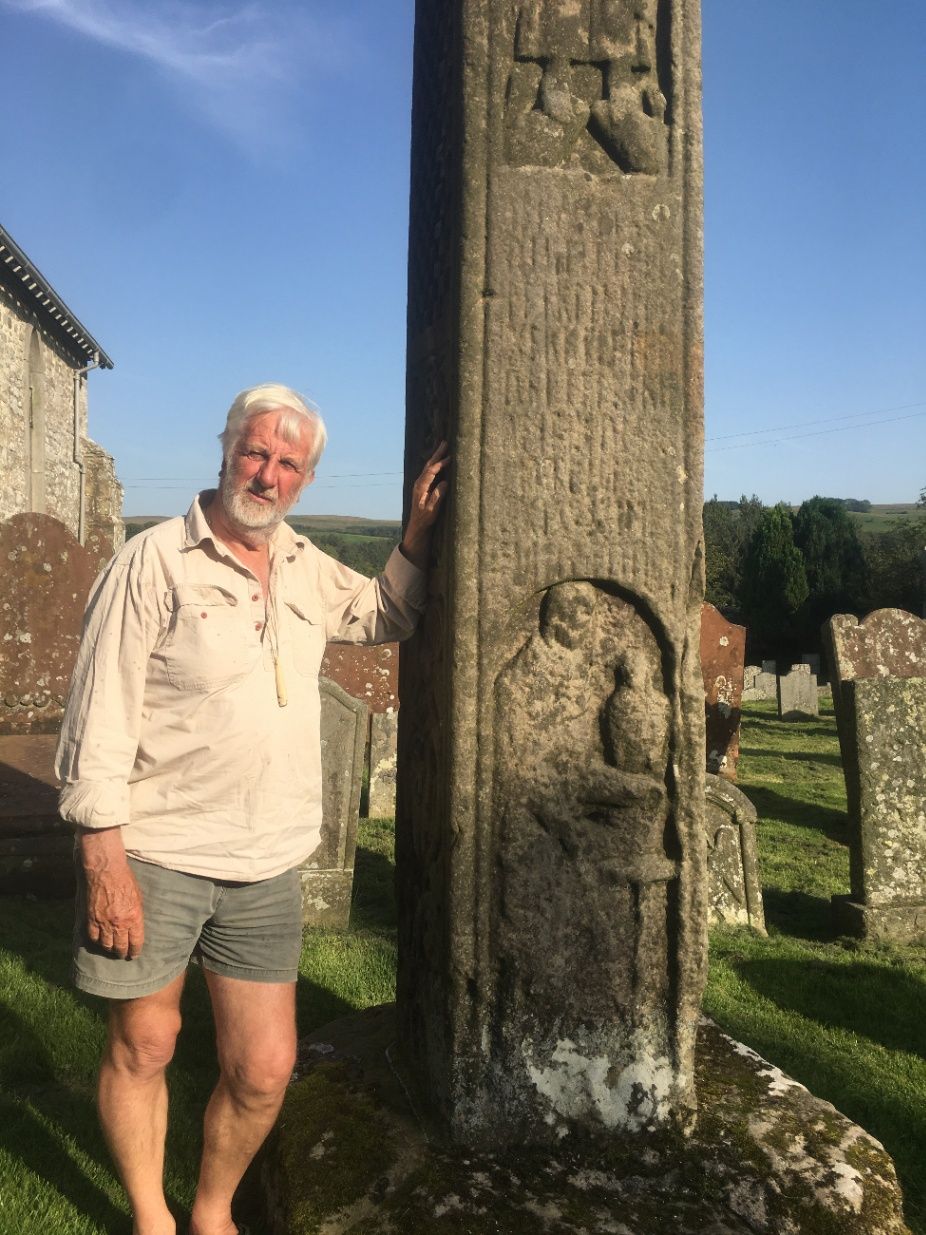
The difficulty is that we can recognise indigenous ICH – falconry for example, although at least 5000 years old globally, dates back before 670 AD in Britain - but if a diaspora arrives and brings with it its own indigenous culture, at what point should that ICH be classed as ‘British’? From the UNESCO perspective, perhaps it would be best for the imported ICH to be first inscribed on behalf of its ‘mother’ country before being inscribed for cultural adopted colonies.
Similarly on timescale. Heritage is not history. History is in the past. Gone. A matter of record. Heritage is a baton of culture that we pass on from one generation to the next. We created a new cultural ‘tradition’ in falconry: Anyone who falls asleep in the Hawking Van on the way home gets a dead crow quietly slipped inside his coat, so that the crow lice crawl out to find a new home…. Perhaps not a tradition worthy of moral praise, and we have only been doing it for thirty years so it hasn’t properly been passed on from one generation to the next and could not really be classed as ICH. To gain credence the new ICH should surely have been around long enough for inter-generational transmission. Less than this is just ‘fashion’. The UK government want to include the Notting Hill Carnival (60 years old) and Steelpan drumming from Jamaica (67 years old) as British ICH.

Our Fieldsports Heritage
All this talk of ICH is all very well, but can it apply to fieldsports? The answer is a resounding YES. Look at some of the items already inscribed: https://ich.unesco.org/en/lists . The item does not have to be something huge and mainstream, such as Hunting with Dogs. It can be about some local aspect of dog-work, such as Cumbrian Trail Hounds, Sheepdog Trials or ferreting with whippets for example. And what about our Hunting Songs and Hunting Horn calls?
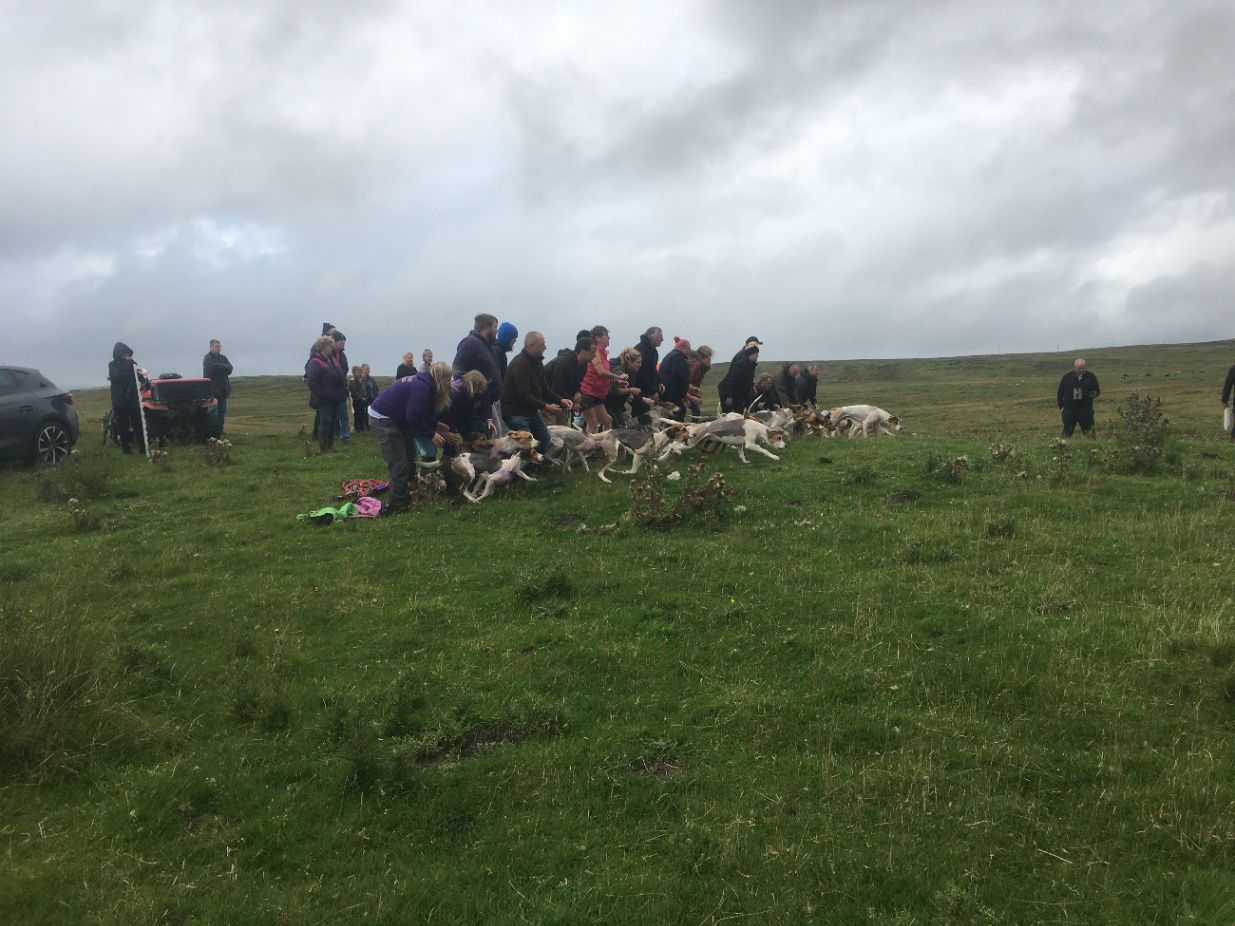
Our Govt claims – as it must, according to the Convention – that a submission must come from the bottom up, from the actual communities practising the ICH. First the community has to propose their item and get it put on the UK Inventory List (which is also broken down into Northern Ireland, Wales, Scotland and England). You can be sure the Culture Bods will not be able to resist interfering at that stage. The next step is for the community to prepare a Submission in line with UNESCO’s requirements, which are all written down. But UK plans to stymie the process at this stage by building an Inventory List but not putting forward any submissions for some years. They are worried about inequalities and priorities. It doesn’t work like that, if a submission is ready, they should send it in for UNESCO to evaluate on par with ICH from other nations. That’s what the Convention is all about. There is no point in keeping back all entries and then submitting piles at a time, congesting the UNESCO assessment process. Better to trickle feed them when each is ready, and learn from the process.
Falconry
Our Falconry submission took several years to prepare because we started at the international level. About 80 countries practise falconry. How many had signed up to the Convention? More were joining all the time. Then we had to get Falconry listed on their Inventory Lists, then create a joint submission written in such a way that it acknowledged and allowed for national differences in Falconry Culture, both now and in future applications. We had to write a book, make a film, and prepare numerous workshops etc both for our own practitioners and for governmental representatives. We did four International Falconry Festivals, the first two at Englefield near Reading, England and the second two in the UAE. For the last one, out in the desert of Abu Dhabi, we flew in 500 falconers from our range states and my shopping list included 80 camels, a dozen horses and two doz golden eagles. A single country submission should be far easier and we plan to hold a British Falconry Heritage Festival at Vowley, near Swindon in July to get the ball rolling for our UK submission. For Falconry the process should be easier because UK can simply join the existing Inscription rather than creating a new one.
Hunting is a hot potato in anthropology. If you are a Bushman hunting group in the Kalahari, or an eagle falconer on the Mongolian steppes, you are an intellectually acceptable subject of studies. You are far enough away from western incestuous academia. 84% of Brits are urban or suburban. They have theatres, art galleries, public transport, hospitals. Food, water and energy appear as if by magic and shit and rubbish conveniently disappears. Why should they have much sympathy for what goes on in the country, especially our primary producers, our farmers?
Now is our chance to get our rural culture recognised. It wont be an easy ride - most of the Culture Bods are urban and woke – but we are the guardians of our indigenous rural culture and we must look after it for future generations.