The Bittersweet Tale of a Traditional Farm Sale
A farm sale marks the end of one era and the beginning of another.

The Farm Sale
A farm sale could be seen as the end of an era, but it can also be interpreted as the start of a new one. There seem to be fewer traditional farm sales today, but recently we were fortunate to be able to attend one such event in our valley, being held by a primary school contemporary of mine whose family had been on the farm since 1936. A decision had to be made; do you carry on farming with the accompaniment of arthritic knees and dodgy hips, and being admired for your tenacity, or do you quit while the going is good? Admittedly, technology has eased the burden of physical labour (I really do enjoy checking the dry cows on the quad), coupled with silage making replacing the manhandling of bales, now all done from the seat of an air-conditioned tractor-cab with a radio.
It must be highlighted that by carrying on, it deprives a generation of being able to do what you yourself did. Once a generation gains employment outside farming with its guaranteed salary, holiday and sick pay, short working days, index-linked pensions, and the inability to be fired, coupled with no risk to one's own capital, farming can lose its appeal.
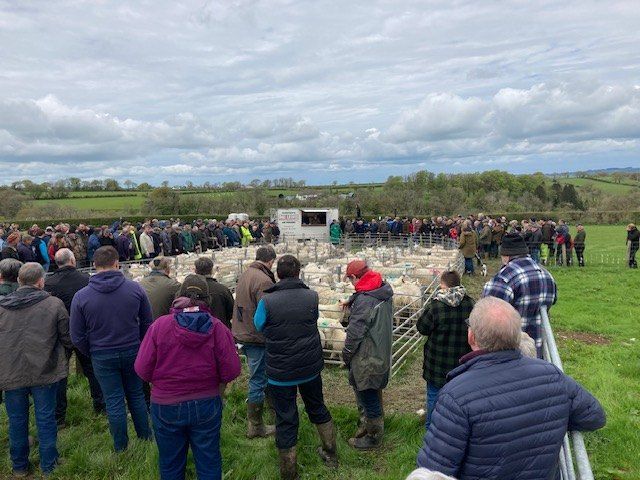
Back to the sale, with all the machinery and sundries out in rows across the field, it must be strange for the sellers seeing all their worldly goods laid out on display, knowing everyone is casting a critical eye over everything, even if there is no intention of buying. It is also a reminder of how much kit is involved in running a farm, admittedly the binder had not seen the light of day for many years. The day of the sale dawned dry and as the day progressed, the sun shone and a large crowd turned up, and prices were buoyant. Apart from the business aspect of the day, there was a lot of catching-up with old acquaintances, coupled with an element of curiosity and the ever hopeful chance of a bargain. It was also a fine example of old-fashioned neighbourliness and of the local community supporting a long-established family. The traditional opening of the sale is worth mentioning. At the allotted time the auctioneer walks through the crowd ringing a hand-bell announcing the commencement of the sale. He then enters a small trailer which is towed at a snail's pace around the field. The sale starts with a welcome, a brief introduction thanking the vendors and outlining the sale conditions. Selling starts with the livestock, in this case some pens of high-quality ewes and lambs, before moving on to the deadstock, right through to bundles of fencing stakes, rolls of wire, miscellaneous lots of 'stuff' dug out from the back of sheds, and finishing off with the 'buckets of odds'.
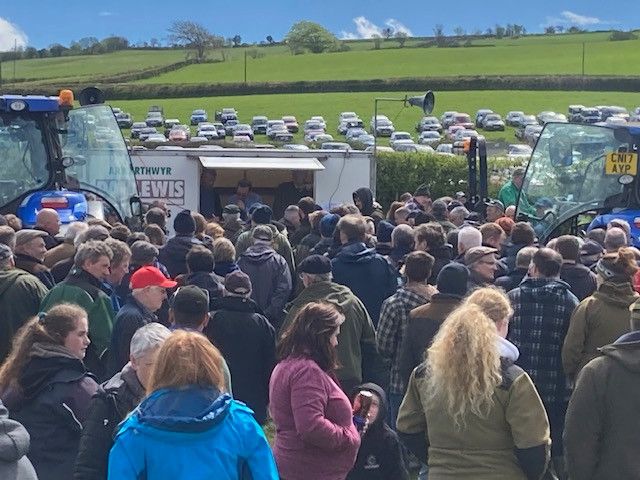
Once the auctioneer's patter starts (he kept it up for four and a half hours without a break!), a silence passes over the crowd, particularly when high-value items are sold, then it's 'going once, going twice, going three times', down comes the hammer, at which point we all crane our necks to see who has bought the said item.
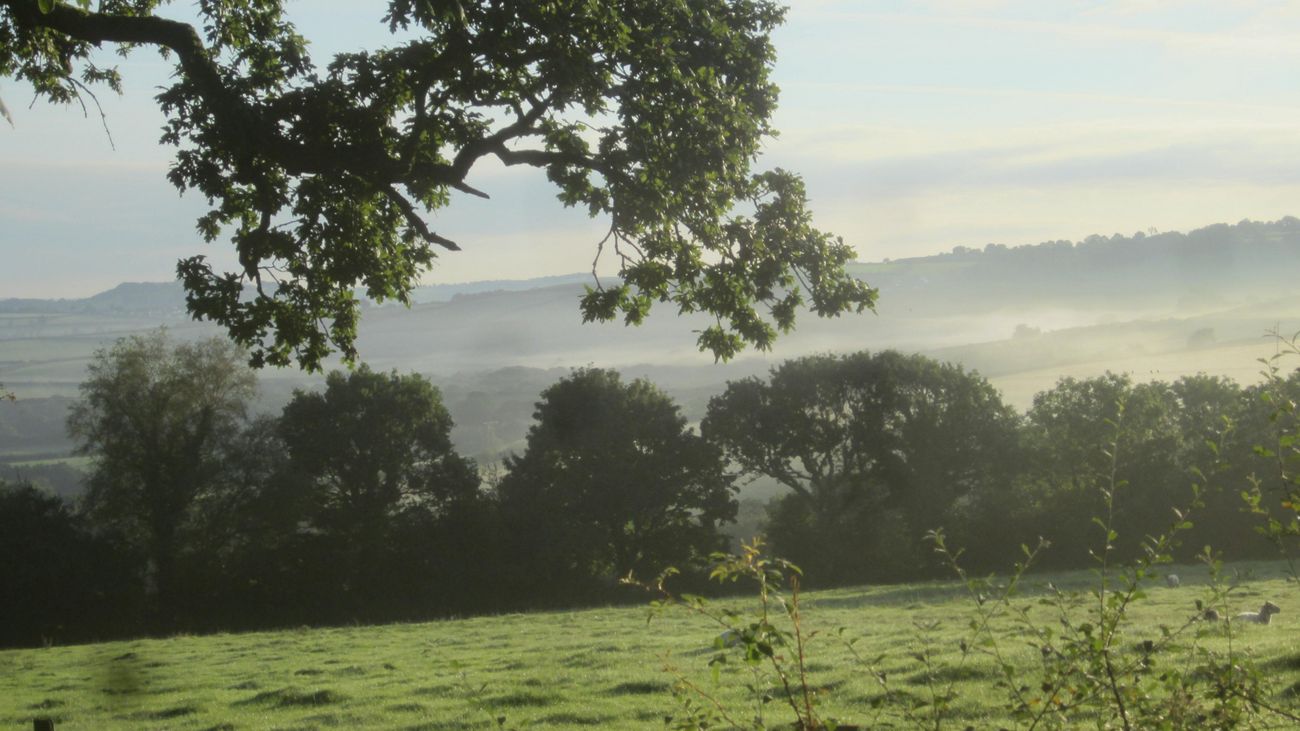
The good news for us in this valley is that the farm in question has been bought by a young family who will resume milking on this holding thereby safeguarding the continuity of family farms. Forty years ago, we had fourteen neighbouring dairy farms, now there are only two, of which we are one. The only sign that these dairy farms ever existed are the overgrown milk-stands at the farm entrances. Unfortunately, most of the farms have been bought solely as an investment by absentee landlords, some rented out, some 'left to nature'. The latter is heartbreaking to see to someone who has personally harvested these areas as it will take some serious work (and costs) to bring them back into production.