'This Brightly Visualised World': A Cultural Erasure of Rural Britain
In an age supposedly obsessed with cultural preservation, are we sleepwalking into the cultural erasure of rural Britain? I explore how the countryside should reclaim its identity
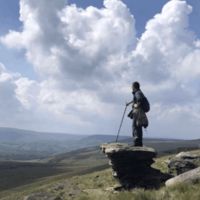
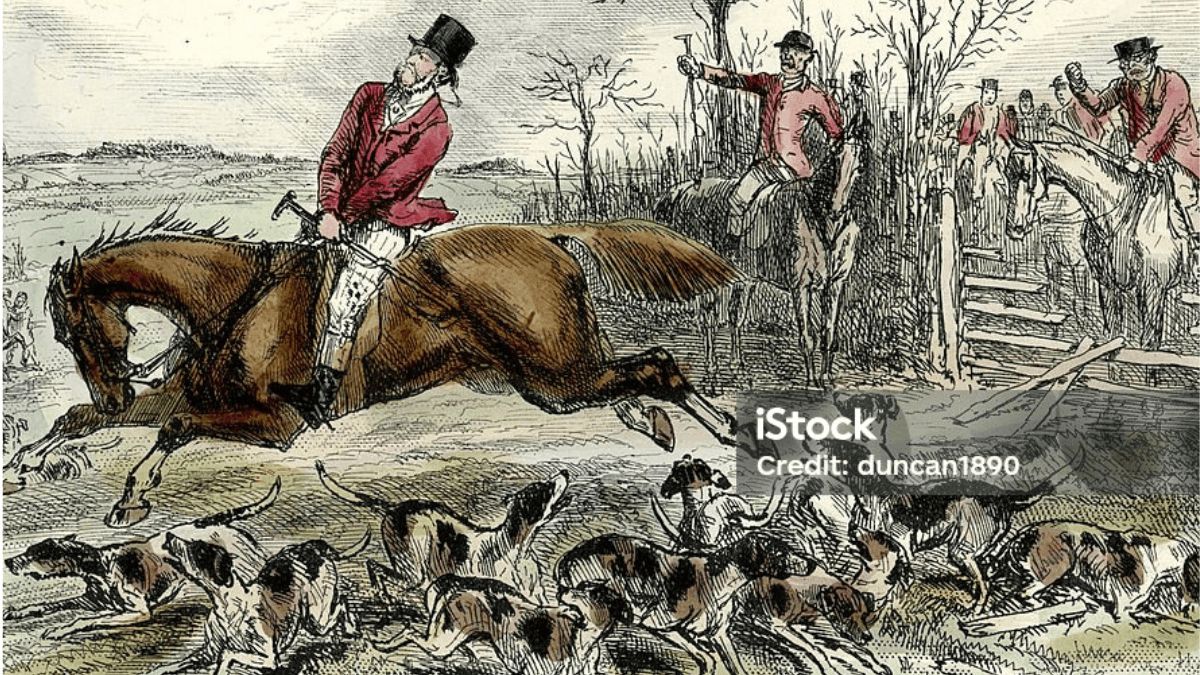
‘In this brightly visualised world of simplicities and misapprehensions and mispronounced names, everything was accepted without question.’
So did Sassoon, that great chronicler of the horrors which war inflicted upon a generation of young men, capture something quite the reverse within this quotation. Situated in his classic semi-autobiographical novel, Memoirs of a Foxhunting Man, it paints an idyllic picture of late Victorian and early Edwardian England; a society immaculate in comfort, tradition and stability, which of course was soon to be shattered by the First World War. His account of growing up in this prelapsarian idyll - rural Kent at the turn of the 20th century - is of course romanticised and somewhat ironic; as the young protagonist hazily fills his days with flower shows, village cricket and, most significantly, riding to hounds. Yet one can’t help feeling a certain anemoia for this lost world, mythologised as it is, especially over a century later when hunting, shooting and the rural way of life in Britain are more vulnerable to attack than ever. As testament to the adaptability of British fieldsports - and perhaps, their timelessness - hunting with hounds of course survived, and indeed flourished, after the first and second world wars.
.jpeg)
The history of foxhunting in particular is punctuated with an undeniable ability to survive changes in land usage, urbanisation and technology. It was once thought that the enclosure of common land into fields, strictly divided with hedgerows and fences, would ruin hunting; when in fact, it provided a new and spectacular element to it. As such, the phenomenon of hedge-leaping fuelled equestrian fervour as a larger element of the hunt, and birthed its sister-sport, steeplechasing. Likewise, the coming of the railways in the mid 19th century, contrary to fears of a catastrophic dissection of hunt country, brought more and more followers and riders out to the countryside of a weekend. Indeed, even hunting’s apparent death knell - legislative abolition of the sport itself - has of course failed to eliminate support for the tradition. Almost two decades since the infamous Hunting Act, popularity with subscriptions and meet attendance seems to remain relatively strong, albeit existing under restrictive and entirely unreasonable legislation. Yet clearly, the rapid urbanisation, detachment from food production and addiction to technology which stains most Western societies has constantly ebbed against the culture of fieldsports, and scarlet coats and tweeds seem more and more at odds with a countryside increasingly populated by brightly coloured Regatta raincoats. The countryside is, of course, there for anyone and everyone to enjoy, but it should not be at a detriment to those traditions which have hallmarked it for centuries. It is with this in mind, I began to think recently about modern societal attitudes towards this vanishing culture.
Academic Blind Spots: The New Cultural Erasure
As a history student, there is nothing more noticeable in modern academia than the current trend of ‘decolonisation’; that is to say, an attempt to study history from a less Western-centric perspective, and a growing recognition of indigenous cultures as equally valid in historical terms as the great European powers which colonised and largely erased them. At its most egregious, such erasure is often termed a ‘cultural genocide’. Whilst I do not necessarily disagree with such research, what is noticeable is that, as usual, we think of ourselves and our own contemporary society last of all. It seems astonishing that we can be so proactive with our concern for the preservation or re-discovery of overseas cultures, yet no one seems to care, or even seeks to identify, the loss of cultural institutions in Britain, and this is nowhere more clear than in the countryside. The fracturing of rural mainstays - the old outdoor beast markets built over and turned into supermarkets, the fox-packs forced to abandon their usual Boxing Day meets because of the threat of saboteurs - all these are part of the heavy jackboot of modernity trampling on the rural way of life. It is evident that the powers that be, whether governmental or simply the mainstream social zeitgeist of Britain, fail to recognise that those who live and work in the countryside form a distinct and legitimate culture. At the risk of cliché, I would invoke the Oxford English Dictionary’s definition of the term: ‘the customs, traditions, and civilisation of a particular society or group of people’. Take hunting with hounds in comparison: it has its own dress, its own vernacular, its own calendar, its own song, folklore, professional employment and even its own canonical historiography (‘Memoirs’ a great example of this). Of course, it is a statistically small and exclusive culture, in that someone is usually either ‘in’ or ‘out’, by choice and knowledge. Yet does this not serve to reinforce its validity, and now fragility, as a culture? Culture is ultimately a tradition of behaviour and association amongst a certain group, which hunting fulfils completely adequately. Yet with this recognition must come protection; something which is regularly awarded, quite rightly, to other diminishing cultures.
A Culture Ignored
A fitting example of this double-standard is the attitude to regional languages within the United Kingdom. Welsh, Gaelic, Scots and Cornish happily enjoy protection and, whilst their future is also far from certain, there is a concerted effort to teach them in schools and maintain their usage and funding as much as possible. Likewise, the physical architecture of Britain is protected thanks to the listing system and organisations such as English Heritage. So is it an unreasonable leap to apply some official protection to Britain’s rural cultural architecture as well?
A bitter irony here is that those devolved governments currently in power in Scotland and Wales are protecting historic languages, yet simultaneously repressing the pursuits of those who traditionally spoke them. The Scottish National Party will symbolically lament the Highland Clearances and celebrate Gaelic, yet rural workers such as ghillies and gamekeepers, as well as Scottish cattle farmers, are all in the line of fire due to the SNP’s crusade to achieve ‘Net Zero’. Scratch the surface in the government’s own publications and this becomes blindingly obvious. For example, in the Scottish Government’s ‘Vision for Agriculture’ of March 2022 there are the usual verbal tropes of a ‘transformation journey’ and ‘land use change’; these of course all coded terms for the abolition of grouse shooting, deerstalking and the transformation of estates into vast forests. Ordinary people working on the land are, as usual, thought of last and subject to what one might even call a: clearance.
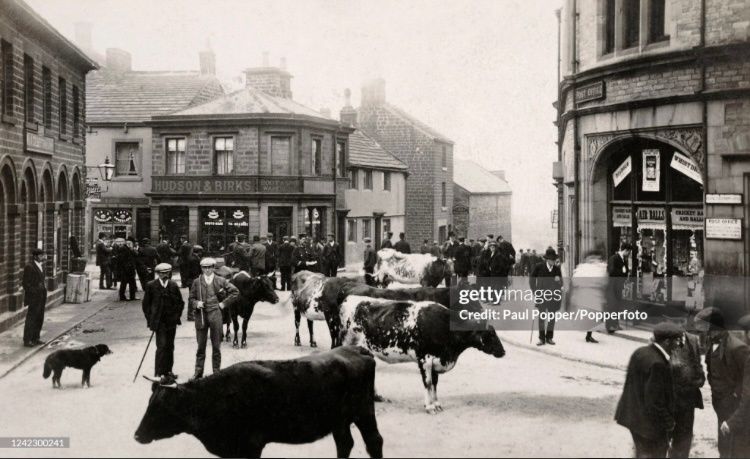
Likewise, back in England, the public would be rightly horrified to see a historic Norman church, nestled suitably cosily in a charming Cotswold village, bulldozed and turned into a Burger King. Indeed it would not just be an aesthetic abhorrence, but, quite literally, an illegal one. Yet with every pack of hounds that is forced to fold, every livestock market that must shut its doors, and every estate turned over to ‘rewilding’ we lose just as significant a part of our history, without any governmental recognition or solace, never mind legal protection. What I am suggesting here is that if we care at all about our rural history - one that has survived world wars, recessions, and social upheaval - instead of simply lamenting these losses as an inevitably of ‘modernity’, we can proactively prevent it.
How to Preserve?
A system of governmental listing perhaps, much like Historic England’s Grade Listing system, could be explored for social and cultural events as well. The right of a local pack of hounds to meet in the village centre, for example, or that of a market to trade in a certain place at a certain time of year without fear of removal, could all be legally solidified. Likewise, tougher penalties for those who wish to prevent people from going about their lawful business - I talk here, of course, of ‘antis’ constantly harassing lawful hunts and shoots - would perhaps instil a greater sense of confidence and permanence within the rural community. This is not to say, of course, that anyone should be pushed into supporting fieldsports, nor should it be forcibly embedded in certain communities, but it is to say that the actual acts of rural life - our social heritage - and not just our architectural, aural or written heritage - should be actively protected, and not just forced to defend attacks from those who would see it destroyed.