“Us” vs “Them”
Are we getting too bogged down in the “small and sustainable” vs hyper commercial, “big bag” debate?

UNITED WE STAND. DIVIDED WE…
There appears, to be a worrying trend developing in the shooting community; to deride those large scale commercial enterprises and their big bags as the “downfall of shooting” and smaller “more sustainable” is the way to go….. but is it?
This baffles me for a number of reasons, first and foremost being we have enough problems from external factors, Chris Packham and Wild Justice’s barrage of legal challenges, an inept Tory government with its general licensing reshuffle and the alarmingly real possibility of a Labour government around the corner, with all the carnage that could bring to name but a few. And yet the hot topic at present is whether it’s acceptable to be shooting “big bags”.
As it is the de rigueur subject , with a few pieces already in circulation, I’ll try not to cover too much old ground in terms of what qualifies as a big bag (which is quite subjective) or the “extreme” bird debate. I will however address the misinformed link with big commercial enterprises and their alleged detrimental effect on biodiversity.
I’ll just throw my ten pence worth into the mix as a keeper on the ground, and hopefully shine a light on a few areas of the debate that are, in my humble opinion, either wrongly portrayed or just ignored completely.
A BRIEF HISTORY LESSON
Let’s start with the basics, big bags are nothing new, we don’t have to look too far back in history to our late Victorian and Edwardian forebears. Once the perfection of the breech loading, centerfire shotgun design was reached in the late 19th century, bag sizes got bigger and bigger. Making even some of the largest shoots in the country today look like child’s play. And remember back then, the size of the keepering teams needed to achieve this was huge. And the way they achieved these numbers hasn’t changed wildly in principle…. Supplementary feeding, managing and creating habitat correctly, and effective vermin control. I’m not even sure the term “conservationist” existed back then!
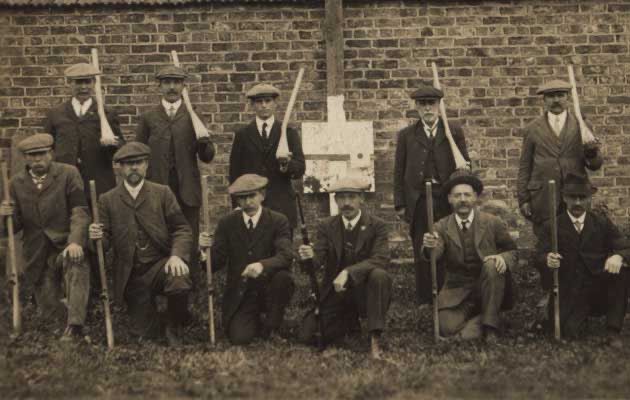
It’s only after the labour shortage of two world wars and the slow decline of the landed gentry’s ability to justify or afford the great expense of having shoots on their ground do we see the bag size plummet. Shooting becomes less of a blue blooded luxury, and syndicates of doctors, bank managers and other such peasants start renting shooting rights. Larger estates scale back their own private shoots to a much more modest level. And agricultural practices get more industrial.
Then in the late 80’s, Thatcher analy assaults the working class of Britain. Our economy moves from goods based to finance based, and the side effect of privatisation: a lot of people with a lot of money. Money that they want to spend on whatever makes them look like they have a lot of money. It’s no coincidence in my mind that the seeds of commercial shooting as we know it today were sown at the same time as the boom of yuppee culture.
AND SO THE SEEDS GREW…
My first head keeper started working on the estate at 15 back in the late 50’s. He recalled the day (towards the end of Mrs Thatchers second term of buggery) his current boss’ grandad called him up to the estate office, to say that, unless they could figure out how to cut their costs yet again, he wouldn’t be able to keep the shoot going. It was the keeper who suggested selling the odd day to improve the books. These let days then multiplied year on year, as the right honourable lord of the estate realised he could have his shooting virtually for free! Much to the disapproval of his neighbouring estates. But sure enough as the 90’s progressed those disapproving neighbours started selling days, and if we imagine this scenario playing out all over the country, it’s not hard to see how these estates became the in vogue settings for the new money to spend itself.
Then as we enter the 21st century, commercial shooting finds its stride, more people rent sporting rights not for a syndicate, but to run as a business, and as with all businesses there are different price points for different customer pools. This is also a time where working man’s syndicates on local farms were in abundance, the average price per bird for let days of good quality were achievable for the average, fairly successful self employed person to treat themselves a few times a season to a special day out without remortgaging the house. And of course, the bigger commercial enterprises that had been given their steroid boost by Thatcherism were now attracting foreign money into the country with guns traveling from Russia, America, the Gulf and elsewhere to sample a bit of British upper class sport. However, as there was no social media, these 500+ back to back days were escaping without slander!
Commercial shooting today is where it is thanks to advertising and social media and the host of people seeking those big birds and big numbers. We are told by cartridge companies that their product performs at extreme range and YouTube tells us that unless we are getting a 400 bird day off the side of Everest we’re better off staying at home. Essentially the industry only has itself to blame for the trend. If people keep buying the days, where’s the incentive to stop?
FROM 1 TO 500+
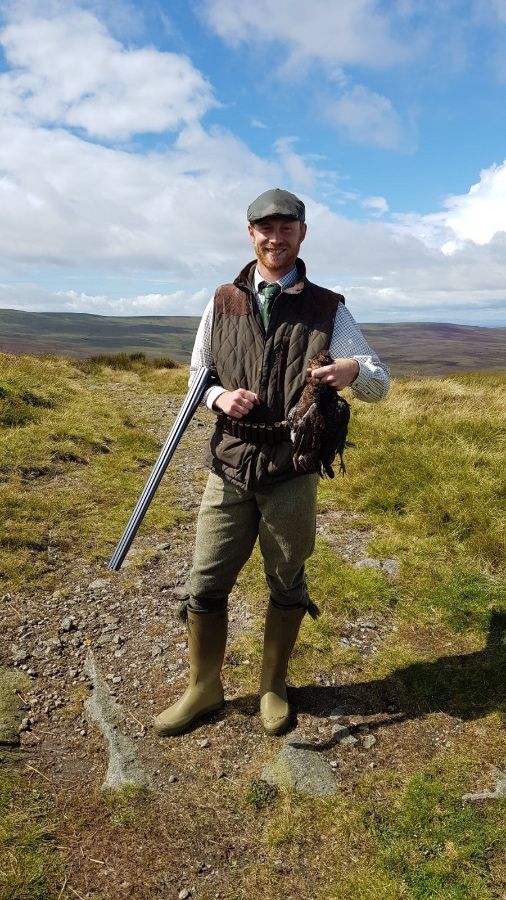
Now I’ve gone through a bit of an emotional rollercoaster on my big bag journey. In the beginning there was just pushing hedges out with my grandad and the terrier. 1 bird (or rabbit) was a good day out. Beating on the local farm shoot where a bag of 20 was cause for celebration. Then during my early military career, shooting took a bit of a back seat. During my later military exploits however, after abusing my carcass for 9 months I got a different coloured beret, a much healthier pay packet, and was fortunate to take a half gun on a good friends walk one stand one DIY syndicate near the forest of Bowland. This still holds some of my fondest memories of days spent in the field with some of the best, salt of the earth humans you could ever hope to share a day with! Being enormously fortunate in that our ground bordered a productive Grouse Moor: We would start with one or two days walked up Grouse, in August and September, bag: 5-10 brace. Then, from mid October we would alternate one Saturday walking the boundary with a bag of around 20, and then the next Saturday driven. A big day for us would have been 60. All game from childhood till now had been taken home by those involved with the day.
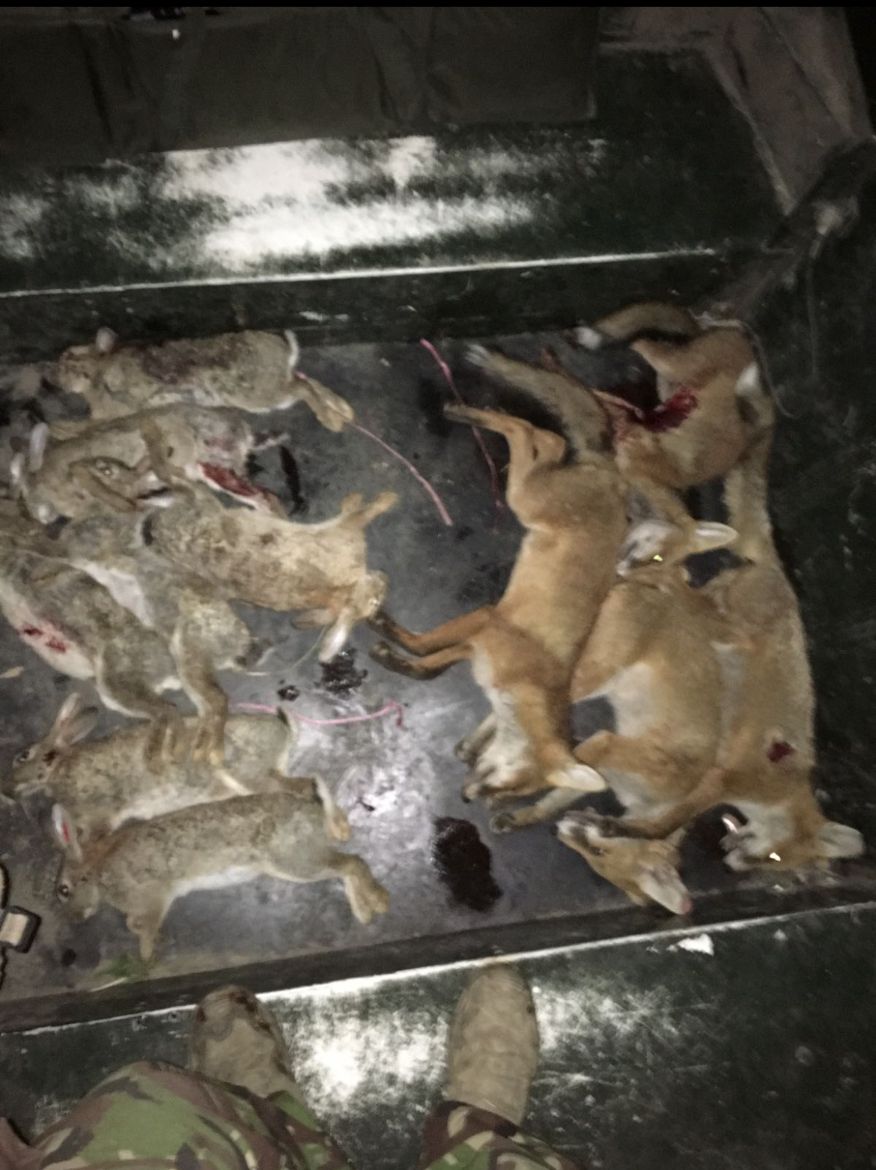
After a few seasons I was based closer to London, and my best friend from my early marine days had just started his first keepering job near Aylesbury. This was my first insight into commercial shooting. It enthralled me. I would spend all my spare time on the rearing field, or out with the lamp. Even the simplest of jobs like driving around helping him feed brought me more satisfaction than any adventures I was getting in military life. The shoot was predominantly a Partridge main course with Pheasant desert. The average bag here was 200, they shot 2 occasionally 3 times a week September onwards. Renting rights over about 3000 acres of arable farmland with a smattering of small woods and spinneys. Whatever shot game the guns and beaters didn’t take was sold for .25p per bird to the game dealer. We would also get drinks behind the bar in a local pub if we snook a few brace in the back door.
To my then fairly nieve eye, I could see no wrong with this set up. There was seemingly an abundance of wildlife: hares, lapwing, yellowhammer, and many others that we wouldn’t often see on the northern “hill” syndicate. I know now of course this was more as a result of the habitat management carried out by the farm (for grants) combined with the predator control and supplementary feeding carried out by the four keepers. Looking back I can see there was so much potential to do more, but as the shooting rights were only rented, there was a limit to how much cover crop could be planted etc etc.
Moving on to the next stage of the journey I find myself in the south west, trapped by a member of the fairer sex whose hoodwinked me into buying an end-of-terrace cottage in a sleepy little village. Fortuitously for me, I didn’t have to go without my shooting estate fix for too long. A conversation with the proprietor of a nearby gun shop led me to the local, quintessentially English country estate. Robert Adam house, Capability Brown parkland…. With long established shoot. Jackpot.
AND SO IT BEGINS.
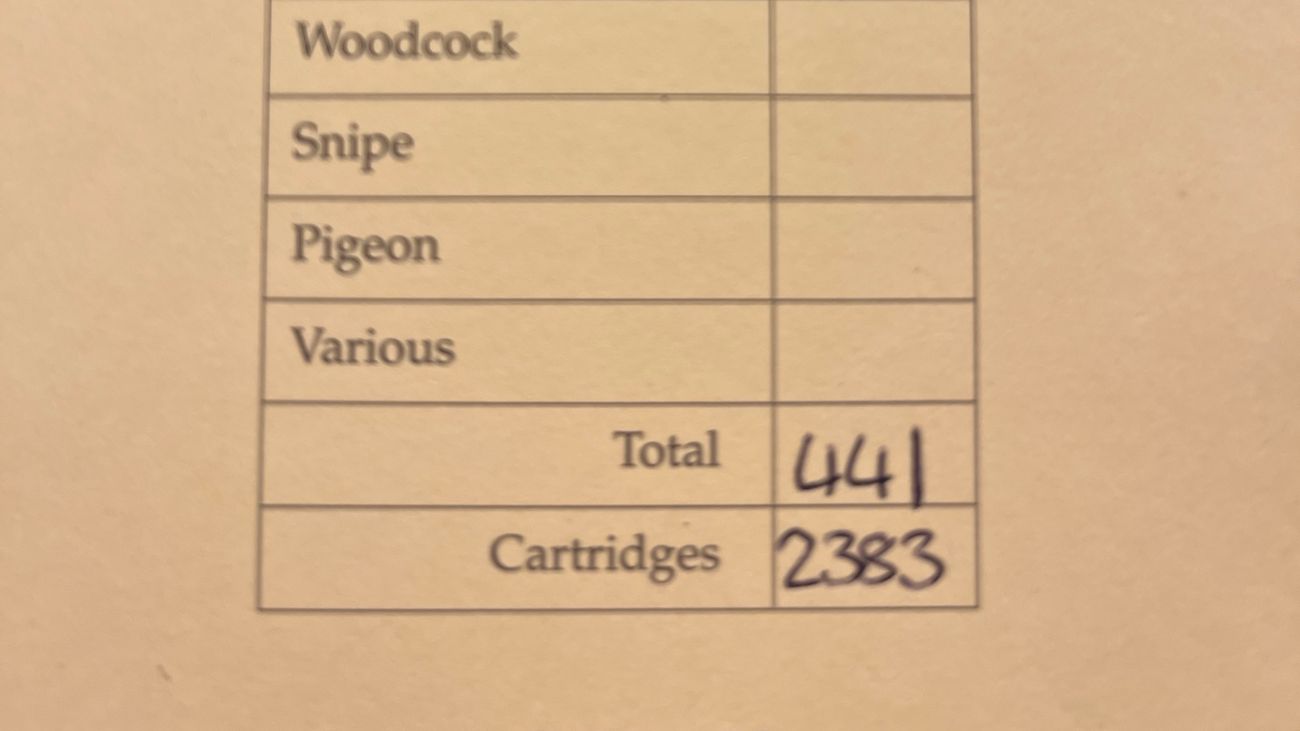
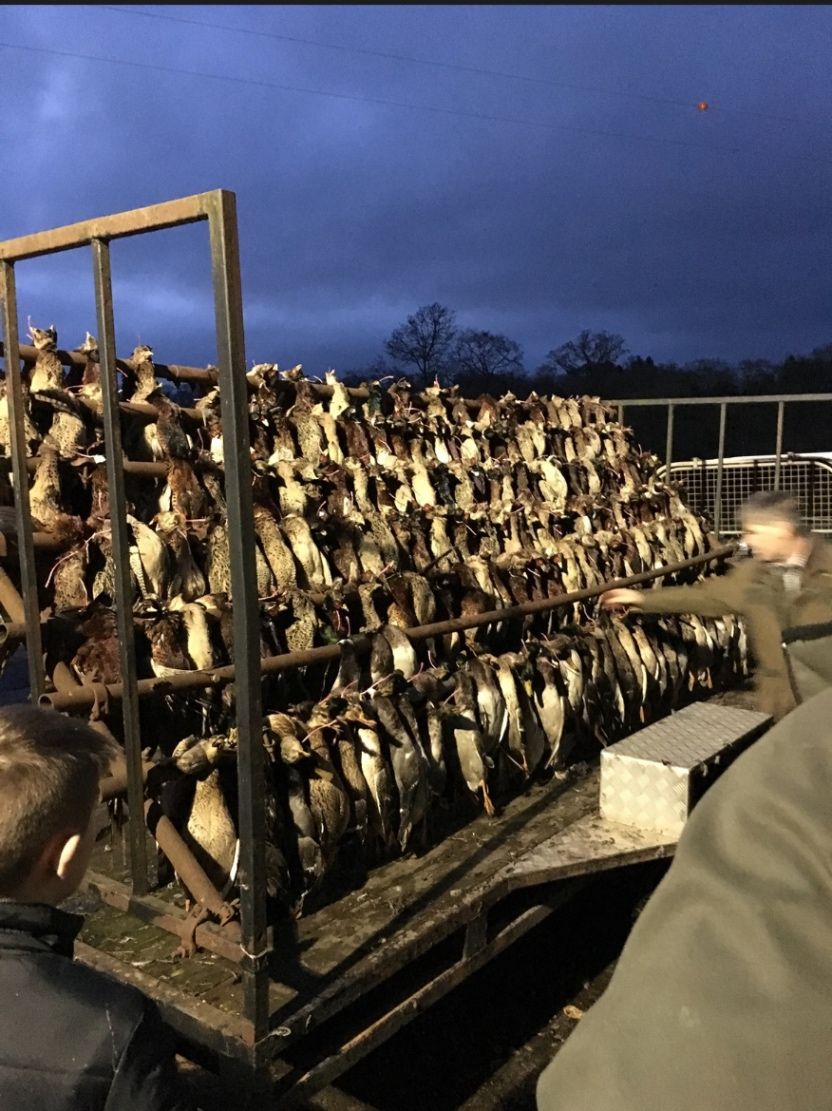
After years of volunteering all spare time, to the now wife’s great annoyance, it is on this estate, upon leaving the military, I get my first keepering job. 3000 acres (although the shooting grounds centred around the main park and adjoining valley made up around 1000 acres) 30,000 birds to wood plus 5000 duck. Shooting 30/35 days a season, up to and including back to back 500 bird days. Now I’m aware that to some readers this is still small potatoes. But to the simpleton from Yorkshire who’s been brought up to hate Thatcher and try not to shoot the terrier when the rabbit bolts, this was the big league. I had also managed to scrape together a very loose kind of roaming syndicate who would do two or three smaller days around 100 a season and then one “big one” of 200. This peaked during Covid when we all got told “no more fun after Christmas” and, as a result we got a ridiculously cheap partridge clear up day deal and shot 441 for the price of 250. This would be unimaginable, given the price of shooting now! (But that’s one for another day) And I could see no issue with it any of it…. For a time.
THE DIRTY UNDERBELLY
It’s at this point in the rollercoaster that I descended from the peak and hit the trough… I start noticing our shot count more and more and that the teams we were attracting (or being sent by the agent) were coming for more of a corporate day out, loaders would be greeted on peg with a nervous “this is my first time shooting a shotgun” or worse…getting asked to identify quarry! This was my epiphany number one; “This is where we are goosing ourselves! It’s not the size of the bag it’s the conduct of some of the turkeys that are doing the shooting that will undo us.” It was a combination of this disillusionment with corporate commercial, and no retirement in sight for the current headkeeper that meant if I wasn’t careful I’d be a beatkeeper for the rest of my career, that led me to move on.
THE “CONSERVATION KEEPER”
I’m currently a single handed keeper on a small shoot in the West Country. Of the 1100 acres that make up the farm, the shoot itself: game covers, pens, all woodland, ponds scrub etc take up just over 100 acres. Annoyingly spread far and wide across the whole farm! There was a big emphasis on conservation efforts during the interview process for the role, and upon first glance it seemed obvious it had been quite high on the agenda. Game covers were a good mix of perennials like canary grass and chicory, along with strips of rotational brassica based mixes providing a variety of seeds from late autumn into mid winter.
Now, I have never distinguished much between gamekeeping and conservation. I view it as mildly insulting to suggest “traditional” gamekeeping has no conservation benefit. Most activities carried out to enhance a shoot will be having a positive effect on all creatures great and small. As most reading will appreciate, the combination of supplementary feeding, habitat creation and management, and vermin control -all a Gamekeepers bread and butter activities since the beginning- greatly enhance biodiversity. However, in the ongoing to and fro between farm and shoot, these benefits seem to be a bit lost in the post. The ever increasing pressure to release areas of game cover back to grazing, lead me to epiphany number two:
IT’S A QUESTION OF SCALE
Now I won’t deny, the shear quantity of birds needed to support some of these hyper commercial behemoths does have some very intense, localised issues especially around release sites. I know of one estate that has to rebuild certain dry stone walls on a regular bases close to pen woods as the number of birds crossing them and dusting off around them causes them to collapse! However, the key element to remember is scale. The localised damage in small areas is easily made up for in net biodiversity gain across the estate on a whole. Hopefully the following example will clarify my point;
Let’s say we have two estates, we will call them A and B. Both 1000 acres. Both with a commercial shoot. (They may sound familiar)
Estate A has 250 acres of woodland, 50 acres of cover crop (a mix of perennial canary grass, maize/kale rotation and AB9 winter bird food) and 30 acres of ponds and low lying wet ground that is left undrained. The remainder is unimproved grass pasture, mixed cereal arable with some overwintered stubble, and scrub that it rotationally grazed by a tenant sheep farmer.
Estate B has 40 acres of woodland, 20 acres of cover crop (similar mix to above) 40 acres of poorly managed gorse scrub, 2 small ponds and no wet areas as all watercourses were diverted underground to maximise grazing potential. The remaining 900 acres is intensively managed New Zealand style dairy farm.
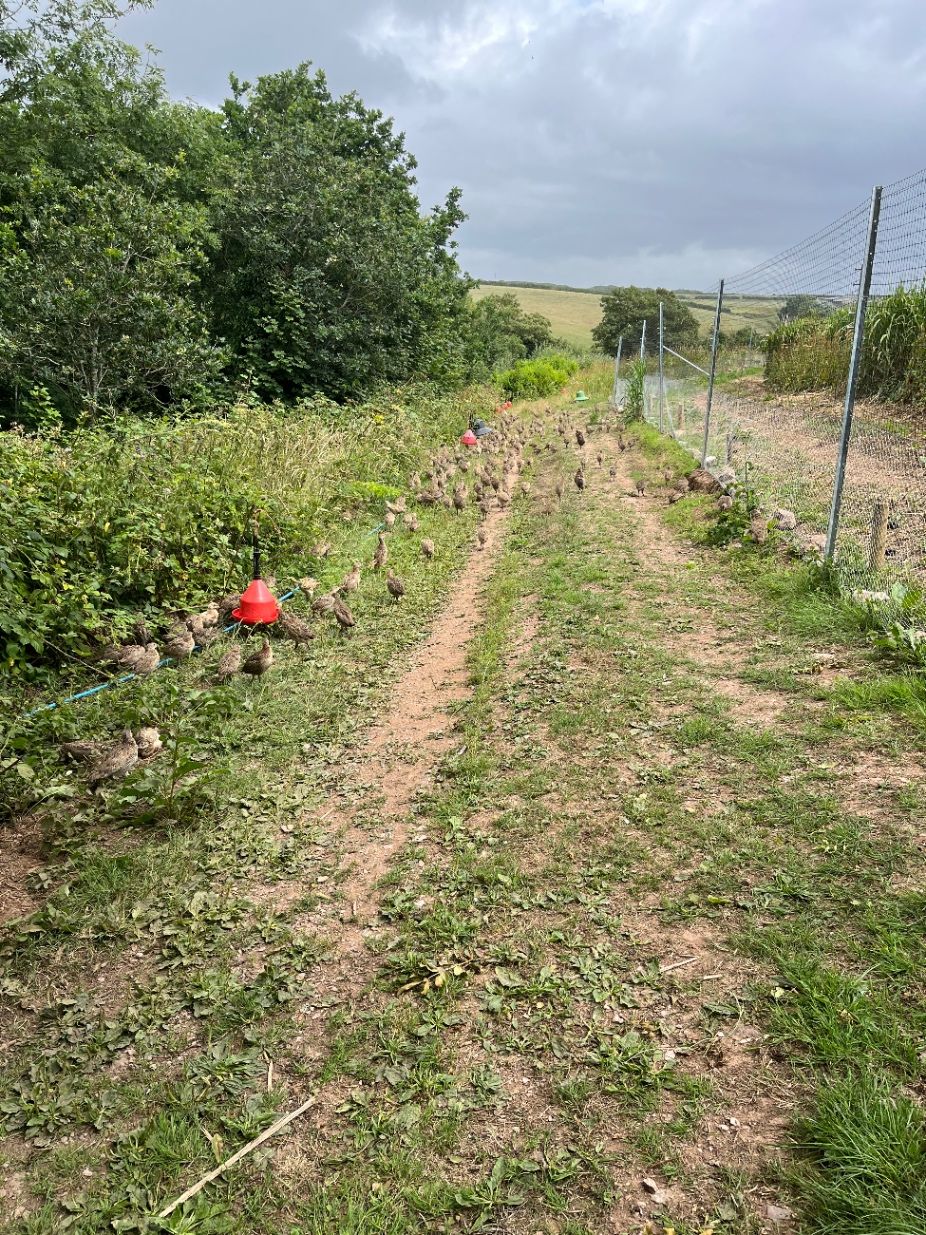
Estate A releases 30000 pheasants & 5000 duck, shoots 35 days a season with bags ranging from 250 to 500. The average being 300.
Estate B releases 6000 pheasants, shoots 25 days a season with bags ranging from 50-150. The average being 100.
Both shoots have the requisite acreage of woodland to comply with GWCT stocking densities in pens, and acreage of pens not making up more than a third of overall wooded area. However the scale estate A operates on, requires it to have a greater area of cover crops, providing more cover and food sources for a myriad farmland birds. As well as the wet areas, that, although maintained primarily for the duck, have an enormously positive impact for biodiversity. Whereas estate B, offering a more palatable bag size, doesn’t really come close in terms of its biodiversity credentials on the same overall acreage. For estate B to have a more positive effect on Flora and Fauna, the shoot would need to increase in size for that ground to “pay its way”.
Arguably if Estate B put some time into improving its Gorse scrub, breaking it up into smaller patches to create more edge habitat that would go some way to improving things. But it is here we run into another oft overlooked point. Estate A will be generating more profit (assuming a similar price per bird) and therefore have more ready cash to complete any habitat management in a timely and efficient manner. Estate B on the other hand is so tight on the break even/ make small profit scale, that any decision on habitat management needs to be carefully considered, or wait for a government grant for funding. Leading to delay in timely management, making it a bigger (more expensive) job for next year and so the trend continues. Not to mention, its hard to bang the “shoot pays for the conservation” drum if, in reality, it’s the tax payer!
Estate A will also generate more revenue for local business and hotels, the extra days it puts on is another 10 teams of guns and guests requiring food shelter and drink for a few nights. It needs more beaters and pickers up, which is more retired people getting out of the house, keeping mentally and physically active. More young people and children being dragged out from in front of love island and strictly come boring to be introduced to the sport!
Now I’m fully aware there are many estates in the country operating on a much greater scale than my “big” example. Some shooting 5 even 6 days a week. And in all honesty as a keeper I would have no interest in working somewhere like that. It would ruin my enjoyment of the day to be going through the motions so often. In the same vein, looking back on the 441 bird day, as much as I enjoyed it at the time, I’m not sure I would do it again. That’s not to say however that I disagree with the practice, or look down my nose at those who do it regularly.
My best friend I mentioned earlier, now works in the Scottish Borders on one of these 100,000 plus birds put down, sometimes shooting 6 days a week type estate. He hates it. For the same reasons I would. But he will still admit that, even though their use of cover crop is minimal (due to the ground and altitude), by sticking to the three basic principles of supplementary feeding, managing the habitat correctly and controlling vermin, his beat is in much better shape ecologically than it would be, were it to be tenanted out to commercial forestry and sheep farming.
TO CONCLUDE
It is the mismanagement of habitat, over stocking ground and not sticking to the evidence based guidance set out by the GWCT and the code of good shooting practice that we should be stamping out. As a community we need to address the issues and image associated with the “corporate day out” type days and all the aforementioned faux pas they create. As long as the shoot on a whole, is being operated on a large enough acreage to support the numbers put down, in a sustainable way, and is doing as much as it can to enhance its net biodiversity, and of course, there is a market for the dead game at the end of the day - I’ll put my testicles on the chopping block and say it….The size of the bag is irrelevant.