Welsh Curlews: A Million Pound Extinction?
The finishing line is in sight for the Welsh Curlew. Six years left before extinction. It's time to stop virtue signalling and get serious.


When I was a student at St Andrews in the 60’s we used to eat them, but they weren’t a culinary treat. People talk about their evocative bubbling call, but we have the technology now to hear that whenever we want – maybe as a ringtone. Will crops fail without them? What’s in it for us humans? Why pay a million pounds to ‘save’ Welsh curlews?
Measuring wildlife against our own utilitarian standards is a route fraught with philosophical danger, not the least being: what’s the point of our own species? But if the general consensus is that ‘we’ want to ‘save’ curlews, then we have to face up to some practical realities as well as some philosophical contortionism.
The Problem
The immediate pinch point for curlews is depressed breeding success related to habitat management and to predation. Habitat management is in the hands of just a few, desperately impoverished, upland farmers struggling to make a living in the face of increasing difficulties. The public want food cheaper than its production costs. The government, six years after Brexit, are just a tale of blithering incompetence and infighting, climate change is playing hell with the weather, and Monbiot idealists bang on about woolly maggots turning the countryside into a desert. This winter has been wet, wet, wet and for many of us in the uplands there has been immense plant growth but impossible to make hay or silage because the ground is too wet to get machinery onto the land, or perhaps I should say, off it. Hardly a week has gone by without someone needing a tow out.
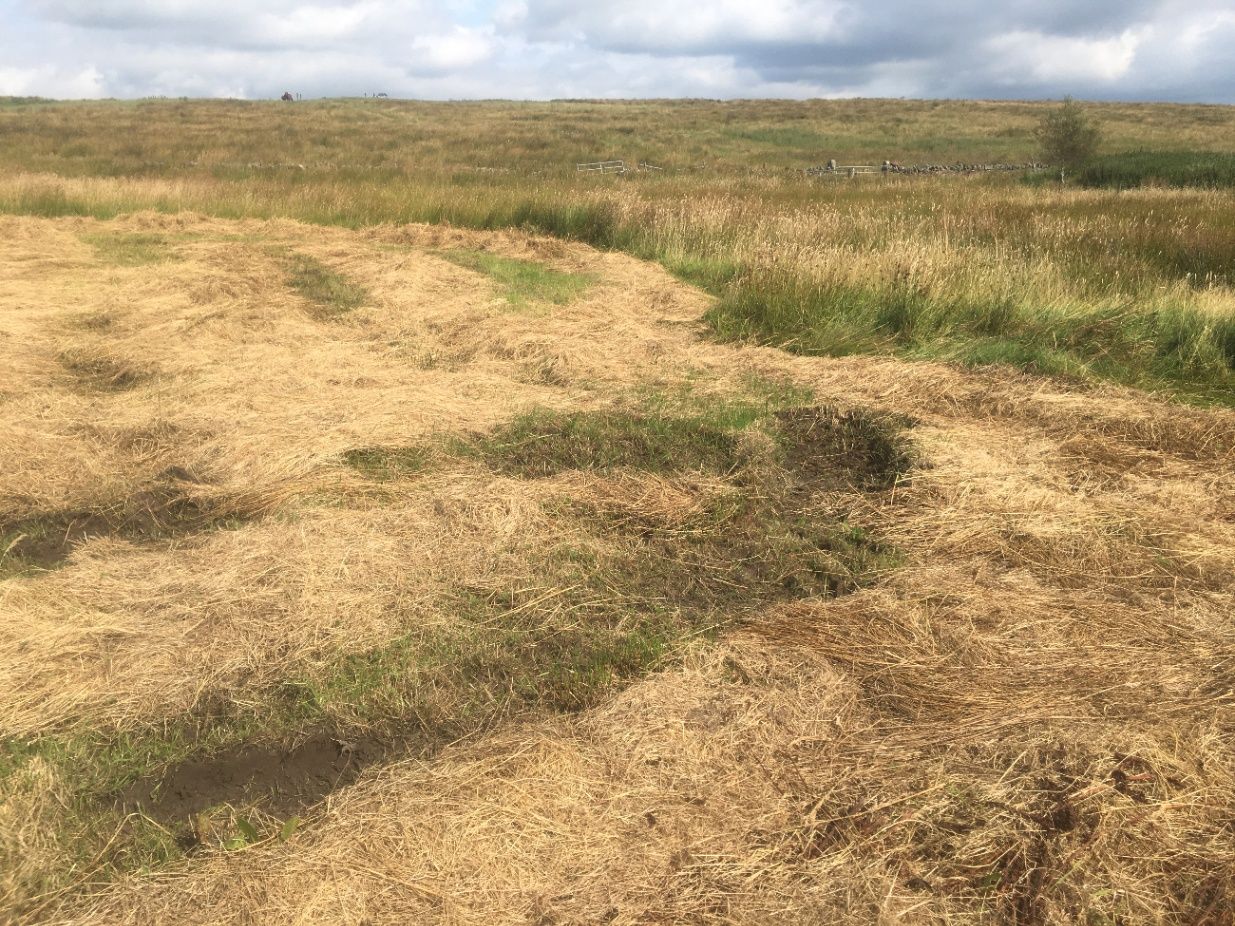
So if ‘we’ want to ‘save’ curlews, ‘we’ need to make upland farms viable to retain the mixed open habitats needed for so many ground-nesting species such as sky larks, curlews, peewits, grey partridges and corn crakes. They need some short open sward, and they need low cover near at hand. They need permanent mixed species that enable insect numbers to establish and increase. They need sympathetic timing for mowing for hay and silage to avoid nests or chicks. What they don’t need is trees. Trees harbour predators. Crows and buzzards use them to overlook nesting meadows and foxes thrive in the plantations, safe from rifles and thermal imaging scopes.
The clock is ticking and it’s close to midnight. The current trend is for the curlew to be extinct as a breeding bird in Wales in about six years’ time – 2030. The target should not be simply to slow the decline and put the extinction date to 2040. The target should be that in 2025 the fledged chick numbers should double 2024, and then again in 2026. The Game and Wildlife Conservation Trust have done the research so many times. Think of the Langholm study, or the predation trails on Otterburn. We know the issues only too well. We don’t need more research. The problem is in the delivery.
Crows
The Welsh government, poked by Wild Justice, have got their knickers in a twist. We KNOW that crows have a devastating impact on nest success, especially in the face of increasing human access disturbance. Why protect crows? A General Licence GL004 that only allows crows to be killed between 1 February and 31 August to protect certain wild birds is ridiculous. Even from the crows’ point of view it entails shooting crows who themselves have dependent young in the nest – a welfare problem. For goodness sake, just let the people on the sharp end tackle the problems in the way that works for them. Group shooting at winter roosts can be very cost effective.
Trying to decipher when, where, why and which corvids can be legally taken is a minefield. England, Wales and Scotland have different regulations. Can you use Larsen traps? In your garden? To protect fruit? To catch magpies? To conserve sparrows (which are protected wild birds). Oh dear, I’m sorry, I’m totally confused. It begs the question: why all these licences in the first place? Just remove protection on crows and magpies and let local problems be sorted out as needed. They are not going extinct any time soon.
Foxes
Hands are equally tied on foxes. Welsh woodlands are thick with foxes, often a ten acre block will house ten or more foxes hunting out into the surrounding countryside each night. But the government has banned the use of hounds and humane cable restraints. Firearms certificates and use are getting tighter and tighter, so how does one control fox predation anywhere near woodland? Dai Thomas, who participated in our fox shooting study, is responsible for fox control on some of the curlew sites but it is an impossible task for just one man with a rifle. And of course in Britain, for every fox there are 40 cats, not to mention mustelids.
Kites
In the 1980’s the Red Kite was on its knees; just a couple of dozen pairs left in Wales. I suggested to the Kite Committee that we took some eggs from each nest, replacing them with dummies and leaving one real egg. The kites were only rearing one chick. Over six years we hatched 53 kites for release, including the first two for England, and the kite was on the road to recovery in Wales. The real problem was food supply. Wales is simply too poor for food and with regulations on removing dead sheep there is very little for scavengers. Help came in the form of kite feeding stations and now everyone and his mate is doing it. The result is that now kites have burgeoned well beyond natural carrying capacity and there are flocks of them, which is not good news for ground nesting birds such as curlews. The Welsh government would be paranoid about killing or even translocating red kites so we have another raptor issue. Diversionary feeding might be worth trying at key sites.
The whole thing is a mess. Conflicting priorities mean that there are no easy solutions, and if hands are tied by ill-thought out legal controls there are no solutions at all. The curlews will die out, simple as that. ‘We’ want public access. ‘We’ want cheap food. ‘We’ want animal welfare. ‘We’ want ground-nesting curlews. Something has to give and it’s going to be curlews. The million quid grant is a conscience salver. We will have done our best. Pity the curlews didn’t make it. Or the corn crakes. Or the black grouse. Or the partridges. Or the red grouse. Or the nightjars. Or the peewits. Or the salmon. It’s just a shifting baseline…
Time to mean business
If I was trying to ‘save’ welsh curlews I would produce a brief leaflet explaining what farm management is needed and send it to all upland farmers as well as the NFU and FUW. I would offer a bounty of £100 for every documented curlew chick fledging on his land. I would remove all protection on crows and magpies. I would offer all Hunts to register as Pest Control companies and pay them to manage fox numbers on the chosen habitat areas, using hounds with or without shotguns or rifles. I would restrict public access to all sensitive sites between March and July. I would tie the whole approach into a wider wildlife management programme which would become increasingly draconian if targets are not being met. Farmers are very capable, given the right financial incentives and a little helping hand, of producing results, whether it is food or wildlife. If ‘we’ want both, then we should pay for both and not tie farmers’ and wildlife managers’ hands behind their backs. To hell with all the virtue signalling. The time for anguished hand-wringing and pussy footing about is over.