What Duty do we owe to our Community?
Beyond the Hedge (the Scribehound podcast) has set a hare running for me. I have struggled with the idea of what I owe a rural community, and how best to define a rural community.


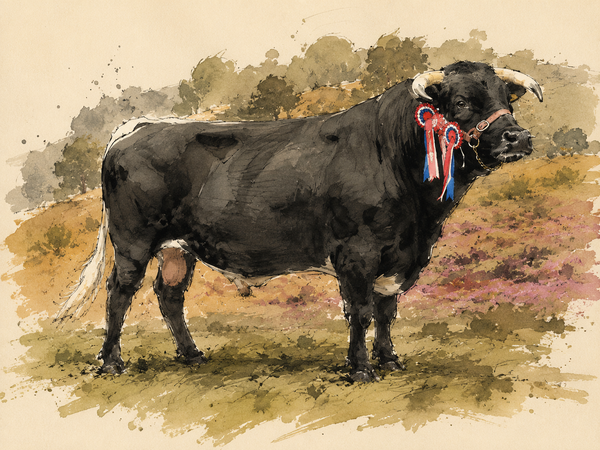
I moved a long way from my family and friends last year, buying a farm in order to pursue my somewhat whimsical dream of becoming a not entirely unsuccessful beef farmer. This remains (financially at least) a dream, but there have been some benefits. I spend a lot of time working on my own and have become an avid listener of podcasts, including the brilliant Beyond the Hedge from Scribehound. In one of the recent episodes “How to Save the English Village” Patrick Galbraith (the erudite and engaging host) says that people who live in rural areas have a level of duty to support their local amenities. He was talking in particular about pubs, but it made me wonder about my duty to what is now my local community.
My integration so far
I have made friends since moving here and do feel that I am become a small part of the community in the area. I recognise that I am on probation, and will be an incomer for years to come, but nonetheless after a year I can lay claim to small successes - the butcher and the baker both know my name, the newsagent keeps aside a Saturday paper for me and knows what tobacco I smoke , and two weeks ago I was allowed to run a tab at the pub as I had genuinely forgotten my wallet and the landlady knows where I live (I couldn’t work out if this was friendly or threatening, but it worked to my advantage so I didn’t enquire much further). But these successes are the result of other people’s welcome, making me the fortunate recipient of existing goodwill.
In an age when moving away from people does not render them socially distant, it is hard to feel a pressing need to make hundreds of new friends. Should I ever want to talk to someone, I could speak to any of my friends or family on the ‘phone. This stops me ever feeling lonely, but also strangely keeps half of my life several hundred miles away. I go to the pub, sparingly, I attend church, irregularly, and I use the local shops when I don’t need something they don’t have. If this were the 80s, perhaps this would be enough to introduce me to the community properly. But it is not the 80s, the pub is not the weeknight social hub it might once have been, and the church unfortunately does not represent a hebdomadal general assembly of the local population. I do not do these things out of duty- I like chatting at a bar, and I love singing a rousing hymn- but should either the pub or the church go under through lack of use, I can at least say I was the right side of the “use it or lose it” argument. (This is of course an argument adjudicated by rugby referee).
Community is now by choice, not location
The world has changed considerably during the last century, and this global change represents an improvement in so many ways. Better communication technology, better education, more efficient farming and greater opportunities (on a national, and centennial, scale) have afforded a level of freedom that villagers a hundred years ago would simply not have had. But it has also denuded the landscape of people, and removed some of the bases in which a community might thrive. The internet has made it possible to find a community defined by interests and choices, rather than the accident of location. I maintain healthy friendships with university colleagues who are in Africa and America, who currently (even after a year and change) I would consider to be more part of “my tribe” than my neighbours or fellow congregants in church.
Local needs are not national needs
The change in food systems has similarly affected the way that we interact with communities. Shops which are local to us might not be local shops. Even local shops might not be selling local produce. There is a superb grocers’ shop in the next village, where I try to buy most of my fruit and veg. I do this because I want to support local businesses, but it puts me in conflict with my desire to support British farmers. It is easier, cheaper, and more efficient for this small shop to buy its produce (barring seasonal British specialities such as rhubarb, asparagus, strawberries and cherries) from a wholesaler in Newcastle, for whom it is easier and cheaper to buy from the central market in Amsterdam. By using this shop, I support a local business which answers a local need, but I might be better supporting a national need (in my mind) by buying Union Flagged cabbage from a supermarket.
In this instance I have had a definite choice, and I could choose which duty to which community I felt was more important. But there are aspects of community which whilst less solid than a shopfront are nonetheless as important in maintaining a village or area’s sense of itself, but how can these aspects be best served without the obvious entry points to community that the church, the pub, the library, and the working men’s club used to represent?
To many of the readers of Scribehound, the answer might well be fieldsports- they are brilliant opportunities to meet likeminded people from an area. As far as making friends and feeling part of a larger community is concerned, this is true for me. I have followed a pack of hounds since moving here, and have made many friends and learnt much about the area. I have been welcomed, because here is an obvious shared interest around which a group can coalesce . But the same can not be said of a village . I am free to pursue my interests, and have done so, and I suspect many of the people who live in the village do so too . The fact that we are all inhabitants of one space, and customers of the same shops does not necessarily make us a community. So, Patrick’s point that people have a duty to their community is an important one, and one with which I agree, but I personally am hard-pushed to see how best to serve a village community other than economically. I worry community is much less local than it used to be, much less visible than it used to be , and arguably may not mean the same thing it used to. Of course, it is possible that actually village communities haven't changed dramatically in my lifetime, but I have been overexposed to the Archers and have therefore developed unrealistic expectations of engagement . The other distinct probability is that I am still just on probation, and slowly the intricacies of the local area will unfold over the next five decades . I hope its the latter.