When did you last hear a curlew?
Or for that matter a cuckoo, a nightingale, or a turtle dove. And when did you last see the lapwing's lazy bouncing flight behind a tractor, their sharp acrylic Robin Gilmour patterns now watery colours etched in our minds across a silent landscape

We should not be the last generation to have our spirits lifted with the glorious hit, the joie de vie of this bubbling, long curved bill of a bird forcing Winter away with sheer exuberance? For me, Brechfa Pool near Lyswen in March on the Welsh Borders is my faded bleached etching. A cock bird shaking the Wye bluffs with his “cur lee” statement of ownership and place, me here and now as he forges his frothy courtship. Curlews back on their breeding territory for another year, or not?
Well, if you have read this far, let me provide some hope. You are not alone in your misgivings, your absence. Many people share your passion for helping Curlews.
The Curlew Recovery Partnership
The Curlew Recovery Partnership brings together all those with an interest in Curlew conservation; joining forces to help secure the future of this most iconic and threatened species, the Eurasian Curlew. Their mission is to provide co-ordination and support to those engaged in Curlew conservation, while also providing benefits for other threatened species and habitats and helping people to connect with nature.
Their overarching framework uniquely brings together the experience and expertise of nine diverse bodies, to ensure relevant habitats and scale are represented with a common set of agreed policies
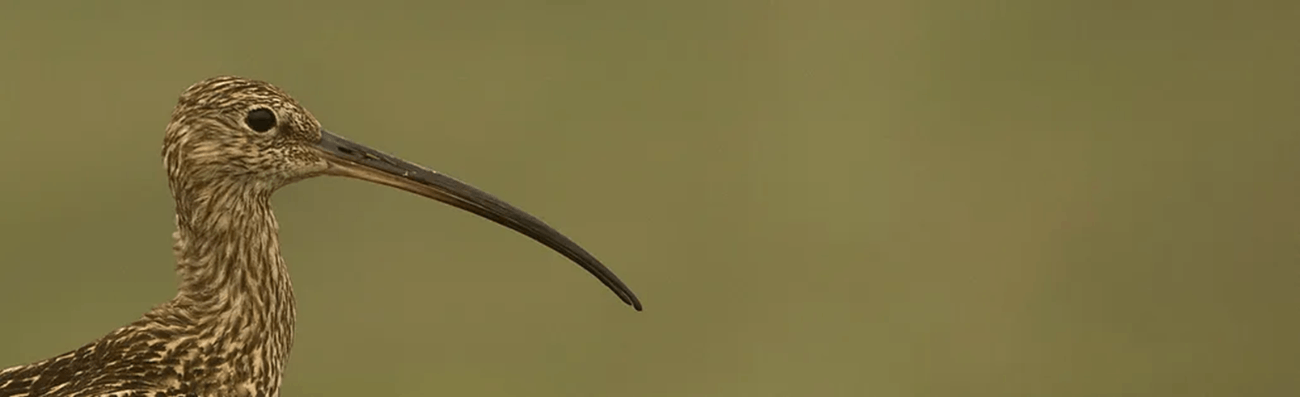
Why do we have a responsibility?
At an estimated 58,500 pairs, we hold in the UK, the responsibility for some 25% of the World’s population of breeding Eurasian curlews, increasing in the Winter to some 125,000 birds, at around 50% of the World’s population.
However, sadly these numbers represent a 50% decline in the breeding population over the last 20 years and around a 25% decline in the total number of wintering birds.
The curlew is now classified as vulnerable to extinction across Europe and is arguably our most pressing bird conservation priority in the UK
Populations in Lowland Southern England are now reduced to some 500 breeding pairs, and while with careful management, there are some relative strongholds in certain Uplands, we must not become complacent as even here we witness long-term declines.
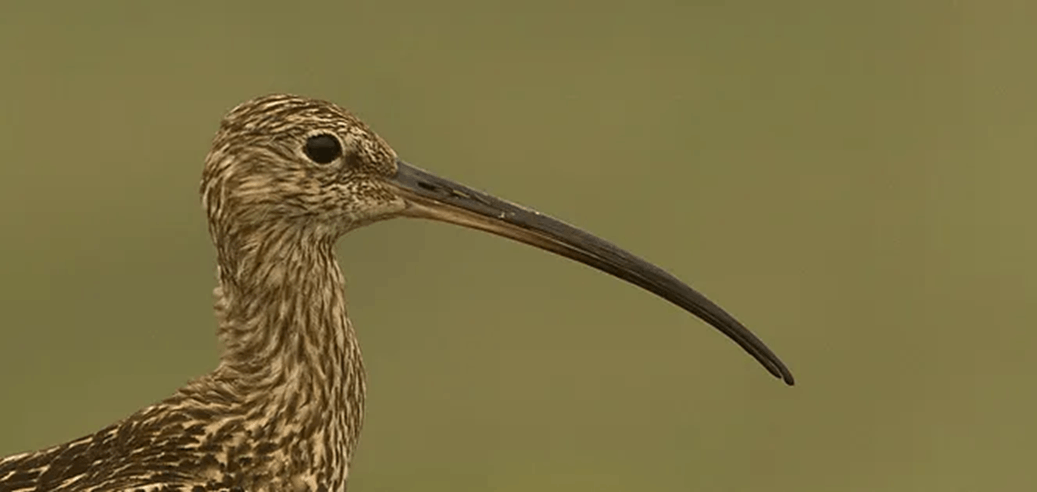
The challenge
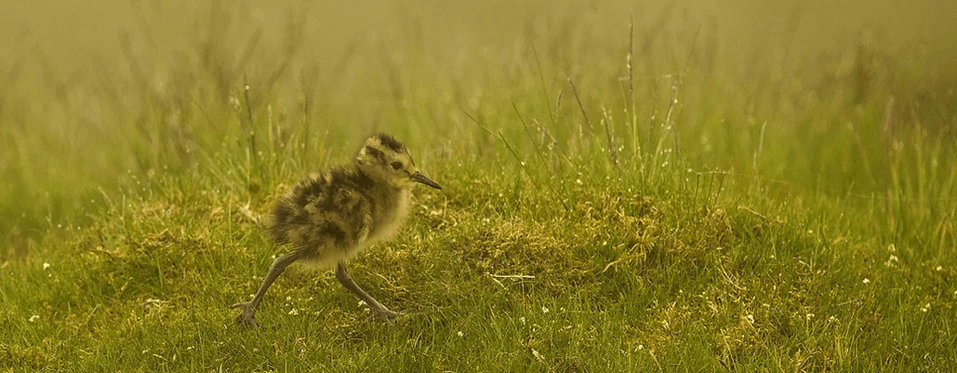
We now know that low productivity (ie chick survival) is driving the more recent uptick in the downward trends, as opposed to reduced adult survival with two main contributory factors:
Predation and agricultural operations.
Look after the curlews and amongst others, you also support lapwings, golden plover, redshank, and snipe, whose evocative cries once such a feature of the British Countryside are also in steep decline.
Providing the right habitat all year is key but alone is not enough if chick survival is too low. Our challenge is to double the chick productivity from the existing 0.25 per year per pair to 0.5 per pair to sustain the population. Broadly you can then categorise actions into three main activities:
1. Habitat loss and degradation including forestry and recreational disturbance
2. Mitigating loss of eggs and chicks to commercial grass-cropping activities (hay & silage)
3. Mitigating loss of eggs and chicks due to predation (foxes & corvids)
The Deliverables of the CRP
The CRP is here to produce evidence-based policies and toolkits by sound research, with surveying and monitoring often on land owned by the Partners. This is supported with toolkits, training and education to aid volunteers' fieldwork. In addition, DEFRA has funded work through 2024 for a Species Recovery Plan (SRP) to help produce policy for curlew-friendly practices. Key to this work, with the help of Natural England, is to consolidate these policies into Defra’s new Environmental Land Management Scheme (ELMS) and the Nature Recovery Network
Why should businesses get involved?
We all have a duty to understand our environmental footprint or impact and increasingly this is accounted for in annual reports as part of a company’s overall Environmental Social Governance (ESG) strategy and/or TNFD (Taskforce for Nature related Financial Disclosures). Improving nature is also the key overall apex for the new UK Environmental Plan 2023 and part of the Environmental Act 2021.
In a survey conducted by Future Countryside in 2023 “What makes you proud to be British?” – The Countryside came second at 37% only to NHS at first with 51%. And Shareholders and employees too are demanding more sustainable practices.
So, my ask of business is how green actually are your “green credentials”? As an example, a tree planted in the wrong place may not truly help. Support real live initiatives such as the Curlew Recovery Programme that will also inspire and engage your employees.
Please check out www.curlewrecovery.org or contact @ hello@curlewrecovery.org
A new Taylor Swift or a Rolling Stones will eventually come along (eventually!) but no future AI can ever replace a lost Curlew calling in the Spring