Hunting - intentional or reckless?
Scottish falconers are pilloried while cat owners get off 'Scot-free'.Why is the Scottish Parliament prepared to flout its own discrimination laws in its prejudice against hunting?


Hunting – intentional or reckless?
The law, as they say, is an ass. And no more so than when it is applied to fieldsports. Our British laws are riddled with inconsistencies, ignorance of science, and downright prejudice. It’s not surprising because only a handful of our MPs have any background in science, knowledge of statistics or acquaintance with farming and the countryside. Added to that, our legislation - deliberately - has been tackled on a piecemeal basis leaving glaring injustices.
To shoot a crow nowadays one has to comply with a General Licence. Few people know what that licence requires, fewer still know the tortuous reasoning behind it. Only the people who wrote it have the arrogance to think that there is any significant means to enforce it. If you end up in court, it is a valid defence to say “So sorry Your Honour, I thought it was a Blackcock!”, a species that although struggling, can be shot without a licence.
But don’t try this one on a Sunday. Game birds are protected on Sundays; crows aren’t.
The Scottish interpretation
The oldest trick in the book is to legislate on one element while refusing to assess other, similar, elements. I hope you don’t live in Scotland, especially if you keep a dog or cat. Big Brother may be after you… Here’s the back story:
Following the Werrity report on muirburn and grouse shooting, Mountain Hares were placed on Schedule 5 of the Wildlife and Countryside Act 1981, on the grounds that they were a ‘priority species for conservation action’. The demographics of the Mountain Hare have yet to be clarified and the reasons for any putative decline are not known, so hey, let’s invoke the Precautionary Principle. But as well as being threatened, the Mountain Hares are also so common that they are a pest to forestry, and a licence can be obtained to kill them. So far, so crazy. But dear old Werrity did not for one moment consider falconry. Perhaps he had never heard of it? As Fergus Ewing MSP clarified in the December 2022 Committee meeting, the Bill went through Stage 3 without the falconry community being consulted at all. Falconry in Scotland has an ancient heritage far exceeding shotguns, golf or commercial forestry, or indeed the concept of Scotland itself as a nation. Our heritage is recorded in the archives of the Falconry Heritage Trust, (https://falconryheritage.org/viewItem.php?id=7468 ) alongside the 24 nations for which Falconry is already inscribed by UNESCO on the Representative List of the Intangible Cultural Heritage of Mankind.
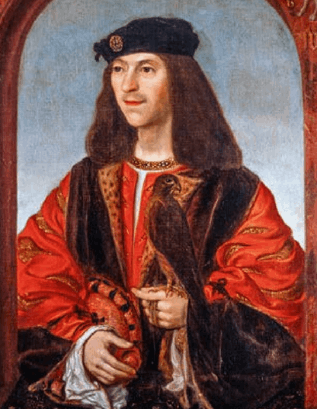
The Mountain Hare issue has been approached from one perspective only – the conservation of Mountain Hares against undefined and unsubstantiated threats. The other approach is to look at the threat this legislation poses to Scotland’s cultural heritage. This is an ‘endangered species’ in its own right. The cultural heritage of Falconry equipment making is on the Red List of Endangered Crafts https://heritagecrafts.org.uk/Falconry-furniture-making/ . So the Scottish Parliament, ignoring its own procedures, ploughed ahead without consultation and falconers who have flown their eagles and hawks at Mountain hares for centuries, were hung out to dry.
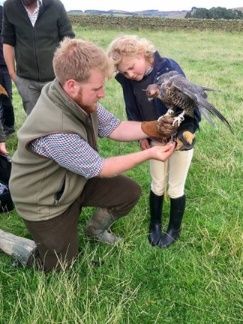
Not being prepared to take this lying down, we made a Petition and this has been through several Committee Hearings without resolution and is now due to be heard in the full Scottish Parliament. Submissions were made to the examining Commission by NatureScot, Police Scotland and the Minister for the Environment and Land Reform. The Crown Office and Procurator Fiscal Service were also approached to seek their views on licensing and prosecution issues but did not respond. The key point is whether flying a bird of prey in an area with Mountain Hares constitutes the possibility that the Falconer might ‘recklessly kill’ a Schedule 5 protected species within the meaning of Section 9 of the Wildlife and Countryside Act 1981.
The Minister for the Environment and Land Reform submission is of the opinion that it depends on individual circumstances. (Politician to the last!)
NatureScot’s opinion is that 1. The Falconer must have permission of the land-owner, 2. The Falconer must take reasonable precautions to ensure that there are only few, if any, mountain hares on the land, 3. The Falconer did not foresee, or could not reasonably foresee that the eagle might take a mountain hare, and 4. The Falconer took all practical steps to minimise the damage, eg by recalling the eagle as soon as reasonably practicable. NatureScot then went on to specify on a map where in Scotland Mountain Hares are at a ‘high’ density, and where they are at a ‘low’ density.
Police Scotland are of a similar opinion to NatureScot with the added proviso that ‘If the Falconers had carried out due diligence … and thereafter a Mountain Hare was taken by a bird of prey, then this could be considered accidental. Police should be notified of the incident and thereafter the area should not be used for exercise again. If thereafter this area was used for exercise purposes again, and a further Mountain Hare was taken, then this could be considered reckless.’ They go on: By choosing to exercise a bird of prey in an area with a known high population of Mountain Hare, then the act could be described as reckless.’
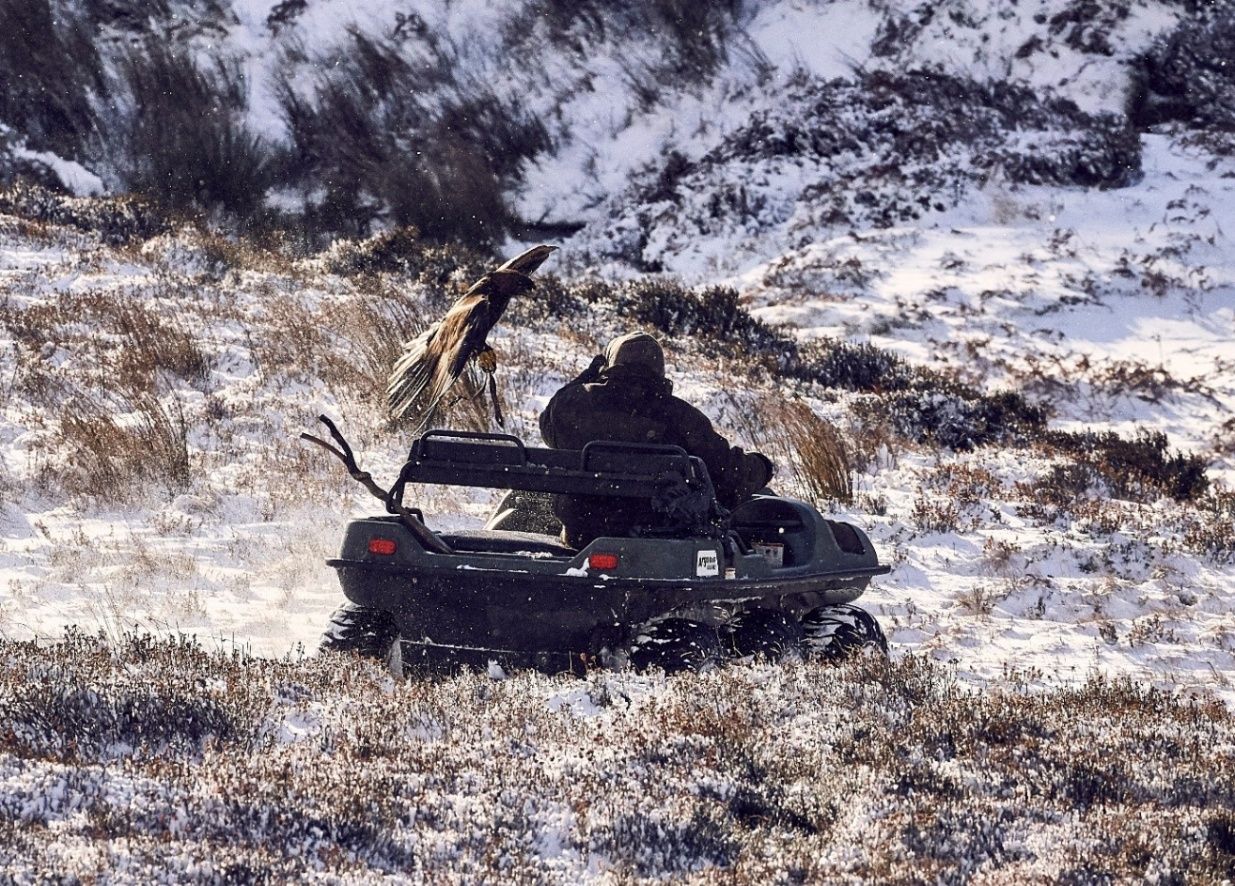
These three submissions have tried to interpret the law narrowly without examining the precedents it would set for other related activities. These are not hard to find.
Cats which hunt
First, Mountain Hares are not the only protected species in Scotland. Most birds and mammals are protected and together they cover the entire area of Scotland. Based on the premise above, clearly it would be ‘reckless’ to fly a bird of prey anywhere in Scotland. Second, birds of prey are not the only animals being used. Dogs and cats are allowed to exercise in Scotland and both species not only kill Mountain Hares but also a wide range of protected species. If you put the word ‘cat’ into NatureScot’s advice, instead of ‘bird of prey’, you will see that cats are 1. being allowed to roam without land-owners’ permissions, 2. Cat-owners have not taken ‘reasonable precautions to ensure that there are only few if any’ protected species on the land, 3. The cat owners could ‘foresee, or could reasonably foresee that’ the cat might take a protected species (because it is happening thousands of times per day), 4. The cat owner did not take ‘all practical steps to minimise the damage eg by recalling the eagle or cat as soon as reasonably practicable.’
Police Scotland helpfully further advise: ‘Police should be notified of the incident and thereafter the area should not be used for exercise again. If thereafter this area was used for exercise purposes again, and a further Mountain Hare (protected animal) was taken, then this could be considered reckless.’
Question: Given the thousands of protected animals being killed daily by the 685,000 owned domestic cats in Scotland, how many cat owners have the police prosecuted? The meta-study by Arie Trouwborst gives a succinct overview:
Trouwborst,, A. and H. Somsen. 2020. Domestic Cats (Felis catus) and European Nature Conservation Law—Applying the EU Birds and Habitats Directives to a Significant but Neglected Threat to Wildlife, Journal of Environmental Law, Volume 32, Issue 3: 391–415.
The politics of hunting
The reality of the discrimination in favour of cat owners is simply their voting power. There are about 10.8 million domestic cats in UK, with 26% of households owning one. No politician wants to poke that hornets’ nest, but the few people who fly eagles can easily be rail-roaded, as can people who hunt foxes with dogs.
I was a Scientific Advisor to the All Parliamentary Party Middle Way Group on Hunting with Dogs in the debates leading up to the Hunting Act in 2004. Bear in mind that the hunts used to kill about 20,000 foxes per year, the cats about 275 million animals. Cats have caused 26 extinctions and in Scotland are the leading factor in the loss of the indigenous Wildcat through genetic introgression.
The debate on the Hunting Bill chaired by Alun Michael, at which both Andrew Linzey and I were expert witnesses, was reported by S. Morros in The Guardian 11 September 2002:
Andrew Linzey was asked to explain why hunting with dogs was morally wrong while it was acceptable for him to have pets which hunted. Professor Linzey's evidence began in conventional style with an attack on the Burns report, the findings of Lord Burns and his committee of inquiry on hunting which concluded that the "experience seriously compromises the welfare of the fox". said the report "fails to confront major moral issues" and "minimises the reality of suffering". He added: "There is ample evidence that mammals experience not just pain, but also stress, terror, shock, anxiety, fear, trauma, foreboding." Replying to the assertion that foxes, hares and mink killed by dogs die within seconds, Prof Linzey, a member of the faculty of theology at Oxford University, said: "Just one second of pain is morally objectionable."
Prof Linzey suggested that hunting could be "morally injurious" to society. He said: "We should not overlook the capacity of human beings to become desensitised through habitual exposure to practices which involve violence and suffering to animals."
But then came the cat issue. Questioned by the Liberal Democrat MP Lembit Opik, Prof Linzey admitted he had two cats, Harry and Pepper. How then could he justify having pets which hunted and which were sometimes attacked by animal welfare groups for killing many birds? Prof Linzey said he did not feel "morally responsible" for their actions. He said they were strays who found him rather than he them. "What do you do when a half-starved cat comes to you?" he asked.
After the hearing, Prof Linzey, a vegetarian, admitted he had faced a "moral dilemma" about what he should feed the cats but had put his doubts aside and cooked fish for them. More seriously, he also expanded his thoughts on the morality of hunting with dogs. He claimed that taking pleasure in "cruelty" was indicative of a "pathological state" and concluded: "Whether a creature has two legs or four legs, violence is violence."
He did not seem to understand that he had himself ‘become desensitised through habitual exposure to practices which involve violence and suffering to animals’ namely, allowing his cats to hunt. His moral squirming in claiming his cats were strays, tacitly admits that if they had not been strays, he would have been morally culpable, along with the other owners of 10.8 million moggies.
Intent v Recklessness
The crux of his argument is that he did not intend an animal to suffer, even though it is well established that domestic cats kill millions of animals a year. He absolved himself from the responsibility by claiming that his cats were, in some way, not ‘his’ cats. Cat-owners sometimes claim the defence of Ferae naturae for their cats which supposedly absolves them of any liability for their cats. However, Ferae naturae applies only to non-domesticated animals and fowls that are no one's private property. Wild Cats may be Ferae naturae, but owned cats are Domitae naturae. Andrew Linzey was trying to claim that his two cats had originally been strays and that they were therefore Ferae naturae, rather than Domitae naturae. They were his, but not his… He wanted it both ways. Clearly he was more concerned about saving his own moral neck than about animal suffering.
The question of ‘intent’ v ‘recklessness’ has been clarified for us by NatureScot and Police Scotland. In their interpretation there can be no doubt whatsoever that if you live in Scotland and keep a dog, cat or bird of prey you must not let it free into any place where it could kill a protected species. Right now they are discriminating against falconers.
The Committee recommended in the 23rd January 2023 meeting asking the Crown Office and the Procurator Fiscal Service for advice on the administration of the law, but at present we can find no response from them.
The Office for Environmental Protection is currently making requests for Defra in England to report on the efficacy of its regulations, with little response. But Scotland does not even have such a body as the OEP to rein in frivolous regulations. There is no accountability – ecologically, economically or democratically. Licensing is the lazy politician’s panacea; it is an administrative burden both on the civil service and the tax-payer and in most cases is a waste of time. The more silly laws you create, the more silly ‘crimes’ will be recorded.
Hunting culture
During these hearings, the attitude towards cultural heritage reflects prejudice to fieldsports generally. NatureScot’s view (March 2023) is: ‘One area discussed was whether Falconry is of sufficient cultural significance to fit any other social, economic or environmental purpose. NatureScot’s view is that hunting mountain hares with birds of prey is not widely practised enough in Scotland to satisfy this purpose’.
NatureScot is not a qualified authority on anthropological aspects and cultural activities. Postulating that there is some sort of cultural threshold which must be satisfied is ridiculous and dangerous. The Scotland Act 1998 gives the Scottish Parliament power to encourage equal opportunities (particularly observing equal opportunity requirements). It also has the power to impose duties on Scottish public authorities and cross-border public bodies operating in Scotland.

The Act defines equal opportunities as: ‘the prevention, elimination or regulation of discrimination between persons on grounds of sex or marital status, on racial grounds, or on grounds of disability, age, sexual orientation, language or social origin, or of other personal attributes, including beliefs or opinions, such as religious beliefs or political opinions.’
The public sector equality duty (or general duty) in the Equality Act 2010 came into force in 2011. It means Scottish public authorities must have 'due regard' to the need to:
· eliminate unlawful discrimination
· advance equality of opportunity
· foster good relations
In 2012 Scottish Ministers made regulations that placed specific duties on Scottish public bodies to help them meet the general duty. These are also known as the Scottish Specific Duties.
In this regard, the Scottish Government is failing to give Falconers an equality of opportunity, for their Protected Belief as a minority. It is also unlawfully discriminating against Falconers by imposing increased restrictions on them in comparison to cat owners, and in failing to prosecute cat owners for WACA offences. From the international perspective the United Nations Human Rights https://www.ohchr.org/sites/default/files/Documents/Publications/MinorityRights_en.pdf gives clear guidance on the rights of cultural minorities such as Falconers.
The law is an ass. Maybe you can think of more examples? Here’s some homework for you: Do you need a Level One Licence or a Level Two Licence to look inside a Hazel Dormouse box? Are there criminals walking our streets with convictions for looking inside a dormouse box? Hmm, that fellow in a Barbour coat looks suspicious...