Positive Forestry
There’s a lot of negativity around the forest industry, nearly all of it unnecessary and unhelpful. Let me enlighten you as to the positives this most sustainable of industries provides us all….


A while back I was privileged enough to appear on the Countryslide podcast (the nation's premier rural affairs podcast, or so I’m told by those in the know – Richard Negus primarily) alongside Matt Biddle - a harvesting contractor based in Suffolk - to talk about the UK forestry industry from the point of view of people on the coal face. Or tree bark. Or something. Perhaps cheekily, Matt and I had asked if we could come on to the show because we are passionate about forestry, see it as a positive thing and want to spread the word. It seems the show was well received and people liked hearing from two blokes who actually get dirty hands.
Lies, damn lies and negativity
The forest industry has a terrible record of promoting itself - that issue is a whole other subject on its own - but I’ve never been shy of grabbing an opportunity, so here we are. We were prompted by the merry-go-round of rural criticism that exists on social media which focused on forestry in recent weeks. It happens in real life too, as a contractor I’m fair game for all kinds of abuse. Next week it’ll be something else, shooting I expect given the time of year. What we wanted to do was highlight the positives that the forestry industry brings in the face of overwhelming negativity, vitriol and personal attacks. In a lot of cases these opinions are factually wrong, a lie, based on a lie, a lie reposted, opinion based on a lie, opinion designed to sell a book, opinion designed to sell one’s ideology, you get the idea. These things don’t particularly bother me, I work in a rural commercial sector it comes with the job. It is what it is. What does bother me is this rhetoric is all the public really gets to see and this informs public opinion which in turn informs government policy. So policy is implemented on the basis of ideology rather than fact, which is daft.
I will stop that rant there because it isn’t news - me and others have been talking about this for a long time - but mostly so I can get onto the positive. For a bit of context, I will briefly have to talk about the negative first. Before I start I should say I will be invoking the ‘Voldemort’ rule, which is - I shan’t be naming any of these individuals or organisations that are peddling this nonsense. We all know who they are, and I refuse to give them any publicity. Sell your own sodding career.
I say sell your own career slightly tongue-in-cheek but actually that is exactly what it is. It can’t be anything else. These are intelligent people after all, they must know that what they are saying is factually wrong, disregards science and established knowledge gleaned over hundreds of years of humans managing woodlands. So it’s self-promotion. In all honesty, I have to also hold my hands up to that too, but there is a crucial difference. My views are moderate, I think we need a bit of everything from preserving habitats on one hand to banging out commercial timber on the other and everything in between. One of the things that annoys me about these Voldemorts is that they refuse on every level to engage in meaningful debate. It is pontificate, misdirect, opinionate, ignore. Damning evidence they know their position is on very shaky ground? I think so.
Consequences of ideology
The thing that really, really angers me is when Voldemorts talk about the evils of conifer plantations or banning log burners or whatever else might have popped into their minds that morning. They never think of the impact that has on the people who make their living from the woods; contractors, managers, estate workers. It is us who will lose our jobs if their ideology came to pass. It is us that have to face abuse simply for doing our jobs. The complete lack of empathy towards those of us who really do make a difference is a disgrace I find hard to stomach.
Unfortunately it is not just individuals guilty of this, there are environmental organisations hellbent on pushing the narrative that commercial forestry is evil and a blight on the countryside. But then they are driven by membership, donations and a large PR budget so maximum return means keeping the public onside and as we know people are taught from a young age all about nature but not really about all the ways we achieve good management for it. Money rolling in is more important than pesky facts. Trees are emotive things and if you can push that button effectively you can say almost anything you want.
Anyway, that’s enough of that. On to #positiveforestry!
Forestry - it's all good
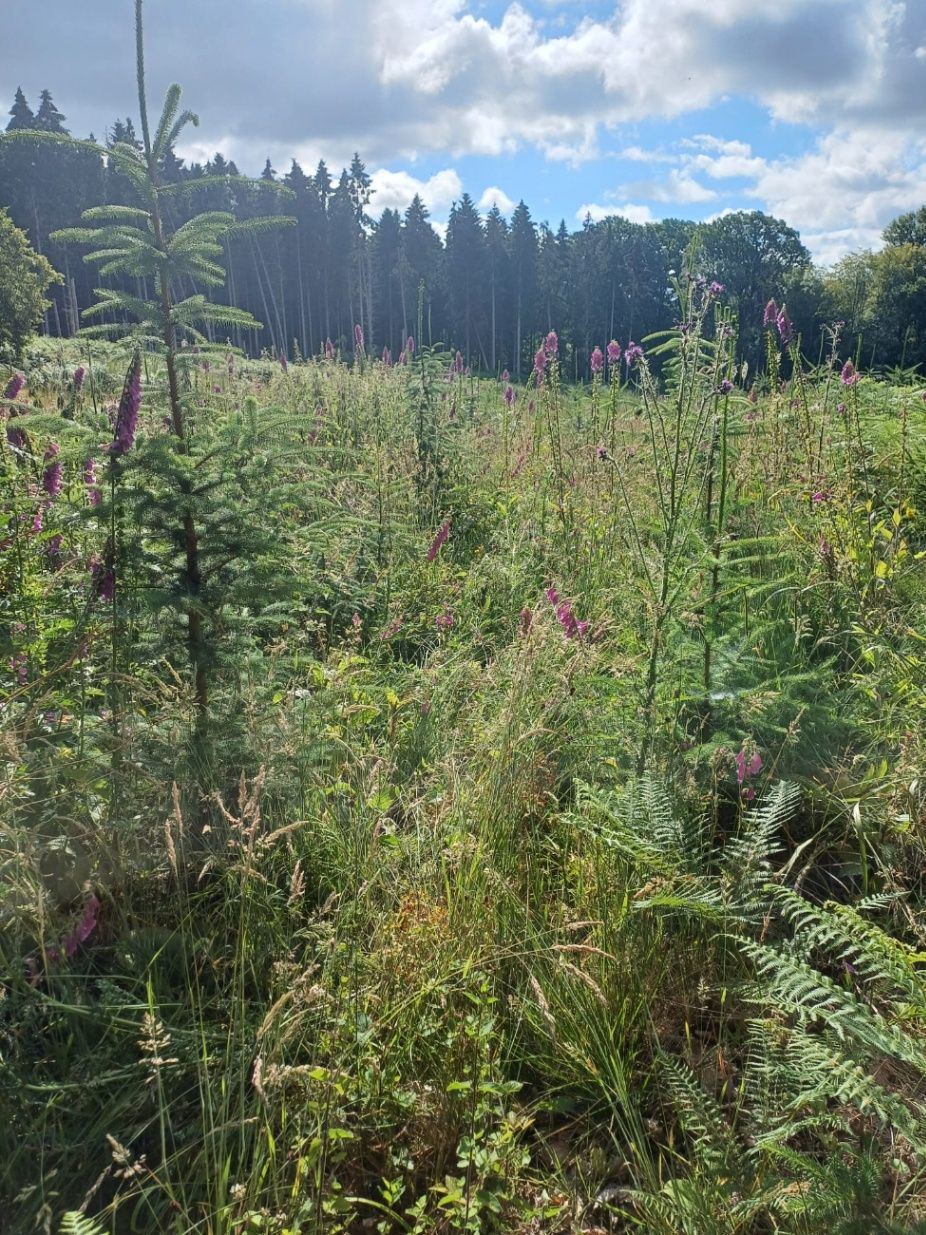
In the context of climate change, forestry is one of the few ‘complete’ industries insofar as it can do everything we need it to do. Want to produce a viable alternative to high-carbon building materials such as steel and concrete that can be replenished over and over again? Forestry can provide that. How about producing a truly sustainable method of heating? Forestry can provide that. Or maybe you want to create a habitat for mammals/birds/reptiles/flora/fauna? Guess what, forestry can do that too.
What I really want to talk about is the much-maligned world of commercial forestry, a world I have inhabited for most of my life in one way or another. Say ‘commercial forestry’ and it conjures up a vision of serried ranks of conifer trees planted in arrow straight rows up and down a hillside. While this is true it is not the whole picture. Forestry is nuanced, but for the sake of simplicity we can divide commercial forestry into two broad areas; upland and lowland. Those ranks of conifer trees marching up the hill we can describe as upland forestry. I will guarantee you that you will never find a forester who will try to tell you these plantations are as good ecologically as a broadleaf wood or ancient woodland. But they serve a different yet crucial role; providing products that can lock up carbon, store carbon and replace carbon intensive materials such as steel and concrete.
Your house is full of timber!
There is a classic example used to demonstrate why we plant conifer trees; look around your house, so much of it is made of wood. The floorboards, 1st and 2nd fix, tables, chairs, your kitchen, doors, stairs, rafters and roof trusses are all wood and, with some exceptions, all come from softwood plantations somewhere in the world. I say somewhere in the world because the UK imports 80% of the timber it uses. Much like food, it is worrying that we rely so much on imports. A large part of Britain’s economy is construction, what happens if overseas supplies either dry up or the price rockets? Doesn’t bear thinking about, so logically we should be planting a lot more. We even have a mandate from government to achieve an increase in tree cover from 13% to 16.5% of the landmass. Still far less than the European average of 38% but more is still better. Happily, a house is a good metaphor for construction in Britain – mostly carbon intensive building materials with a small amount of materials that lock up carbon. Timber technology has come on in the last few years and should increase the percentage of timber used.
There are other reasons why we plant almost exclusively conifer on upland sites. One is nimbyism, another is government policy guided by the aforementioned envNGOs who also almost exclusively focus on nature recovery rather than timber production. These two together push timber production to the fringes.
But mostly, upland sites tend to have poorer soils and are more exposed to the elements limiting the range of trees that you can plant. Basically, you need a hard bastard and his name is Sitka Spruce. Sitka is a fantastic tree. It grows well just about anywhere, with good form if managed well and produces high quality structural timber. Even the bits that don’t make the grade, tops and edge trees for example, can be chipped for biomass or to make OSB. Complemented by other species such as Norway Spruce and Scots pine to break up monoculture, what’s not to like?
Commercial doesn't just mean conifer!
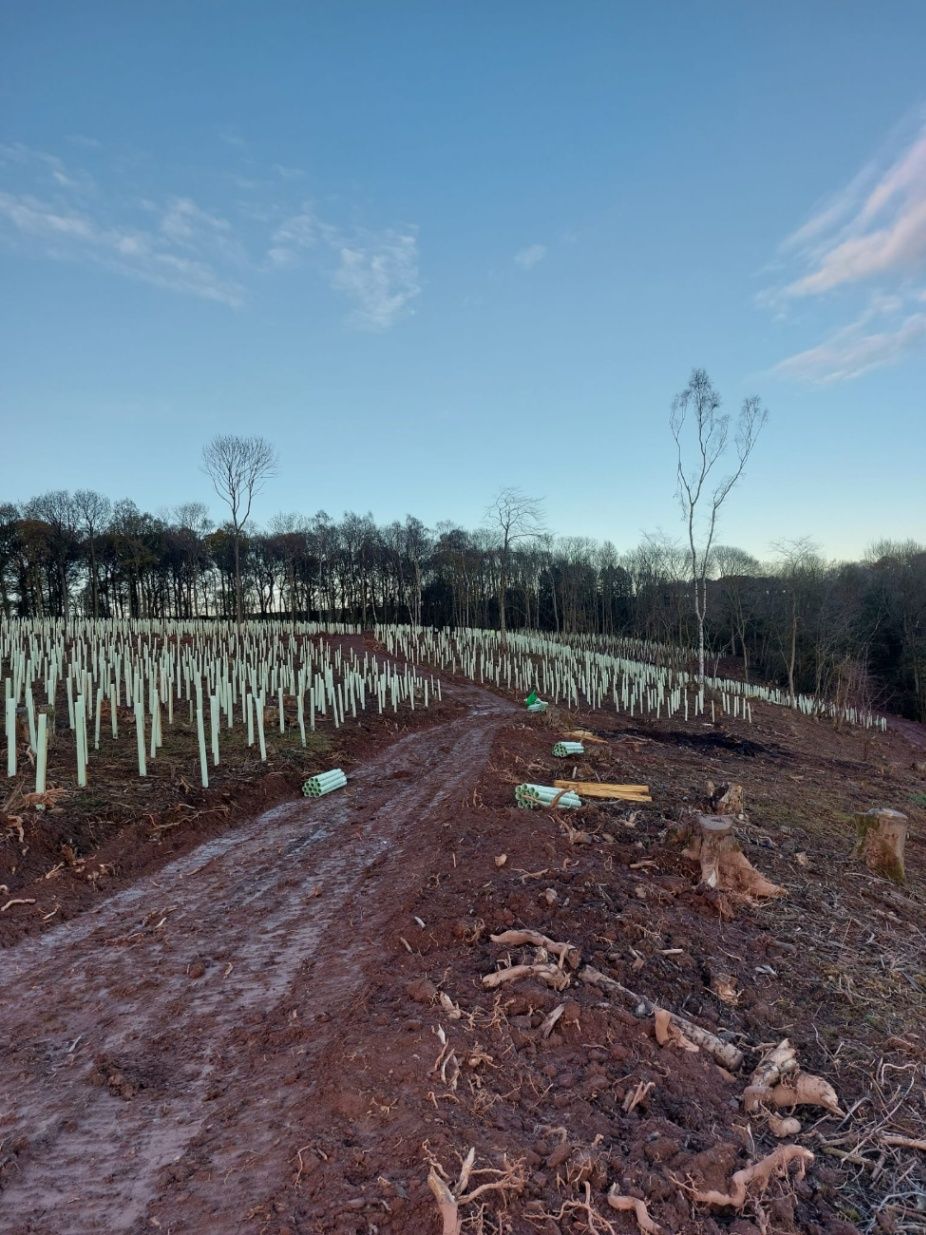
Commercial forestry is not just confined to upland conifer plantations. Lowland forestry offers a varied mix of broadleaf and conifer species which can meet a whole host of objectives. Because the soils tend to be better and less exposed your options are almost infinite. Forest Research recently published a list of the 28 best species to grow in England, and a slightly different one for Scotland, with the aim of future-proofing our timber stocks in the face of warming temperatures. We already plant most of the species listed in lowland areas and have done for a long time. What we really need if we’re to have diverse woodlands serving a range of objectives is more lowland woodland creation.
Where I live in the Forest of Dean is a particularly good example of what I mean. Go anywhere in the Dean and you’ll find a mosaic of different tree species all happily growing alongside each other. Plantations of Douglas fir, Norway spruce and Scots pine with intricate understoreys of regen conifer and broadleaf species stand right next door to broadleaves waiting for the day when they are felled to make high quality timber. Some of the conifer plantations will be clearfelled and replanted, and nowadays that means a mix of species and a lot of the time broadleaves incorporated into edges to support habitats for small mammals, invertebrates and flora/fauna. Monocultures are pretty well a thing of the past. Some plantations are selectively thinned and either allowed to regenerate on their own or the gaps planted as continuous cover. We have plantations of coppice species such as Sweet Chestnut and Hazel, which if well managed are a fantastic source of timber for fencing and hedging products as well as a vital habitat for the aforementioned small mammals such as dormice. I like dormice. It is unfortunate that many of these plantations have been ruined by deer and squirrels but we must remember that is a management problem, the concept is sound.
To combat climate change, do the simple things well
Timber is a very simple game. Plant tree, look after tree, fell tree, reap reward for all that hard work, start again. I’m a firm believer that timber should be the backbone of our industry. It’s the bit that makes the money and pays for all the other nice things we want. But moreover timber is about producing a variety of products of the best quality we can. This process is called silviculture and done properly it will solve a lot of problems. We have a problem of over-complication in this country where we must jam every conceivable outcome into our woods, when actually doing the simple stuff well is by far the better method.
Timber production, I believe, should be a major contributor to the British rural economy, the driving force behind the whole industry. It is a shame that it is currently fragmented, riven by polarisation and those of us that advocate for a moderate ‘all things for all men’ approach are so often vilified for it despite it being the clear way forward. It only makes me more determined to fight for it though. So there you have it, forestry is a good thing despite what you may have heard. I hope my (very) basic explanation has done enough to sway you all to bat for team forestry.
So do me a favour, spread the word about #positiveforestry wherever you go.
Viva la Revolution!