Spooky Origins Revealed: Why We Celebrate Halloween Today
Halloween ushers in the winter with pumpkins, ghosts and too many sweets! But what is the 31st of October really all about and why all the fuss?


Happy Halloween!
Make the most of the shortening evenings because the clocks go back on Sunday the 26th! We’ll all be getting up in the dark and coming home in the dark, short days and long nights. The leaves are coloured and falling like russet confetti, the weather is changing and the thermometer is beginning to touch single digits in places with the first frosts due any day now.
Here on the North Coast of Cornwall, the sun set is making its annual winter migration south to Padstow where it will sulk for the winter until it starts to creep North signalling the start of spring. But for now, Autumn is in full swing and winter is just around the corner. There is another clear sign that winter is nearly with us. Most every retail and hospitality outlet in the country is crammed to bursting with images of pumpkins and witches, spider web and skeletons.
Halloween is here! Squeezed into the shopping calendar between Back to Skool and Happy Holidays, Halloween has grown and grown to mirror its American cousin with hype and consumer fervour. Like Christmas lights, it is now common to see homes festooned in creepy decorations, lawns displaying macabre tableaux and on the night, children in elaborate fancy dress being chaperoned around the neighbourhood by anxious parents, knocking on neighbour’s doors in anticipation of free sweets and treats. Some homes display stern ‘No Trick or Treating here!’ signs and local councils post po-faced guidance to residents. Halloween, like many traditions, has become sanitised and commercialised.
How much?
We Brits are expected to spend £779 million on Halloween in 2025, according to a recent Finder survey. More than half of people (55%) are planning to spend some money on celebrations, decorations or costumes, with an average spend of £26 per person.
Analysis conducted by finder.com
Whilst across the pond in the USA spending this year is expected to top $13.1 BILLION!! It’s all a bit of fun and another chance for beleaguered retailers to entice people to spend a little more discretionary cash on imported plastic tat or high sugar sweetness and a rather harmless diversion for kids facing a long winter term before the frenzy of Christmas. It’s easy to complain that the simple evening of mischief of our childhoods, a simple game of knock and run, rudimentary pumpkin lanterns on front steps and perhaps a toffee apple or a handful of Chewitts to show for an evening galavanting around the local homes has changed but what are the origins of this night and how has it morphed into what we see now.
Samhain (SAH-win)
In the ancient Celtic Pagan world, people led a pastoral life centred around the movement of livestock between summer pasture and winter grazing. This transhumance required some of the tribe to travel with the livestock whilst the rest remained at the settlement. The seasons dictated most everything they did and they had systems and rituals to track the passage of time and allow them to make plans to survive the hard months of winter. Whilst there is little written record before the ninth century CE, there is ample evidence of such charting and prediction.

The oldest Celtic calendar is the Gaulish Coligny calendar, dating from the second century CE and incorporates both Gaelic and Roman characters and numerals, charting the phases of the moon. The calendars focused on the cyclical change of seasons.
The original Celts celebrated four fire festivals, evenly spaced throughout the year, celebrating the transition of the sun throughout the seasons - Imbolc Im-bulk (Feb 1), Bealtaine byaal-tuh-nuh ( (May 1), Lughnasadh LOO-nah-sah (Aug 1) and Samhain SAH-win (Oct 31). And it is the last of these fire festivals, Samhain (pronounced SAH-win) that we might recognise.
Marking the end of the harvest season and the beginning of the dark half of the year Samhain is roughly half-way between the autumnal equinox and the winter solstice. As a festival, it is believed to have its origins with these ancient Celtic people but even further back, stones and dolmens exhibit an alignment that correlates to the position of the setting sun on October 31st.
This was the time of year the livestock were brought down from summer pastures and some were slaughtered to be prepared and preserved to help the people survive the winter. It was seen as a threshold or liminal festival, a time where the veil between the living world and the spiritual world of magic and ancestors was especially thin. The tombs and ancient burial mounds were opened, seen as portals to the Otherworld and animals were sacrificed as offerings to the aos si - eees SHEE, the supernatural race of Irish folklore, the fairie folk, to ensure the survival of the clan and their livestock through the winter.
The Bone-Fire
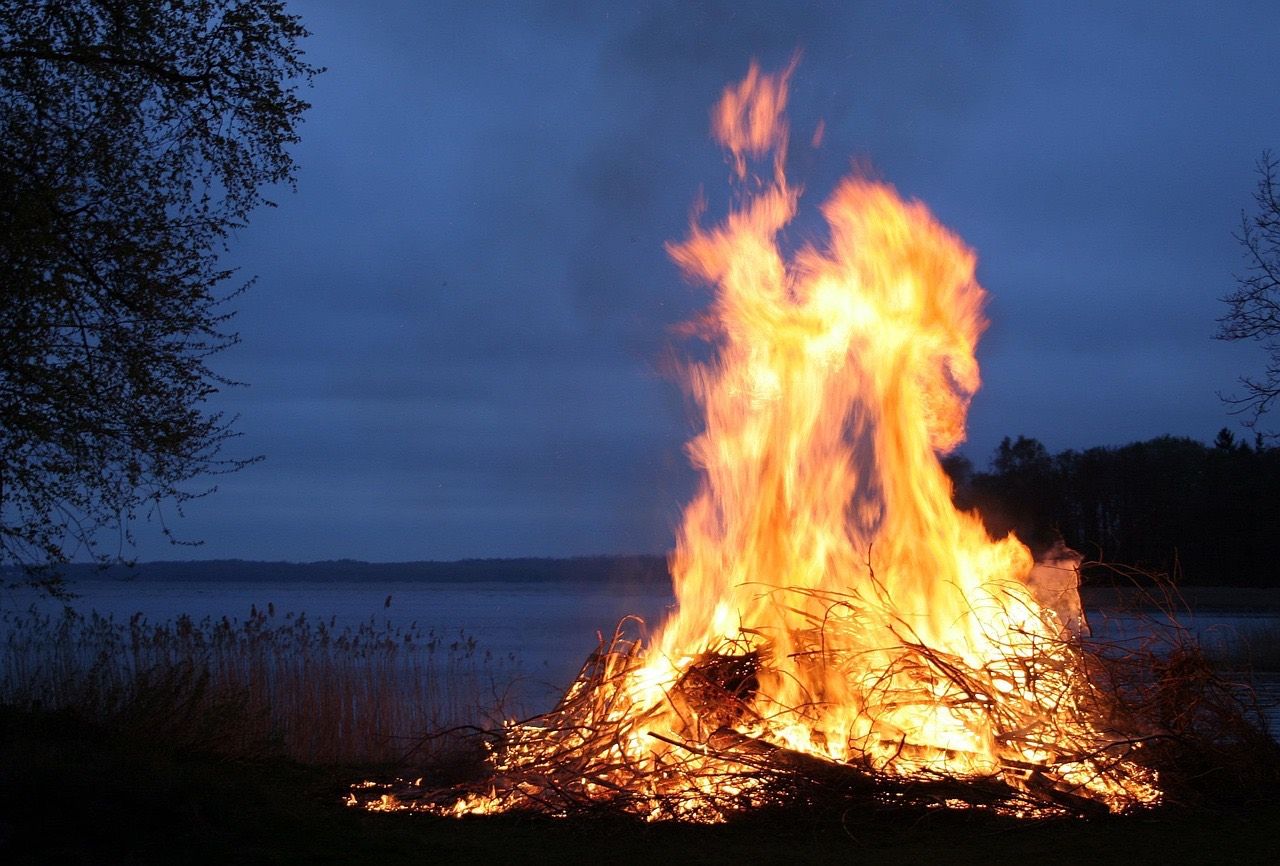
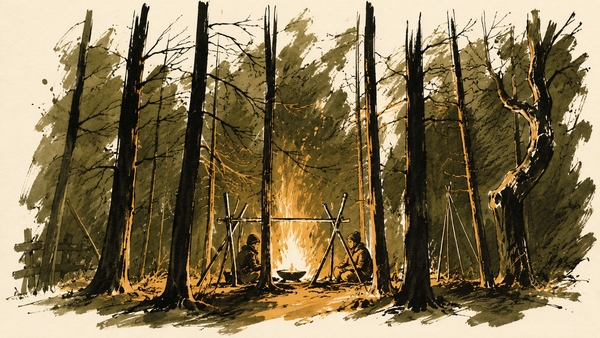
Great symbolic importance was attached to the ceremonial, cleansing fires lit to burn the sacrificial bones. Most of us are unaware of the significance of the ritualistic Bone-Fires but we all know a bonfire when we see one .
Samhain was a great feast and celebration and it was believed the spirits of the ancestors mingled with the living, visiting their homes so an extra place was often set at the table for them, and the aos si were abroad causing mischief and trouble!
It is thought that the custom of dressing in animal skins and masks was to remain unidentified by the aos si, to mask ones identity and blend in with them. Divination and augury was practised using bones, apples and roasted nuts to make predictions and prophecy of the dark times ahead.
In the ninth century, the Church began to do what it always has done. It recognised how deep the festival went and absorbed it into its own practises and claimed it as its own. It was subsumed into the liturgical year as Allhallowtide, the day before All Hallows Day, the day of remembrance of the dead especially the saints (hallows), martyrs and the faithful departed. By the twelfth century, it had become one of the holy days of obligation, requiring attendance at church and was accompanied by the ringing of bells for those lost in purgatory. Black clad criers trod the streets ringing a mournful bell, emploring all good Christians to remember poor souls.
Soul Cakes
The custom of baking soul cakes, or soul-mass cakes, grew and these small, round cakes, laced with sweet spices, were given out to soulers, mainly children and the poor, who called at the door on this evening. It became tradition that in return for the soul cake or souls, the soulers would recite poetry, say a prayer or perform in some manner and these guises and mummers often replaced prayer with songs and poetry with jokes, the children often visiting pranks on those who offered poor or no soul cakes.
The cakes were often marked with a cross, just like hot cross buns, as a sign they were alms. Shakespeare mentions souling in The Two Gentlemen of Verona. These groups of soulers would often carry lanterns made from hollowed out turnips to represent the souls of the dead and these Jack O’Lanterns were lit in windows and doorways to ward off evil spirits.

The Jack O’Lantern was originally a carved turnip or other root vegetable, and mimics the fairy lights seen burning over bogs and marshes, being another name for these Will o' the Wisp. The name has also been linked to the Irish legend of Drunk Jack who tricked the Devil twice and ensured he’d never take his soul. Upon his death Jack was denied entry to heaven and the devil kept his promise not to take his soul and forced Jack to walk the earth in the twilight between life and death with only an ember in a hollowed out turnip as his light.

Through the Middle Ages, wealthy parishes would display saintly relics in the churches on All Hallows Eve and those without the wherewithal to display such relics encouraged parishioners to dress as saints and parade around the village. It was held that in the graveyards, the spirits of the dead would rise up for one night of revelry and this danse macabre was often depicted in church decoration, urging Christians not to forget the end of all earthly thing.
In Britain, the Protestant movement post Reformation banned most of the ‘Papist’ celebrations and practices, abolishing ceremonies associated with the intercession of saints or the praying for souls in purgatory, yet All Hallows Eve survived to ‘celebrate saints as godly human beings’. The ringing of bells for the souls of the dead was likewise banned but it still continued in some areas, particularly those with strong Catholic heritage.
In 1605, the Gunpowder Plot and the ensuing Guy Fawkes Night became wildly popular, helped in no little part by the enactment of the ‘Observance of the 5th November’ Act mandating a day of national celebration and thanksgiving for the failure of the plot. Guy Fawkes night absorbed many of the traditions of All Hallows Eve, the bonfires and apple bobbing, dressing up and raucous celebrations. But in small areas across the country, old celebrations were still held discretely, in rural Lancashire, catholic families gathered to burn straw on pitchforks and pray for the dead and similar customs were continued in Hertfordshire and in Derbyshire, these teen’lay or tindle fires were thought to help guide the poor souls back to earth. In Scotland and Ireland, where catholocism remained strongly rooted, the All Hallows Eve practices were largely left to continue as it was seen to be too difficult to try to suppress them and so were deemed "important to the life cycle and rites of passage of local communities".
Off to the USA!
Halloween's rise in America came with the influx of Irish and Scottish immigrants in the 19th century. The earlier Anglican settlers certainly had the dates in their calendars but the Puritans frowned on the practice and squashed the celebrations. These later Celtic and Gaelic immigrants caused Halloween to become a major holiday in the States and whilst originally confined to these ethnic groups, it gradually began to be assimilated across the country into the mainstream and by the early 20th Century it was adopted by people across social, religious and ethnic divides. This surge in popularity of Halloween and the new traditions of carved pumpkin (being a native plant of North America) Jack O’Lanterns, trick or treating, dressing up and partying began to be exported from the USA back to mainland Europe, seen as early as Victorian London where it landed well with the emerging genre of the Gothic horror and the search for titillation.

Today, the export is wholesale. Halloween is one of the most popular and celebrated holidays in the US, right up there with Christmas and Thanksgiving as part of 'the big three'. The traditions have been modified and somewhat sanitised before being exported back to Europe. The symbology and customs have a loose basis in the old ways but are somehow divorced from them and have taken on a meaning and persona all their own. Halloween has spawned movie genres, custom menus, fancy dress and party items. TV channels have Halloween movie months and popular TV shows have Halloween specials. Home decoration has gone from a simple Jack O’Lantern to elaborate physical and digital displays and retailers dedicate large areas of their outlets to Halloween related items.

Image by <a href="https://pixabay.com/users/ottawagraphics-3815775/?utm_source=link-attribution&utm_medium=referral&utm_campaign=image&utm_content=5842741">Ana Krach</a> from <a href="https://pixabay.com//?utm_source=link-attribution&utm_medium=referral&utm_campaign=image&utm_content=5842741">Pixabay</a>
Here at home in the UK, the contagion is growing. Supermarkets are heaving with pumpkins, fake spiders and miles of spooky sweets and treats. Garden centres and farm shops hold pumpkin picking days and pubs and bars host Halloween nights.

Back in my wife Claire’s home village in the west of Kerry at the foot of the Shrone mountains, my brother-in-law DB and a group of his friends run a Halloween fun park .
The Killarney Pumpkin Farm opens during October till the first of November charging visitors to come and pick their own pumpkins. There’s a carnival atmosphere with food stands and refreshments, a maize maze and animal petting area. The high ground up near the ancient settlement of Carran Townland catches the majority of the prevailing weather but it doesn’t deter the thousands of families who flock to buy candy floss and tee shirts emblazoned with a skeleton in a coffin under the legend “Never Better!” There’s a creepy witches house and fairy village, the old crofters buildings reimagined, and local theatrical talent mingles with the crowds in ghoulish fancy dress. Children, pumped up with sugar run screaming around the place thrilling at the delight of being safely scared whilst parents eat burgers and buy souvenirs. They come by the coachload from around the county and beyond. On the surface, it’s commercial and sanitised, a day out for the family and something different to do but a second look reveals there’s a little more to it than that
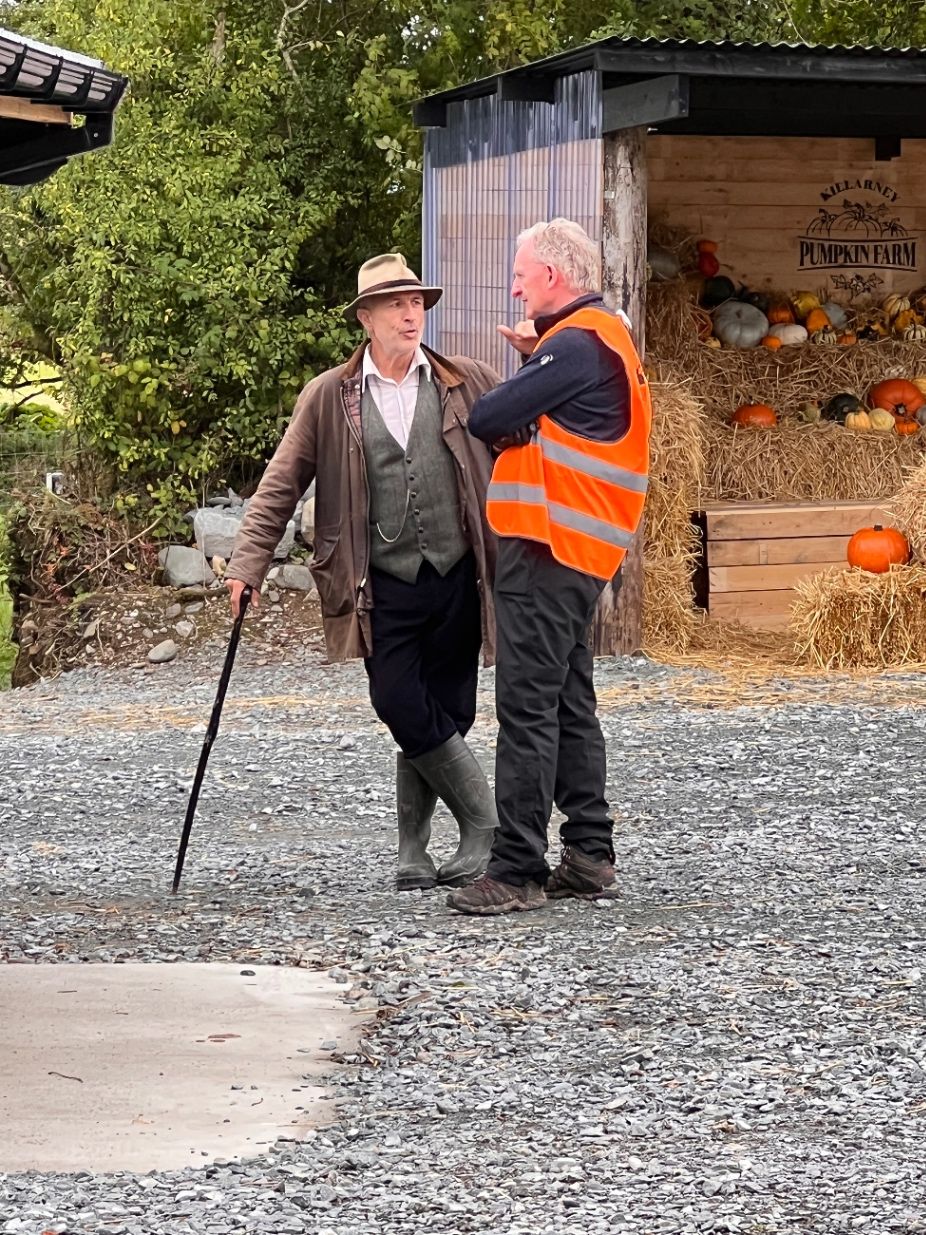
DB is a natural Seanchai, a story teller. He has a reverence for the old stories and folk legends of the country and of the area. He tells stories of the fairie folk and the Otherworld and holds visitors in his thrall as he sits them around the bone fire as the dusk begins to creep over the ancient stone ditches and boreens and recounts stories of spirits and legends, ancient lore and the rituals of the dead. He holds them in rapt attention until he’s done and he breaks the spell and they click back to the modern day, back to their plastic skull bucket of Haribo and back to their cars clutching a bright orange pumpkin to carve and put tea lights in. In these rural areas, modernity has laminated most things but the old ways still lurk just beneath the surface. The myths and practices of the Samhain have survived for thousands of years despite being co-opted and modified, repurposed and monetised. But the core of the beliefs of our ancient forebears remain, the kernel of truth in the fever dream Halloween has become. So as October fades into November, as the neighbours put out plastic skeletons on their lawns and the local kids are taken trick or treating, keep in mind the spirits of the otherworld and perhaps try to avoid the attention of the aos si. I’m absolutely sure it’s all just Iron age superstition, but just in case, I might just slip a bit of bone into the log burner on the 31st.